
Andy Nowlen
Well-Known Member
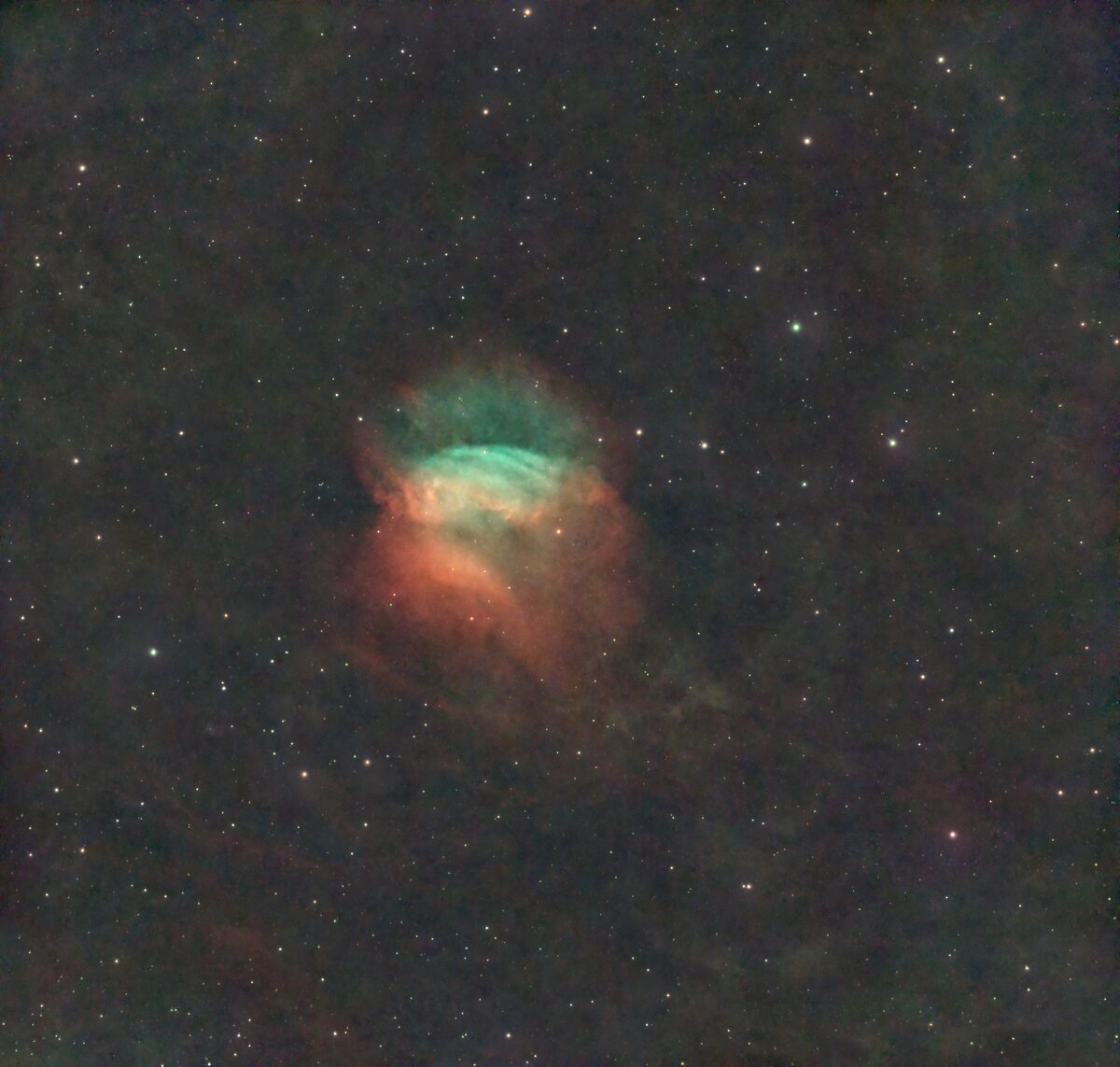
In early July 2024 we had a 2 week series of clear nights. Some of those nights had excellent transparency and excellent seeing. I decided to gather more data on this target. I had data from 2022 when I was very new to astrophotography. Adding data to this target in 2024 was a very different experience. Much more enjoyable, less stressful, and much better data. I like the result.
A word about processing - I stacked the individual telescope data in Astropixel processor. After the individual stacks were ready, I added them as "lights" into APP and stacked those 4 lights into the final stack. I had to crop out the stacking artifacts and some vignette left over from one set of flats. Then the 4 lights stacked successfully even though I had one set that was not rotated correctly. The software available to us as amateur astrophotographers is truly amazing.
Here I have the result of 4 different scopes 3 different cameras and 3 different filters for my OSC cameras - Asi533mc pro x2, Asi071mc cool, Explore Scientific 102mm, Takahashi 106n, Sharpstar 76mm and C11 Rasa. The integration is the result of about 26 hours of sub-frames.
A word about processing - I stacked the individual telescope data in Astropixel processor. After the individual stacks were ready, I added them as "lights" into APP and stacked those 4 lights into the final stack. I had to crop out the stacking artifacts and some vignette left over from one set of flats. Then the 4 lights stacked successfully even though I had one set that was not rotated correctly. The software available to us as amateur astrophotographers is truly amazing.
Here I have the result of 4 different scopes 3 different cameras and 3 different filters for my OSC cameras - Asi533mc pro x2, Asi071mc cool, Explore Scientific 102mm, Takahashi 106n, Sharpstar 76mm and C11 Rasa. The integration is the result of about 26 hours of sub-frames.


