

Eric Gofreed
Well-Known Member
This week’s Winged Wednesday is all about your favorite winged creatures. There’s no set theme—whether it’s birds, butterflies, dragonflies, bees, or anything else that flutters, soars, or zips by in the breeze, I want to see it! Share what’s been catching your eye or your camera. As for me, I’m highlighting birds with extraordinary toes, perfectly designed for life on the water’s edge. This week’s photos feature swamphens, gallinules, and jacanas—each a specialist at balancing on lily pads, weaving through reeds, and gliding across floating vegetation. These are the birds who walk where others would sink.

Wattled Jacana
With toes like stilts, the Wattled Jacana walks across floating vegetation like it’s on solid ground. Those extra-long toes spread their weight, letting them forage for insects, seeds, and tiny aquatic creatures without sinking. The bright red wattle on its face isn’t just for show—it helps attract mates, signals dominance, and lets jacanas recognize one another during breeding season.
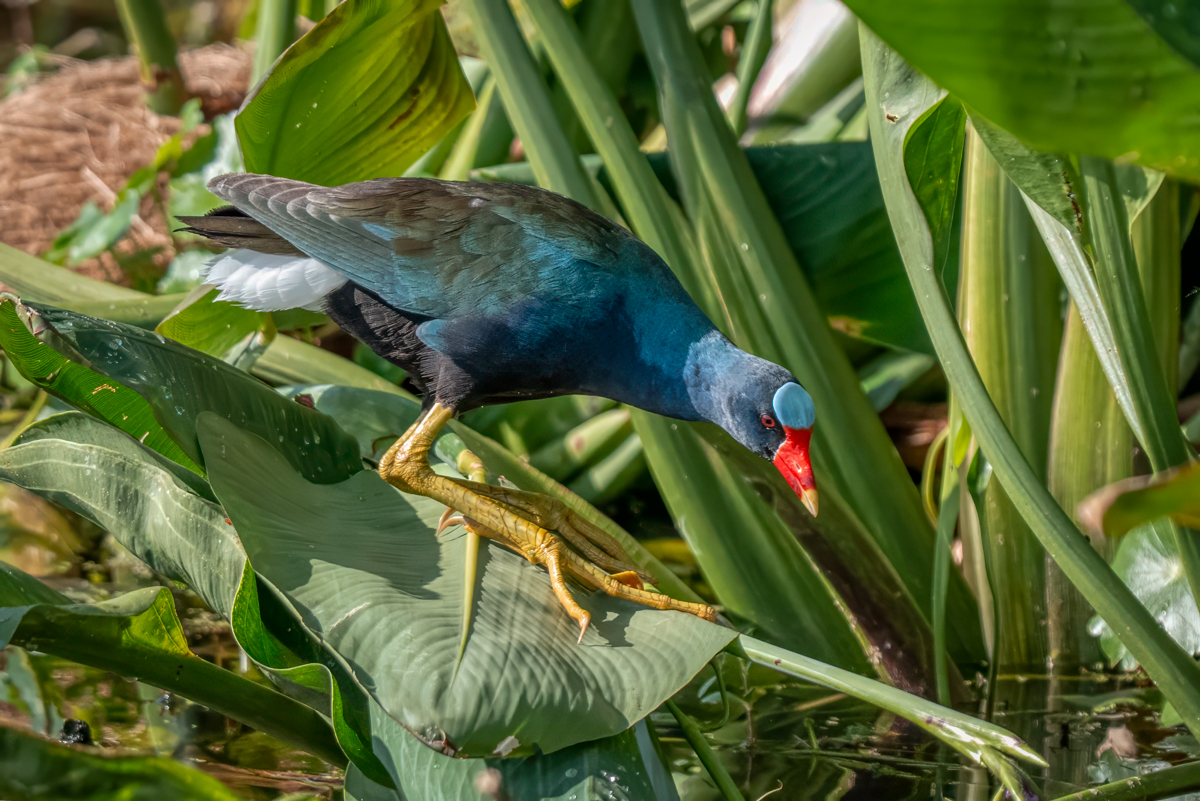
Purple Gallinule
Like the Jacana, the Gallinule easily walks across floating vegetation, its long toes spreading its weight like snowshoes. But unlike the Jacana, the Gallinule is also a climber—using those same toes to scale reeds and stalks in search of berries, bugs, and snails tucked away above the waterline.
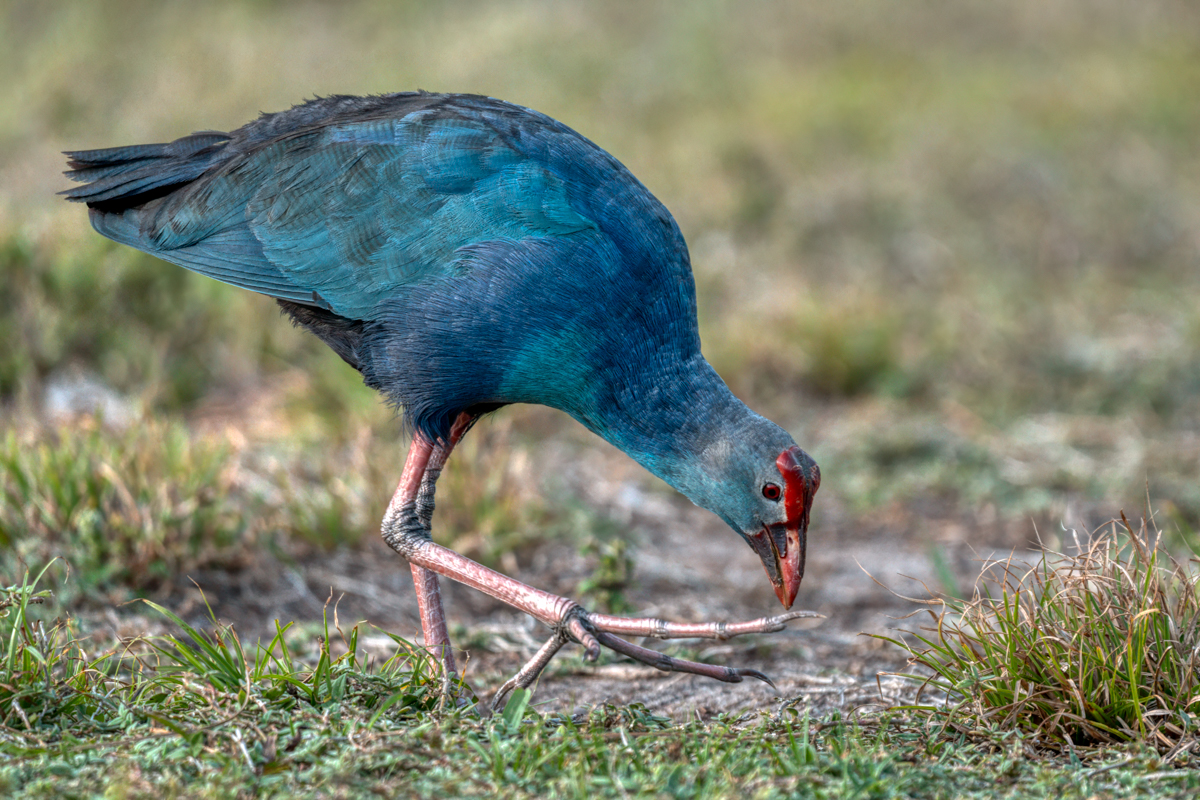
Gray-headed Swamphen
A striking newcomer to Florida’s wetlands, this bird arrived in the 1990s—likely escaped from private collections—and now breeds across South Florida. Its long toes help it balance on floating plants and wade through thick vegetation. Even more impressive, it often uses one foot like a hand, grasping stems or pulling shoots closer as it forages. Though non-native, it hasn’t caused any disruption yet.
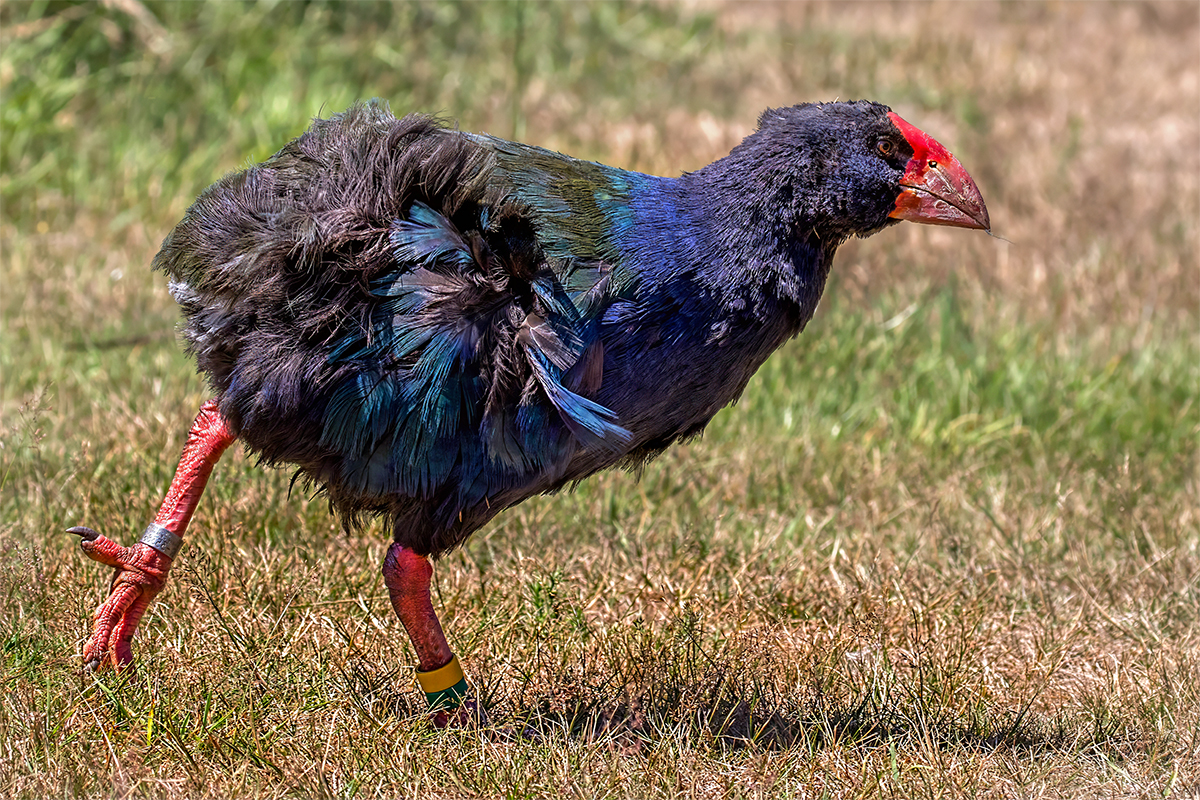
Takahē (pronounced TAH-kah-heh)
The Takahē is a rare, flightless swamphen found only in New Zealand. Once thought extinct, it was rediscovered in 1948. Its name reflects the soft sounds it makes as it moves through the grass. In Māori culture, it’s a taonga—a treasured bird that symbolizes endurance, rediscovery, and the bond between people and the land.
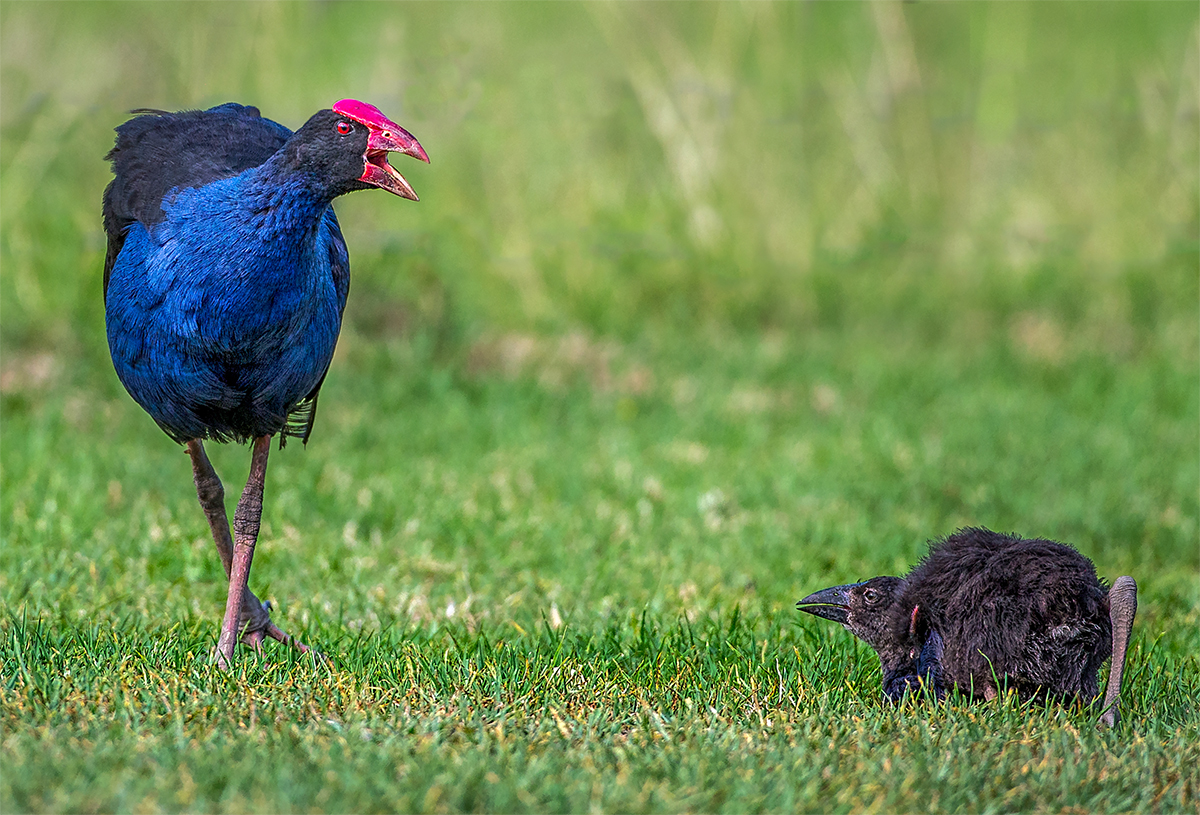
Pūkeko (pronounced POO-keh-koh) or Australasian Swamphen,
The Pūkeko is a far more common sight, striding confidently through roadside ditches and wetlands in New Zealand. In Māori tradition, the Pūkeko is often portrayed as a clever, mischievous figure—a survivor who thrives in natural and human-shaped landscapes.
A Note on Names: Takahē and Pūkeko
The names Takahē and Pūkeko come from Te Reo Māori, the Indigenous language of the Māori people of New Zealand. Both are onomatopoeic, inspired by the natural calls of the birds themselves.
Wattled Jacana
With toes like stilts, the Wattled Jacana walks across floating vegetation like it’s on solid ground. Those extra-long toes spread their weight, letting them forage for insects, seeds, and tiny aquatic creatures without sinking. The bright red wattle on its face isn’t just for show—it helps attract mates, signals dominance, and lets jacanas recognize one another during breeding season.
Purple Gallinule
Like the Jacana, the Gallinule easily walks across floating vegetation, its long toes spreading its weight like snowshoes. But unlike the Jacana, the Gallinule is also a climber—using those same toes to scale reeds and stalks in search of berries, bugs, and snails tucked away above the waterline.
Gray-headed Swamphen
A striking newcomer to Florida’s wetlands, this bird arrived in the 1990s—likely escaped from private collections—and now breeds across South Florida. Its long toes help it balance on floating plants and wade through thick vegetation. Even more impressive, it often uses one foot like a hand, grasping stems or pulling shoots closer as it forages. Though non-native, it hasn’t caused any disruption yet.
Takahē (pronounced TAH-kah-heh)
The Takahē is a rare, flightless swamphen found only in New Zealand. Once thought extinct, it was rediscovered in 1948. Its name reflects the soft sounds it makes as it moves through the grass. In Māori culture, it’s a taonga—a treasured bird that symbolizes endurance, rediscovery, and the bond between people and the land.
Pūkeko (pronounced POO-keh-koh) or Australasian Swamphen,
The Pūkeko is a far more common sight, striding confidently through roadside ditches and wetlands in New Zealand. In Māori tradition, the Pūkeko is often portrayed as a clever, mischievous figure—a survivor who thrives in natural and human-shaped landscapes.
A Note on Names: Takahē and Pūkeko
The names Takahē and Pūkeko come from Te Reo Māori, the Indigenous language of the Māori people of New Zealand. Both are onomatopoeic, inspired by the natural calls of the birds themselves.
Last edited:


