

IainGFoulds
Well-Known Member
Over the years, I have read the occasional posts on forums from vintage lens enthusiasts. Individuals generally shouted down by fans of the “latest and greatest” lenses. The “latest” lenses had the sharpest corners, conquered any trace of vignetting, and rated higher on the DXO measurements. Thus the lenses were definitively and indisputably “better”.
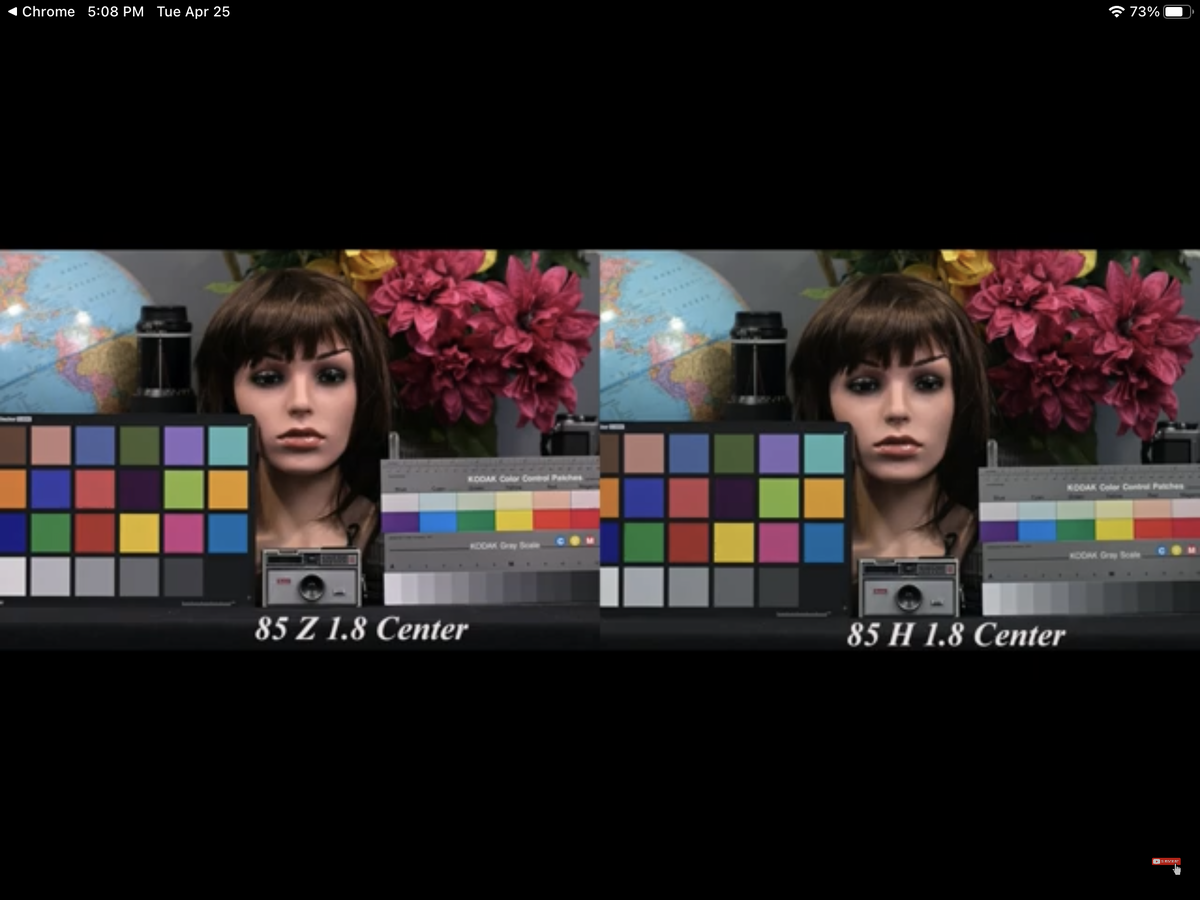
It was this image that convinced me otherwise. The image of the 45 year old 85H has greater natural depth, greater apparent curvature, and an integrity of focal planes. Comparing the two images together, I actually find the modern “corrected” image to be somewhat sickening in it’s obvious distortion. Distortion created by the scene passing through two or three times the number of elements (lenses). The natural scene has not been “corrected”. It has been flattened and distorted by the modern lens in pursuit of artistically irrelevant ideals of technicians.
There is no reason for sharp corners in an image. There is no reason for even sharp edges. Myself, I do edgework on every image- lightly blurring and darkening the artificial border. Why? Because I am creating an illusion. An illusion of a 3D scene to draw in the viewer’s imagination. Absolutely, the earlier lenses with five or six- even four- elements are greater at preserving the sense of depth to the image.
Just wonder how much modern lenses have contributed to the collapse of interest in photography? Of course, the manufacturers blame everyone and everything else… Iain
It was this image that convinced me otherwise. The image of the 45 year old 85H has greater natural depth, greater apparent curvature, and an integrity of focal planes. Comparing the two images together, I actually find the modern “corrected” image to be somewhat sickening in it’s obvious distortion. Distortion created by the scene passing through two or three times the number of elements (lenses). The natural scene has not been “corrected”. It has been flattened and distorted by the modern lens in pursuit of artistically irrelevant ideals of technicians.
There is no reason for sharp corners in an image. There is no reason for even sharp edges. Myself, I do edgework on every image- lightly blurring and darkening the artificial border. Why? Because I am creating an illusion. An illusion of a 3D scene to draw in the viewer’s imagination. Absolutely, the earlier lenses with five or six- even four- elements are greater at preserving the sense of depth to the image.
Just wonder how much modern lenses have contributed to the collapse of interest in photography? Of course, the manufacturers blame everyone and everything else… Iain
Last edited:

