

Mike Lewis
Staff Member
So firstly, apologies to everyone for being AWOL from FW for so long. I have had lots going on, not the least of which has been the relocation of some of my astro gear from my friend's house in Green Valley AZ to a remote hosting site in TX called Starfront Observatories. I had been running my gear remotely from here in CO, but my friend is scaling down on his astro activities and we decided at least one of my 2 telescope setups had to be moved. I ended up buying a large amount of new gear to relocate to the TX site, and then had to scramble to try to get it all tested out before deploying it down there. This ended up in a 9 day great circle trip from CO first down to AZ to setup and test (weather in CO had not allowed much testing) followed by a drive from there to Starfront Remote Observatories (SFRO) located just north of the bustling town of Rockwood, TX. Here is an aerial view of their site, which now hosts what I think are ~400 remote setups and counting.
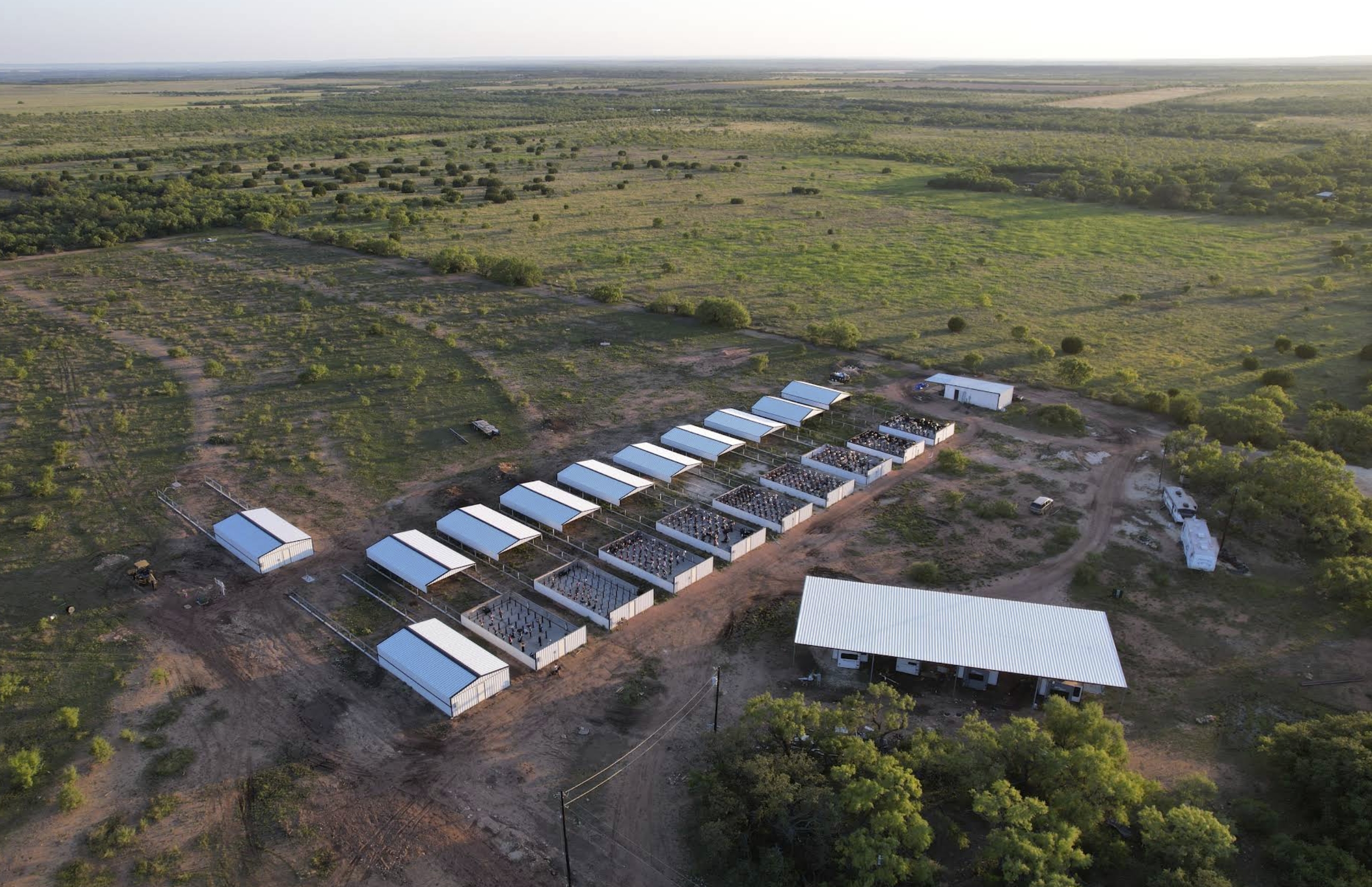
It is a very dark site, definitely at least Bortle 2 I think, and the big draw is that by using a pricing structure based on precise measurements of the space your gear takes up on the observatory floor they allow for many setups in their buildings, which brings down the normally eye-watering cost of remote hosting to something that can be contemplated without having a divorce lawyer on speed-dial They have prices ranging from $99/month for a SeeStar (go for it Jim ) up to $799/month for those massive cost-is-no-object setups. That being said, my very nice mid size refractor setup falls into the $199/month category. Here is an image of my gear setup there, in Building 8 (8th from front row left in the aerial image, which was taken months before my gear was installed).

I would say well over half of their installs are for setups in the $149 or $199 per month range, with lots of ZWO AM5 style setups on site. Not the typical remote hosted gear but it does seem to do quite well there. The one caveat of a place like this is because they have so many setups packed closely together in each building, they DO NOT let the user set up their own gear. So you can ship it down there or as in my case drive it down there but then they install it for you. Given the headache of what would transpire if user A is installing his gear and trips over a cable going to user B's gear and damages something, It is easy to see why this policy is in place. And at least in my experience, the install of my gear was done quickly, accurately, and professionally. So not to sound like a commercial for this place, but I do think SFRO should be worth a look of you are considering remote hosting your gear at some point.
They are growing very quickly with that second row going in behind the first row of 10 buildings.
I have had a few issues to resolve, most notably that my mini-PC was running at 100% CPU utilization for many tasks (something I had not previously realized) so it was replaced with a faster PC and that fixed a number of issues. I am still dealing with some tracking/guiding issues but given the quality of my mount and the excellent level of support I have so far received from both the SFRO staff and the wonderful tech support staff at Astro-Physics, I feel confident it can all get worked out.
So if you are still with me after all of that, here are a couple versions of what would constitute my first light image from SFRO.
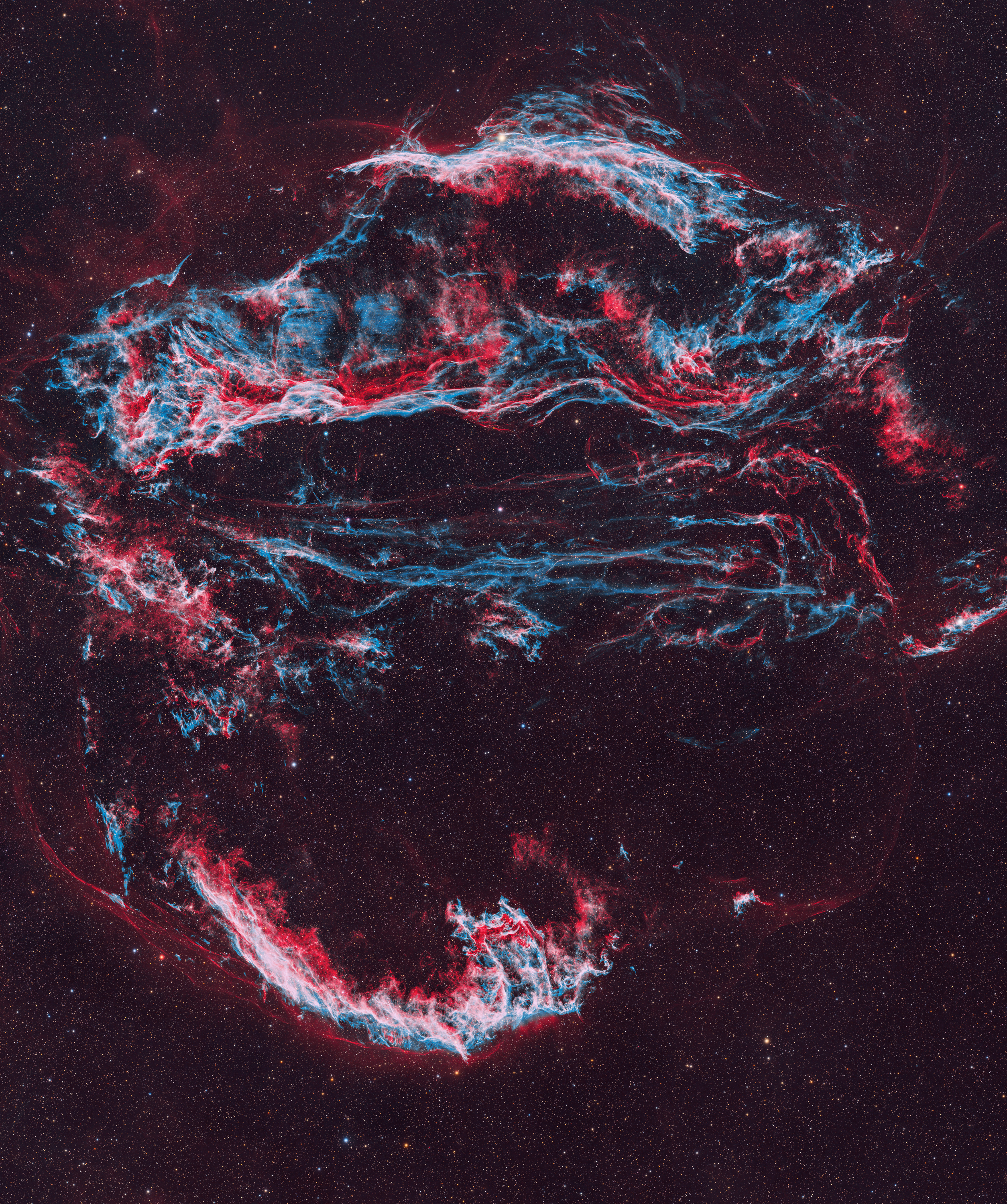
The Veil Nebula complex needs no introduction to any astrophotographer and consists of a number of well known astrophotography targets that make for excellent images all by themselves. However, it is only when the entire area is imaged as a whole that one can see the interrelationship of all the areas of nebulosity that clearly identify this area of the sky as the site of a supernova that occurred some 10 to 20 thousand years ago.
In this orientation we see the eastern Veil Nebula on the bottom with the Western Veil Nebula on top, with Pickering's triangle in the middle left portion of the image. This is a 2 panel mosaic image.
This image is made from images taken in all 3 common narrowband wavelengths of light (Hα, Oiii, and Sii). A link to larger versions on AB is here:
https://app.astrobin.com/u/mlewis?i=zn9gga

And here is a version using just the Hα and Oiii data, giving a different color palette to the final result.
Which do you prefer?
ML
Link to SFRO site for those interested:
https://starfront.space/
My Equipment:
Poseidon-M Camera @ -5C and
Gain:125 Offset:25
Astro-Physics Mach2 Mount
Williams Optics Cat 91 Refractor, 448mm @ f/4.9
Antlia Pro Filters (3nm narrowband plus RGB)
Askar FMA180 Guide scope with ASI290MM
Software:
Pixinsight Commercial Version 1.9
Lightroom CC
Photoshop CC
N.I.N.A. Control Software
BlurXTerminator (Russell Croman)
StarXTerminator (Russell Croman)
NoiseXTerminator (Russell Croman)
Astro-Physics APCC and APPM
Light Frames:
Gain 125 / Offset 25
Hα: 35 x 600 secs (5 hrs 50 mins)
Oiii: 29 x 600 secs (4 hrs 50 mins)
Sii: 28 x 600 secs (4 hrs 40 mins) - (this data was unused for 2nd color mix version)
Red: 51 x 30 secs (25 mins 30 secs)
Green: 49 x 30 secs (24 mins 30 secs)
Blue: 49 x 30 secs (24 mins 30 secs)
16 hrs 34 mins 30 secs total
Dark Frames:
10 x 30 secs (5 mins)
10 x 600 secs (1 hr 40 mins)
It is a very dark site, definitely at least Bortle 2 I think, and the big draw is that by using a pricing structure based on precise measurements of the space your gear takes up on the observatory floor they allow for many setups in their buildings, which brings down the normally eye-watering cost of remote hosting to something that can be contemplated without having a divorce lawyer on speed-dial
They have prices ranging from $99/month for a SeeStar (go for it Jim ) up to $799/month for those massive cost-is-no-object setups. That being said, my very nice mid size refractor setup falls into the $199/month category. Here is an image of my gear setup there, in Building 8 (8th from front row left in the aerial image, which was taken months before my gear was installed). I would say well over half of their installs are for setups in the $149 or $199 per month range, with lots of ZWO AM5 style setups on site. Not the typical remote hosted gear but it does seem to do quite well there. The one caveat of a place like this is because they have so many setups packed closely together in each building, they DO NOT let the user set up their own gear. So you can ship it down there or as in my case drive it down there but then they install it for you. Given the headache of what would transpire if user A is installing his gear and trips over a cable going to user B's gear and damages something, It is easy to see why this policy is in place. And at least in my experience, the install of my gear was done quickly, accurately, and professionally. So not to sound like a commercial for this place, but I do think SFRO should be worth a look of you are considering remote hosting your gear at some point.
They are growing very quickly with that second row going in behind the first row of 10 buildings.
I have had a few issues to resolve, most notably that my mini-PC was running at 100% CPU utilization for many tasks (something I had not previously realized) so it was replaced with a faster PC and that fixed a number of issues. I am still dealing with some tracking/guiding issues but given the quality of my mount and the excellent level of support I have so far received from both the SFRO staff and the wonderful tech support staff at Astro-Physics, I feel confident it can all get worked out.
So if you are still with me after all of that, here are a couple versions of what would constitute my first light image from SFRO.
The Veil Nebula complex needs no introduction to any astrophotographer and consists of a number of well known astrophotography targets that make for excellent images all by themselves. However, it is only when the entire area is imaged as a whole that one can see the interrelationship of all the areas of nebulosity that clearly identify this area of the sky as the site of a supernova that occurred some 10 to 20 thousand years ago.
In this orientation we see the eastern Veil Nebula on the bottom with the Western Veil Nebula on top, with Pickering's triangle in the middle left portion of the image. This is a 2 panel mosaic image.
This image is made from images taken in all 3 common narrowband wavelengths of light (Hα, Oiii, and Sii). A link to larger versions on AB is here:
https://app.astrobin.com/u/mlewis?i=zn9gga
And here is a version using just the Hα and Oiii data, giving a different color palette to the final result.
Which do you prefer?
ML
Link to SFRO site for those interested:
https://starfront.space/
My Equipment:
Poseidon-M Camera @ -5C and
Gain:125 Offset:25
Astro-Physics Mach2 Mount
Williams Optics Cat 91 Refractor, 448mm @ f/4.9
Antlia Pro Filters (3nm narrowband plus RGB)
Askar FMA180 Guide scope with ASI290MM
Software:
Pixinsight Commercial Version 1.9
Lightroom CC
Photoshop CC
N.I.N.A. Control Software
BlurXTerminator (Russell Croman)
StarXTerminator (Russell Croman)
NoiseXTerminator (Russell Croman)
Astro-Physics APCC and APPM
Light Frames:
Gain 125 / Offset 25
Hα: 35 x 600 secs (5 hrs 50 mins)
Oiii: 29 x 600 secs (4 hrs 50 mins)
Sii: 28 x 600 secs (4 hrs 40 mins) - (this data was unused for 2nd color mix version)
Red: 51 x 30 secs (25 mins 30 secs)
Green: 49 x 30 secs (24 mins 30 secs)
Blue: 49 x 30 secs (24 mins 30 secs)
16 hrs 34 mins 30 secs total
Dark Frames:
10 x 30 secs (5 mins)
10 x 600 secs (1 hr 40 mins)

