Astro Mod: Full frame or APS-C bodies ?

Hi everyone,

I’m hoping to get some advice from the more experienced members here as I take my first steps into deep-space astrophotography.

I currently have three camera bodies in my kit:

  • Pentax K-mount body
  • Sony NEX-5
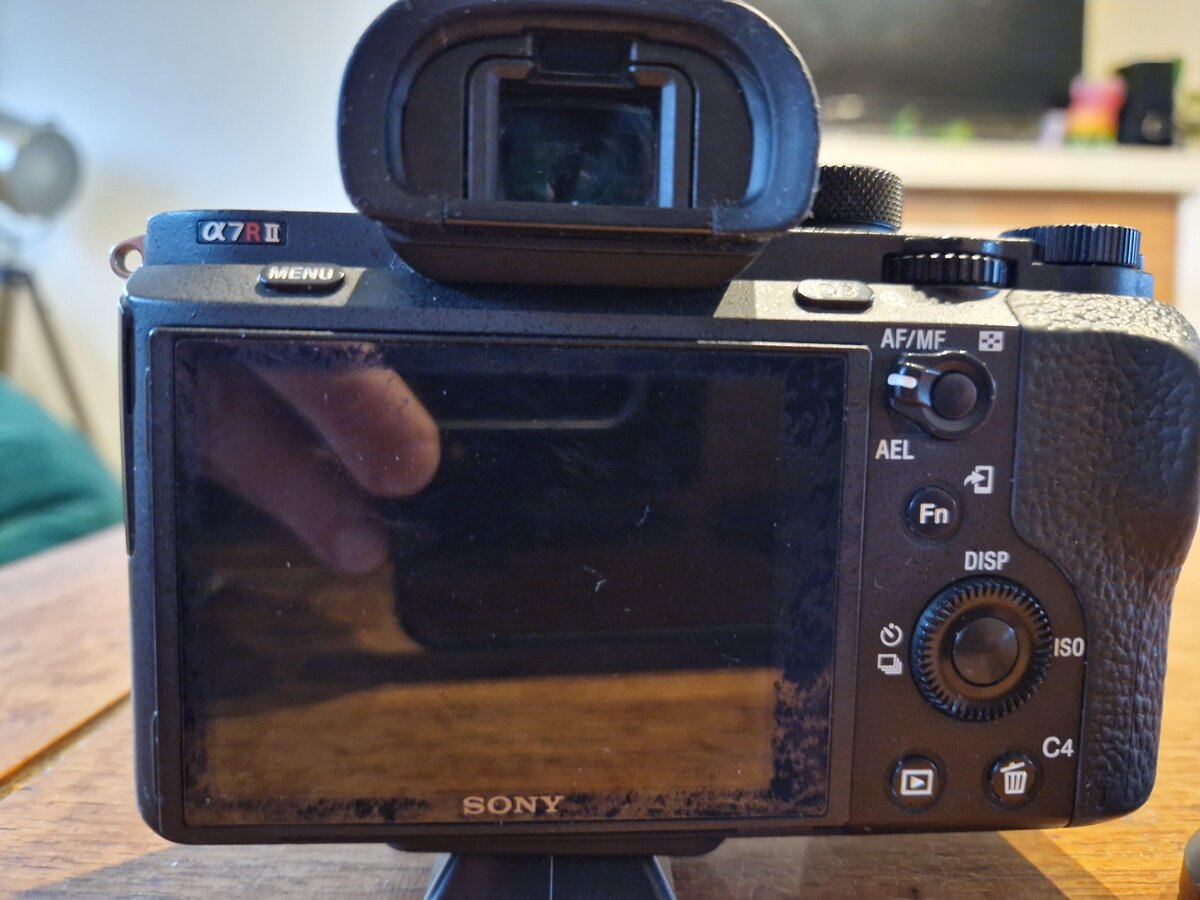
  • Sony A7R II (Full-frame)
I am itching to get one of these bodies astro-modified before diving deeper into the hobby. Given that I am a complete beginner when it comes to telescopes and deep-space imaging, I’m trying to figure out the smartest route.

Does it make sense to commit my full-frame Sony A7R II to an astro-modification, or would modding an older Pentax body (or even the NEX-5) be a better and more forgiving starting point?

I want to make sure I'm asking the right questions here, so any guidance, pros/cons, or recommendations would be hugely appreciated!

Thanks,

Oliver

Pentax_K_01.jpg


A7R2.jpg
 

JimFox

Moderator
Staff member
Full frame sensors are way better at night then AP-C, so right off the bat, eliminate any thought of converting over a AP-C camera.

I would go with the Sony A7R II to convert.

All comments
 

Mike Lewis

Staff Member
Oliver,

I would ask a few some questions first:

What is your use case? If you are looking to shoot nightscapes and get Milky Way images or very wide field sky ijages with better Hα sensitivity, then I think a modified camera body makes sense.

But if you want to get into tracked mount deep sky astroimaging, a new fully cooled one shot color (same tech as what your terrestrial camera uses) sensor camera can be had for $600 (based on 8MP IMX585 sensor), and you can find cheaper deals than that in the uised market (same sensor camera for $485 now on Cloudy Nights as an example). Depending on what you are spending for the astro mod the dedicated camera will do a better job, assuming you are shooting deep sky.

A camera mod can also do double duty as an IR camera if you hget a clear glass mod instead of just opening up the Hα response. But again, for deep sky once you start tracking with a decent mount and taking exposures of 2 minutes on up, the ability to cool the sensor to a specified repeatable temperature is really advantageous. For CMOS sensors thermal noise drops by ~1/2 for every 6 degrees C you cool the sensor.

To answer your direct question though, the Sony full frame camera is likely your best choice for modification of ione of your existing cameras, for the reasons Jim mentioned.

ML
 
Full frame sensors are way better at night then AP-C, so right off the bat, eliminate any thought of converting over a AP-C camera.

I would go with the Sony A7R II to convert.

All comments
Hi Jim, thank you for your response. Yes, another reason I leaning towards Sony two is the battery and available accessories.

Oliver
 
Oliver,

I would ask a few some questions first:

What is your use case? If you are looking to shoot nightscapes and get Milky Way images or very wide field sky ijages with better Hα sensitivity, then I think a modified camera body makes sense.

But if you want to get into tracked mount deep sky astroimaging, a new fully cooled one shot color (same tech as what your terrestrial camera uses) sensor camera can be had for $600 (based on 8MP IMX585 sensor), and you can find cheaper deals than that in the uised market (same sensor camera for $485 now on Cloudy Nights as an example). Depending on what you are spending for the astro mod the dedicated camera will do a better job, assuming you are shooting deep sky.

A camera mod can also do double duty as an IR camera if you hget a clear glass mod instead of just opening up the Hα response. But again, for deep sky once you start tracking with a decent mount and taking exposures of 2 minutes on up, the ability to cool the sensor to a specified repeatable temperature is really advantageous. For CMOS sensors thermal noise drops by ~1/2 for every 6 degrees C you cool the sensor.

To answer your direct question though, the Sony full frame camera is likely your best choice for modification of ione of your existing cameras, for the reasons Jim mentioned.

ML
Hi Mike, thank you for the comments. You know, I have just too many cameras lying around. I was really worried deep space astrophotography would be addictive. Once I start, I may not stop & start to build a bigger rig soon. Every day I look at you guys posting drooling over the gorgeous images.

I have a few small portable trackers mostly for milky way & planetary subjects, it seems ZWO mounts are a lot easier to learn nowawadys. Eventually, say in a couple of years, I will be doing a deep space.

Oliver
 

Mike Lewis

Staff Member
Hi Mike, thank you for the comments. You know, I have just too many cameras lying around. I was really worried deep space astrophotography would be addictive. Once I start, I may not stop & start to build a bigger rig soon. Every day I look at you guys posting drooling over the gorgeous images.

I have a few small portable trackers mostly for milky way & planetary subjects, it seems ZWO mounts are a lot easier to learn nowawadys. Eventually, say in a couple of years, I will be doing a deep space.

Oliver
Oliver,

All very good points. And let me just say - it IS addictive o_O😆 Just ask Jim, he went from zero to 60 on it in the blink of an eye. But I think it compliments other types of photography well. I find being able to transfer over from scenic to astro or astro to scenic keeps me fresher in both disciplines. Anyway, glad to see you getting more involved, and starting slow is actually a very good approach. Too many folks jump in with so much new gear that they get overwhelmed and decide they cannot figure it all out and quit.

ML
 

JimFox

Moderator
Staff member
Oliver,

I would ask a few some questions first:

What is your use case? If you are looking to shoot nightscapes and get Milky Way images or very wide field sky ijages with better Hα sensitivity, then I think a modified camera body makes sense.

But if you want to get into tracked mount deep sky astroimaging, a new fully cooled one shot color (same tech as what your terrestrial camera uses) sensor camera can be had for $600 (based on 8MP IMX585 sensor), and you can find cheaper deals than that in the uised market (same sensor camera for $485 now on Cloudy Nights as an example). Depending on what you are spending for the astro mod the dedicated camera will do a better job, assuming you are shooting deep sky.

A camera mod can also do double duty as an IR camera if you hget a clear glass mod instead of just opening up the Hα response. But again, for deep sky once you start tracking with a decent mount and taking exposures of 2 minutes on up, the ability to cool the sensor to a specified repeatable temperature is really advantageous. For CMOS sensors thermal noise drops by ~1/2 for every 6 degrees C you cool the sensor.

To answer your direct question though, the Sony full frame camera is likely your best choice for modification of ione of your existing cameras, for the reasons Jim mentioned.

ML
Good points Mike. I didn't separate case use, but that's an important consideration. I guess if Oliver has some camera's laying around and just wants to convert one to start dipping his toe in use for the MW, and one day work his way up to a telescope. It's an inexpensive way to get started.
 

JimFox

Moderator
Staff member
Hi Jim, thank you for your response. Yes, another reason I leaning towards Sony two is the battery and available accessories.

Oliver
BTW, I would suggest Spencers as the conversion of choice with their Ha/Visible Light conversion. That's what I did to one of my cameras. It's nice in that it also works in Visible Light. You use a custom WB to image with, the colors coming straight out of it look a little off, but that's to be expected. Then in ACR, when processing you just do an Auto WB adjustment and the colors pop into place. It's an easy enough process to have that extra flexibilty, especially when doing the Milky Way because then the ground layer can still be used as the color cast is easily corrected for.
 
Top Bottom