Easy PixInsight workflow with AutoIntegrate script

jarmor

Active Member
I have developed an AutoIntegrate.js script that automates basic processing steps in PixInsight. Script takes calibrated image files, runs a basic PixInsight workflow and produces an (almost) final image. It works with both RGB and narrowband (HSO) data. Also camera RAW files can be used.

I think the script could be useful for someone just starting out with PixInsight and wanting an easy start before learning all the processes needed to create an image. It also suits well for lazy people like me :). For best results you obviously need careful manual processing as described in many good PixInsight tutorials.

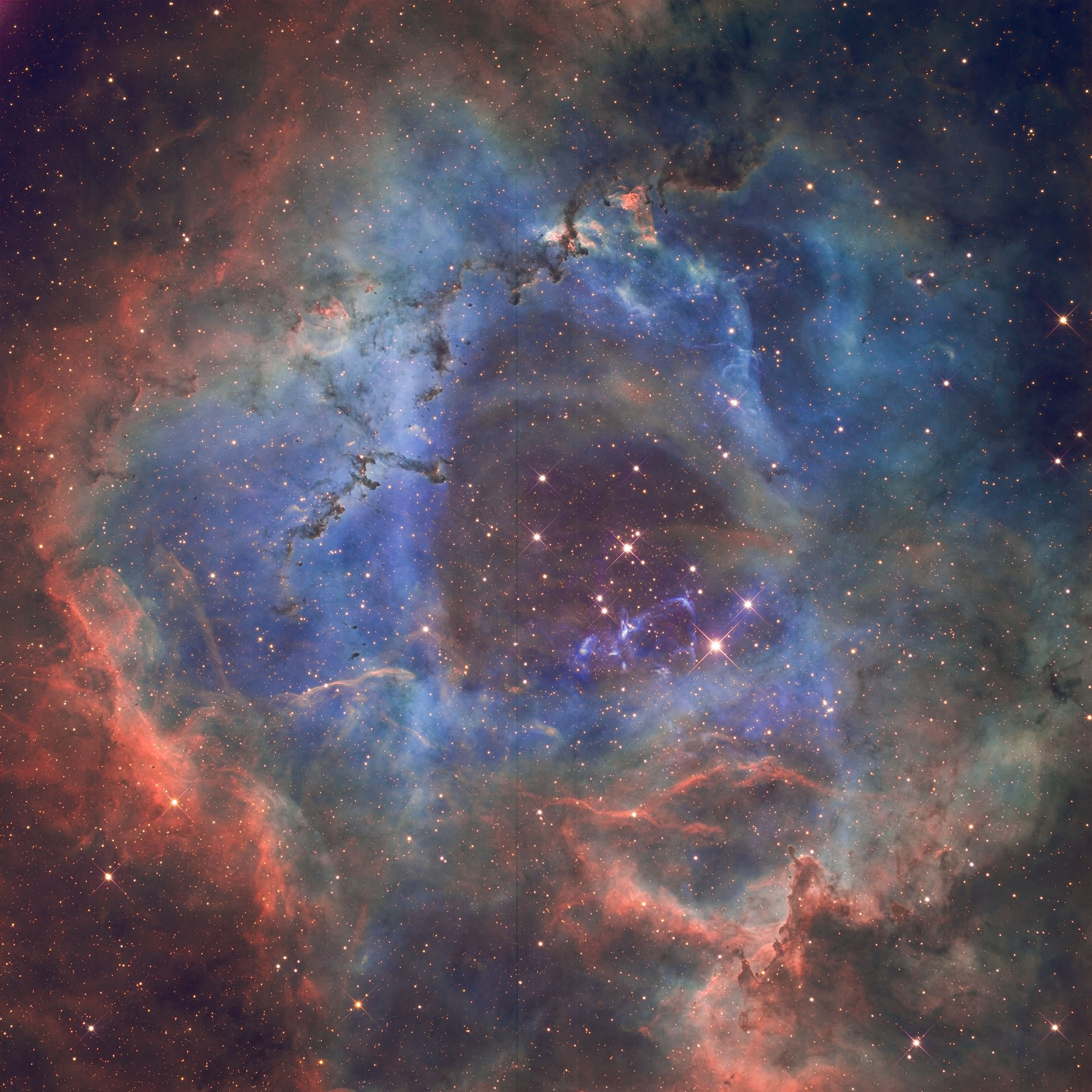
I have attached two images that are created with AutoIntegrate script without any manual processing. Obviously you would like to further enhance them for example in PixInsight or Photoshop.
I have developed the script for my own use but I am sharing it in case someone else might find it useful. If you have any improvement ideas or if you find any problems please let me know!

I have more information and download link here: https://ruuth.xyz/AutoIntegrateInfo.html.

I have also a short YouTube video of the workflow: https://www.youtube.com/watch?v=ONmY5VHPTVo

Image 1: Trifid Nebula, AutoIntegrate default processing was used for this image. Image data from Telescope Live.
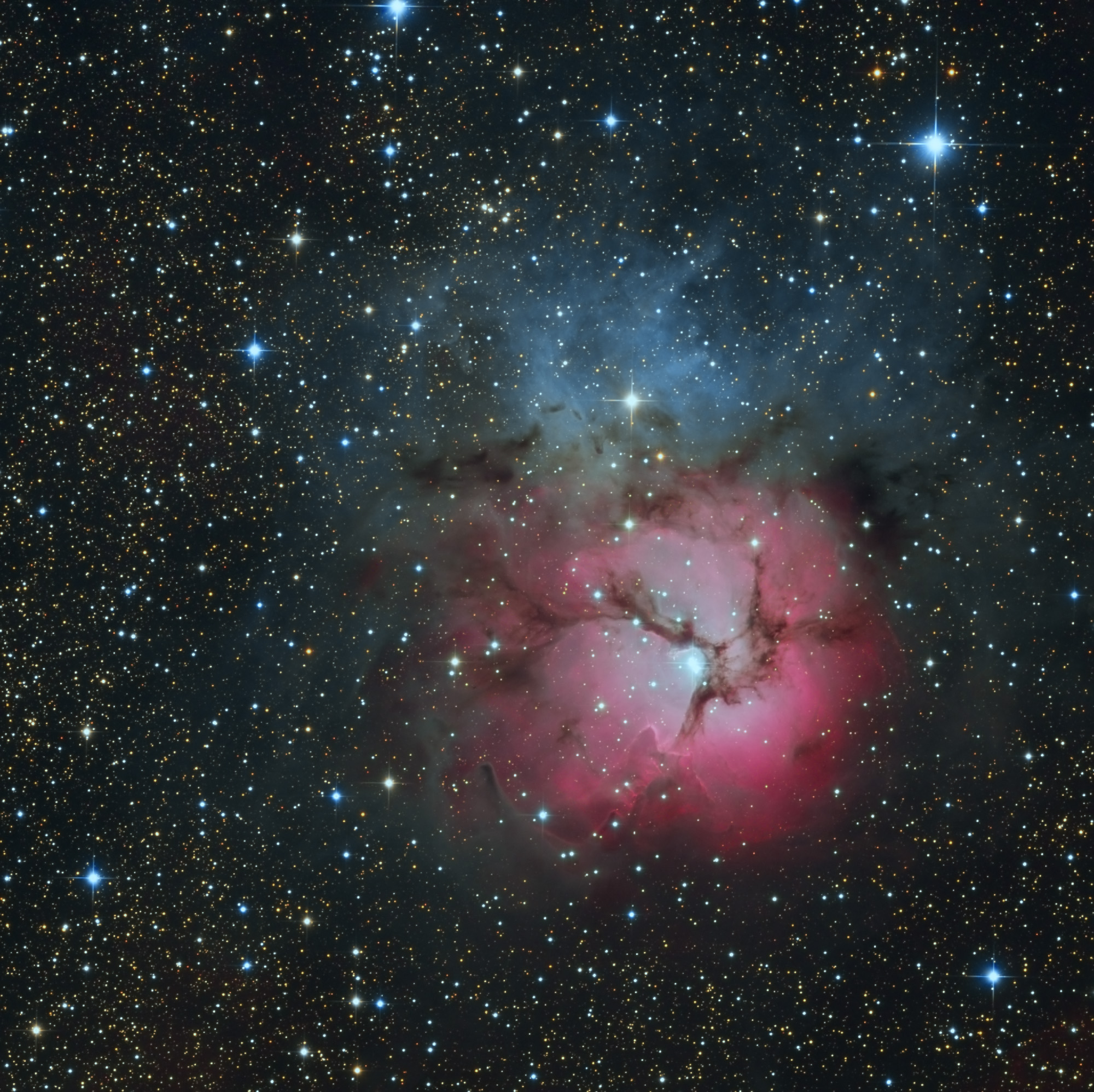


Image 2: Rosette Nebula, AutoIntegrate default process with some extra options was first run on this image and then the final image was created using Adobe Camera Raw Auto option. Image data from Telescope Live.
 

JimFox

Moderator
Staff member
Hey Jamor!

Welcome to FocalWorld! :)

And what a great way to introduce yourself.

These are both super cool images, and to think they were done with just a basic script in Pixinsight. I currently use DSS, but I know I need to start using Pixinsight soon. The horror stories about how hard Pixinsight is to use has definitely caused me to hold off on using it. Knowing there is a basic script like this available that works, and then I can go and start getting my feet wet safely.
 

AlanLichty

Moderator
Stunningly beautiful shots with wonderful details. I am not an astro photographer so I'll just appreciate the results you posted.
 

Ben Egbert

Forum Helper
Staff member
Welcome to Focal World, like Alan, I appreciate deep space images, but don't do them. What a wonderful way to start off here.
 

Jameel Hyder

Moderator
Staff member
Welcome to the forum !!

Very nice pair of images. The script doing the heavy lifting doe the post process is impressive.
 

jarmor

Active Member
Thanks for nice comments!

My background is with remote telescopes and some small experiments using my DSLR. I have no experience using the script with a non-remote telescope. I think the most common problem is how to recognize different files. I have tried to explain the rules in my AutoIntegrate Info page.

Sample images that I have included are of course those that seemed to work best with the script. You still need to work hard to get a good image.

And for those interested, here is a list of steps run by the script.

CosmeticCorrection
SubframeSelector
StarAlignment
ImageIntegration
LinearFit
ScreenTransferFunction
HistogramTransformation
MultiscaleLinearTransform
ChannelCombination
ColorCalibration
CurvesTransformation
LRGBCombination
SCNR
TGVDenoise
 

Yervant

Well-Known Member
I have developed an AutoIntegrate.js script that automates basic processing steps in PixInsight. Script takes calibrated image files, runs a basic PixInsight workflow and produces an (almost) final image. It works with both RGB and narrowband (HSO) data. Also camera RAW files can be used.

I think the script could be useful for someone just starting out with PixInsight and wanting an easy start before learning all the processes needed to create an image. It also suits well for lazy people like me :). For best results you obviously need careful manual processing as described in many good PixInsight tutorials.

I have attached two images that are created with AutoIntegrate script without any manual processing. Obviously you would like to further enhance them for example in PixInsight or Photoshop.
I have developed the script for my own use but I am sharing it in case someone else might find it useful. If you have any improvement ideas or if you find any problems please let me know!

I have more information and download link here: https://ruuth.xyz/AutoIntegrateInfo.html.

I have also a short YouTube video of the workflow: https://www.youtube.com/watch?v=ONmY5VHPTVo

Image 1: Trifid Nebula, AutoIntegrate default processing was used for this image. Image data from Telescope Live.


Image 2: Rosette Nebula, AutoIntegrate default process with some extra options was first run on this image and then the final image was created using Adobe Camera Raw Auto option. Image data from Telescope Live.

Well done on the pictures, processing and providing a script. My trial of PI just ran out and I'm thinking of purchasing the license. I'll scope out your video.
 

Yervant

Well-Known Member
Hey Jamor!

Welcome to FocalWorld! :)

And what a great way to introduce yourself.

These are both super cool images, and to think they were done with just a basic script in Pixinsight. I currently use DSS, but I know I need to start using Pixinsight soon. The horror stories about how hard Pixinsight is to use has definitely caused me to hold off on using it. Knowing there is a basic script like this available that works, and then I can go and start getting my feet wet safely.
(4) Mitch - YouTube He has a 12 part beginner series on PI that is great. I made up a step by step book of over 80 pages from his beginner series.
 

Mike Lewis

Staff Member
Jamor,

That sounds very interesting! I am putting the finishing touches on my next image (also the Rosette Nebula) that I just ran through PI. I typically perform a number of the steps you mention, although not always in the same order as you show. It would be fun to try out your script on some of my newest data. I will definitely check it out, along with the YouTube video link that you posted.
 

Mike Lewis

Staff Member
Jamor,

So after watching the YouTube, I played with your script - very slick piece of programming! I was able to run my Rosette NB Masters through the script in a very short period of time and get some informative results. I do have a question followed by a comment:

1) What does the script desire for input?
- I am guessing maybe Master input files (already calibrated, aligned and stacked master files for each channel) - that seemed to be what was being input in the YouTube video based on the number of input files passed to the script

- or do you pass raw capture frames for all the individual filters to this? (Kinda like the WBPP script...)

2) The buttons at the very bottom of the GUI dialog window in both columns are compressed and not very readable on my screen:

AutoIntegrate_ScreenCapture.JPG


I am running on a 4K monitor with the scale set top 175% for readability although setting scale to 100% did not seem to fix the problem.

This is very cool, thanks for sharing it. I do think it could prove to be very beneficial, especially for those new PixInsight users who are just starting out and feel overwhelmed...

ML
 

jarmor

Active Member
Hi Mike,

Thanks for testing! I am really happy to hear any feedback, good or bad, as I have a limited set of equipment and limited access to image data.

  1. Script takes calibrated images. So you need to work with your darks, flats, bias etc. before running the script. I have used it with my DSLR without those but you need to work hard to get anything useful out and you need to set some options like BackgroundNeutralization and ABE on combined image.

  2. Thanks for pointing out the GUI problem. I have had some problems with the dialog as I want fit all options in a single page. Previously I had a problem that the GUI did not fit into the Full HD screen. Now it looks like your resolution is too high :). I have used a fixed size for those two dialog button boxes (yes, a bad idea).

    I have pushed out a version 0.81 that should fix this problem.

Jarmo
 

jarmor

Active Member
Some more detailed comments on script input files. And apologies if my terminology is not correct as I have been using just remote telescopes. My understanding is that if you use filters, you typically get a number of images for each filter, like 20xL, 20xR, 20xG and 20xB. Then you calibrate those files with darks, flats, bias etc. and get the same number of calibrated files. These calibrated files are the ones that should be the input to the script, so the input to the script would be 20xL, 20xR, 20xG and 20xB calibrated files. With OSC it would be the same but input would be 20x calibrated color files. Script then does star alignment and other stuff to produce a stretched color image for further processing.

The video may actually be a bit misleading. The minimum set of files that I get with that specific remote telescope in one mission (time slot) is 1xL, 1xR, 1xG and 1xB. Typically you want something like five missions and you would use 5xL, 5xR, 5xG and 5xB.

Jarmo
 

Mike Lewis

Staff Member
Jarmo,

Excellent info - thanks! I have a data set that is next to be processed that I will pass thru your script and see how it goes. It is LRGB data instead of narrowband. As a former software engineer I may have to eventually dig into PI scripting after seeing how wonderfully useful a tool you have managed to create here. I have not messed with javascript but syntactically it doesn't look too 'greek' to me :)

In any case, thanks for the wonderful tool and the clarifications on how best to use it.

ML
 
Top Bottom