

Mike Lewis
Staff Member
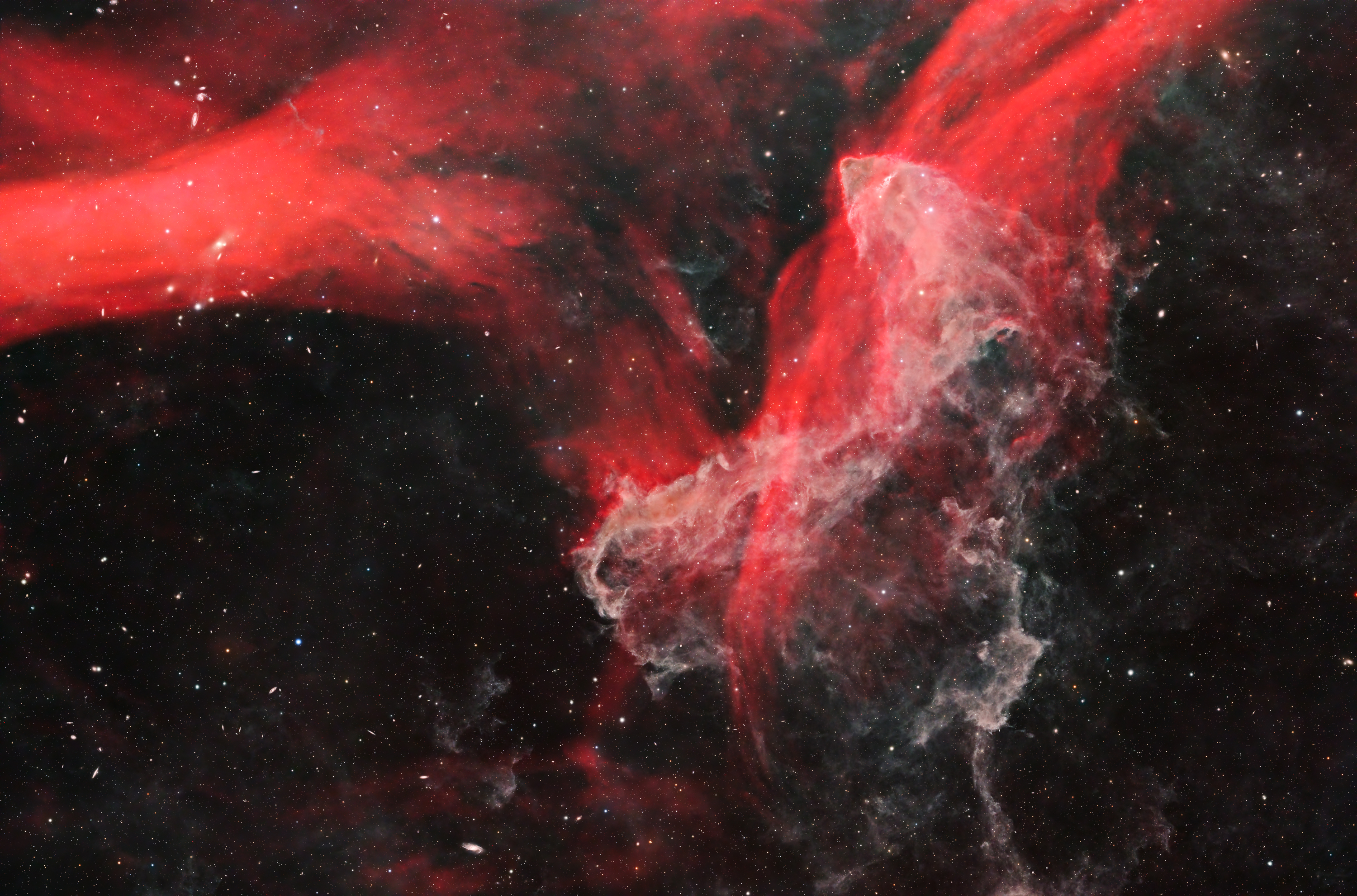
So this one has been fun. It is the first time in a while I really put time into collecting luminance data to bring out the details in the namesake part of the image. I also went deep on the Hα portion of the data collecting too, as it adds some much needed color to the final result I think. I was not prepared for the number of small galaxies in this region. Indeed, Star XTerminator had some trouble differentiating some of the larger stars that bloated a bit on the longer 10 minute subs from the many galaxies. The annotator in PixInsight found over 70 galaxies, and seemed to actually miss a couple too. But anyway, quite an interesting area of the sky.
Posting here before anywhere else, and without the initial expsoure data. But over 38 hours total, with almost 12 hours of just luminance data alone, as current conditions at my remote site at SFRO in TX have been super the last few nights right around the new moon.
The Gecko Nebula, designated as LBN 437, is a faint reflection cloud in the constellation Lacerta (the Lizard). Spanning roughly 1.25 degrees, it sits about 1,200 light-years away and is famously intertwined with the bright red hydrogen strands of the larger emission nebula Sh2-126.
Any feedback much appreciated.
ML
Posting here before anywhere else, and without the initial expsoure data. But over 38 hours total, with almost 12 hours of just luminance data alone, as current conditions at my remote site at SFRO in TX have been super the last few nights right around the new moon.
The Gecko Nebula, designated as LBN 437, is a faint reflection cloud in the constellation Lacerta (the Lizard). Spanning roughly 1.25 degrees, it sits about 1,200 light-years away and is famously intertwined with the bright red hydrogen strands of the larger emission nebula Sh2-126.
Any feedback much appreciated.
ML
