

Eric Gofreed
Well-Known Member
Also known as the Giant River Otter

The giant otter is found in South America's rivers and wetlands, including the Amazon, Orinoco, and La Plata basins. As the biggest member of the weasel family, it can grow up to six feet long, including its powerful tail, and weigh 50 to 70 pounds. These social animals live in family groups of up to 10 and are skilled hunters. Their diet mainly consists of fish like catfish and Piranhas, but they also eat crustaceans, small reptiles, and birds. They may hunt alone or in a group relying on teamwork and communication to catch their prey.
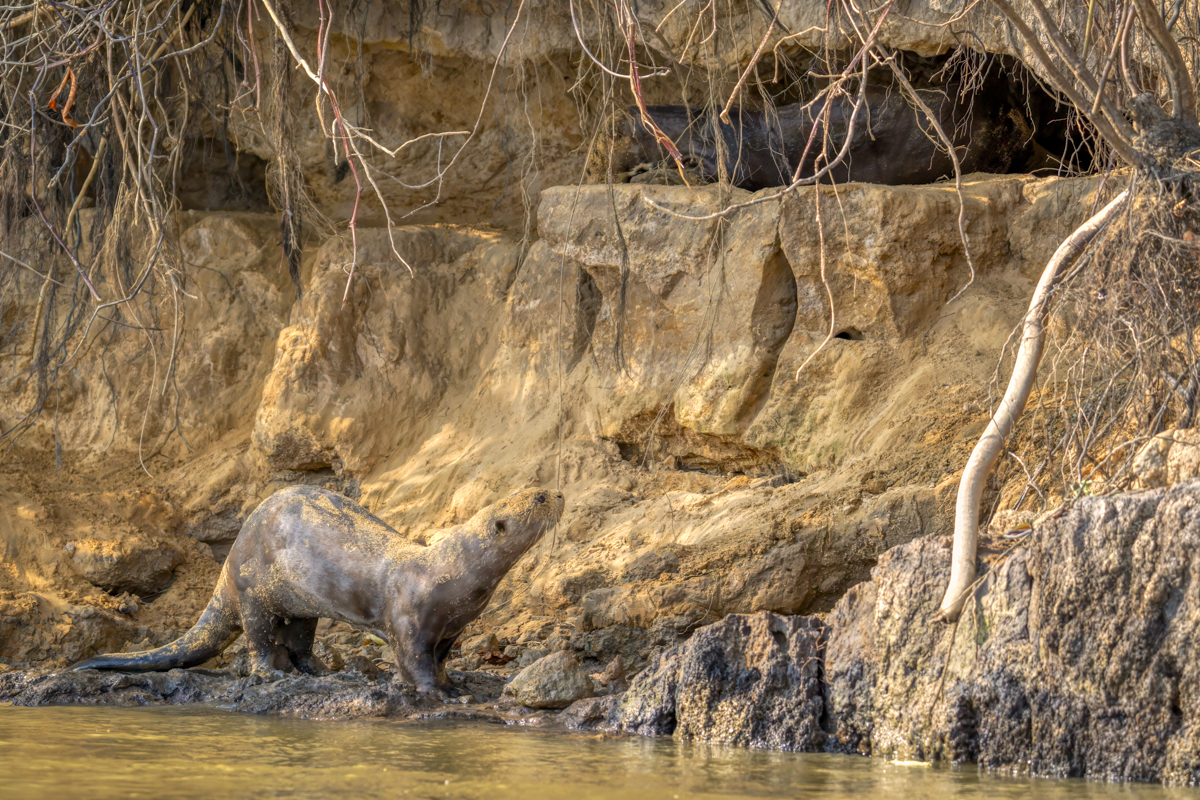
Giant otters are mainly aquatic, but they frequently come ashore for intriguing behaviors such as rolling in sand, often in areas where they have previously urinated. This behavior is believed to serve multiple purposes, including scent-marking their territory and potentially maintaining coat health by reducing parasites. They dig dens into riverbanks for shelter, raising young, and staying safe from predators like jaguars and caimans. These unique behaviors make them truly fascinating, but sadly, they face threats from habitat destruction and poaching.
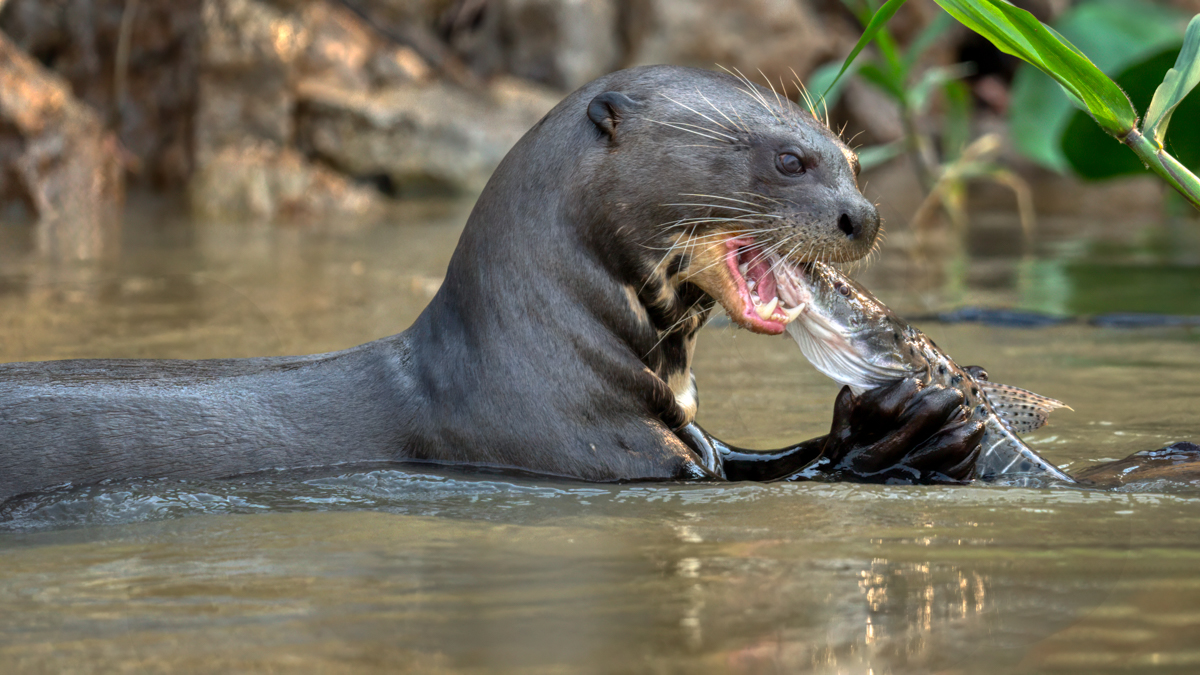
Giant otters eat their prey's face first. By starting at the head, otters can quickly disable their prey by crushing the fish's skull. This also ensures that the fish’s sharp fins, spines, or scales are swallowed in a more manageable way as the body follows head-first.
The giant otter is found in South America's rivers and wetlands, including the Amazon, Orinoco, and La Plata basins. As the biggest member of the weasel family, it can grow up to six feet long, including its powerful tail, and weigh 50 to 70 pounds. These social animals live in family groups of up to 10 and are skilled hunters. Their diet mainly consists of fish like catfish and Piranhas, but they also eat crustaceans, small reptiles, and birds. They may hunt alone or in a group relying on teamwork and communication to catch their prey.
Giant otters are mainly aquatic, but they frequently come ashore for intriguing behaviors such as rolling in sand, often in areas where they have previously urinated. This behavior is believed to serve multiple purposes, including scent-marking their territory and potentially maintaining coat health by reducing parasites. They dig dens into riverbanks for shelter, raising young, and staying safe from predators like jaguars and caimans. These unique behaviors make them truly fascinating, but sadly, they face threats from habitat destruction and poaching.
Giant otters eat their prey's face first. By starting at the head, otters can quickly disable their prey by crushing the fish's skull. This also ensures that the fish’s sharp fins, spines, or scales are swallowed in a more manageable way as the body follows head-first.


