

Bob Israel
Well-Known Member
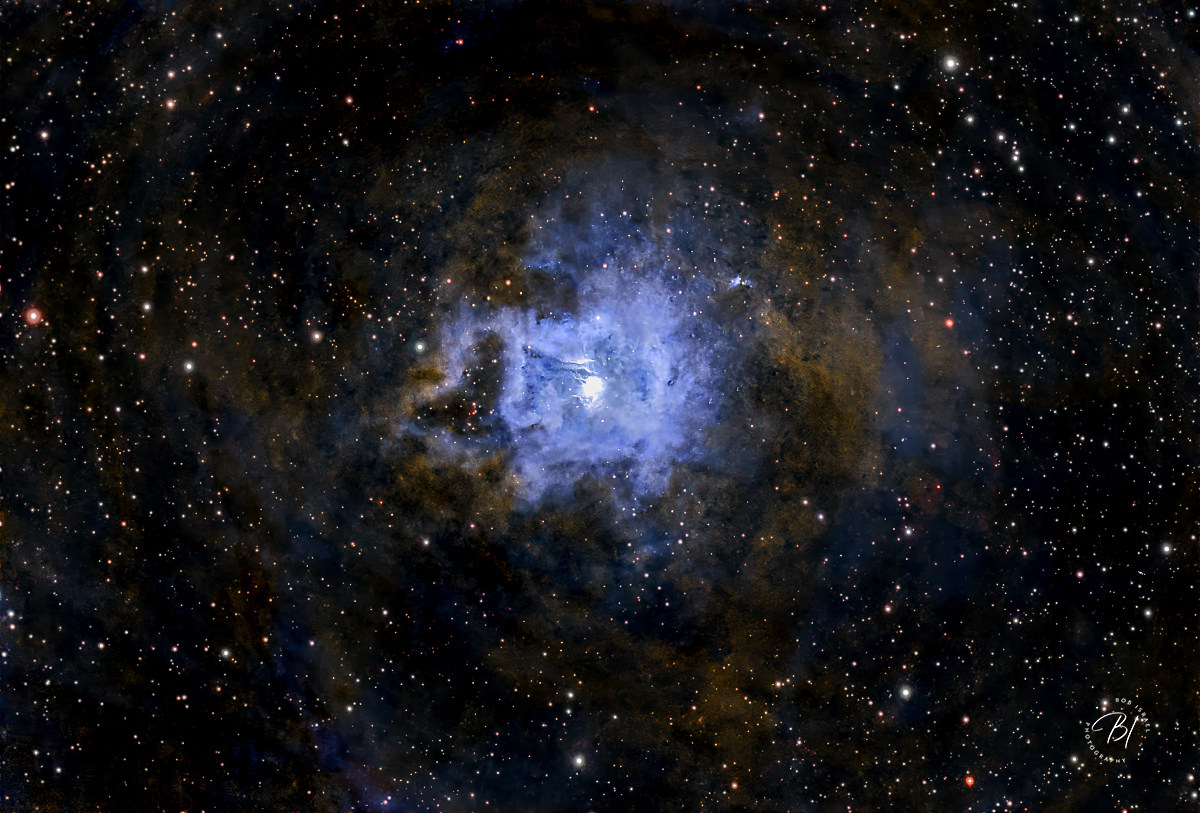
Posting this image while I know there are several things to improve. This image represents 4 hours of integration of 1440 10s images with the Celestron Origin. What I like about this scope is that I can schedule my imaging session which I did for this target. It was scheduled to start at midnight and run to 4am while I was sleeping. That worked well. However, I messed up and forgot to turn on "save individual raw images" so I was forced to use the stacked Tiff produced by the Origin.
The resulting image has a lot of field rotation artifacts which I expected at the edges but was evident surrounding the nebula as well. As a result, I needed to 'hide' these artifacts and therefore lost some surrounding dust. All that being said, I feel like I got something salvageable. It makes me wonder if I'm better off doing four 1hr sessions at the same time of day vs one 4hr session. I assume this is the result of an Alt-Az mount vs equatorial. In the future, Celestron plans to offer an EQ wedge for longer exposures.
4 hrs total integration
1440 images @ 10s each
Bortle 5 skies
Celestron Origin w/Nebula filter
Processed in Pixinsight from Origin Stacked Tiff
BXT, NXT, SXT
LrC, Topaz Photo AI
The resulting image has a lot of field rotation artifacts which I expected at the edges but was evident surrounding the nebula as well. As a result, I needed to 'hide' these artifacts and therefore lost some surrounding dust. All that being said, I feel like I got something salvageable. It makes me wonder if I'm better off doing four 1hr sessions at the same time of day vs one 4hr session. I assume this is the result of an Alt-Az mount vs equatorial. In the future, Celestron plans to offer an EQ wedge for longer exposures.
4 hrs total integration
1440 images @ 10s each
Bortle 5 skies
Celestron Origin w/Nebula filter
Processed in Pixinsight from Origin Stacked Tiff
BXT, NXT, SXT
LrC, Topaz Photo AI

