Lobster Nebula - OCI 1016

JimFox

Moderator
Staff member
I got the chance to run out to Joshua Tree NP to do some Deep Space Astro for a couple of nights. The Lobster Nebula was high on my list, but low in the sky. :rolleyes:

So I was not able to image it all night, but I got 4 hours of data between the 2 nights. I used my L-Enhance filter which is a 7nm NB filter. I tried to process this in the Hubble Palette, but no OIII (blue) showed up in it. Not sure if it got cut off by the L-Enhance filter, though it appears there isn't much there of it anyway. So I left this in the straight OSC (color) that comes from my color astro camera.

71 - Lights at 180 secs with the Optolong L-Enhance Filter
30 - Flats
30 - Dark/Flats
10 - Darks

iOptron Gem28
ZWO ASI2600mc Pro
ZWO 120mm Mini - Guide Camera
Askar Fra500
Stacked in Pixinsight
BlurXterminator
NoiseXterminator
StarXterminator
Processed in Pixinsight and Photoshop

All comments are welcome,

Jim
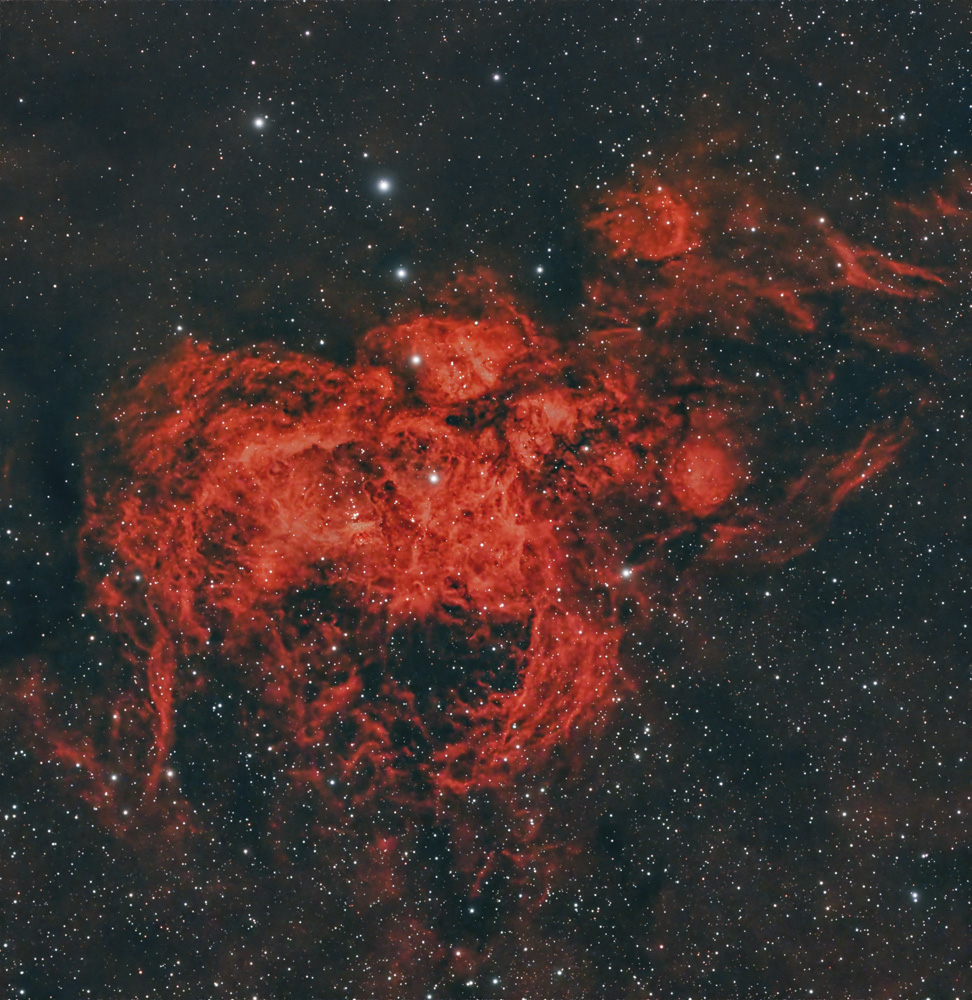
OCI1016_LobsterNebula_20230613_dw.jpg
 

JimFox

Moderator
Staff member
Where is my claw cracker and bowl of butter? :p

Nice palette.
Ha ha, thanks Alan. Now I am hungry! :)

While I like the various colors that can come from the Hubble Palette, there are times that I just enjoy the normal color camera Palette that is dominated by the Ha signal (Red).
 

kiwiapple

Well-Known Member
What a cool image! It’s interesting to see how it looks with an OSC compared with monochrome—and how it seems the Earth might actually be spherical after all, since for me this object is fairly high in the sky…. ;-)
 

Mike Lewis

Staff Member
Jim,

As stated above, sometimes the RGB 'natural capture' look is refreshing and appropriate. The trick is being able to pivot away from the look you thought you were going after and just go with what the data wants to give you. That often means data that was taken that isn't used, but it also often results in a better image. I'm still training myself to do this :)

This image looks great - lots of detail even in the outer regions. You are getting some nice work done under those dark skies for sure.

ML
 

JimFox

Moderator
Staff member
What a cool image! It’s interesting to see how it looks with an OSC compared with monochrome—and how it seems the Earth might actually be spherical after all, since for me this object is fairly high in the sky…. ;-)
Wait... wait.... you mean? The earth isn't flat??? Oh well, back to the drawing board. ;)

Thanks so much James, I am glad you liked this! It's fun that I am still able to capture new to me objects, that after 3 years of Deep Space Astro I haven't run out of objects in the sky.
 

JimFox

Moderator
Staff member
Jim,

As stated above, sometimes the RGB 'natural capture' look is refreshing and appropriate. The trick is being able to pivot away from the look you thought you were going after and just go with what the data wants to give you. That often means data that was taken that isn't used, but it also often results in a better image. I'm still training myself to do this :)

This image looks great - lots of detail even in the outer regions. You are getting some nice work done under those dark skies for sure.

ML
I appreciate that Mike, I am glad it turned out well.

My intention, or thought to get more life out of my Deep Space Objects was to process them 1st as OSC and Ha dominant, and then later going back and processing it in the Hubble palette. So I get a 2 for 1 deal. With limited days to be able to get out and image, that seems like a good idea. But often once I saw the Hubble palette version, I would just not post the normal OSC version. I need to stay more disciplined with that.
 

Mike Lewis

Staff Member
I appreciate that Mike, I am glad it turned out well.

My intention, or thought to get more life out of my Deep Space Objects was to process them 1st as OSC and Ha dominant, and then later going back and processing it in the Hubble palette. So I get a 2 for 1 deal. With limited days to be able to get out and image, that seems like a good idea. But often once I saw the Hubble palette version, I would just not post the normal OSC version. I need to stay more disciplined with that.
Agree. When it comes to nebula based targets they are almost always very different and accentuate and highlight different parts of the objects you are imaging in different ways. Both versions can be interesting in their own right.

ML
 

JimFox

Moderator
Staff member
Agree. When it comes to nebula based targets they are almost always very different and accentuate and highlight different parts of the objects you are imaging in different ways. Both versions can be interesting in their own right.

ML
Hey Mike. If you get a chance to image this, I would love to see how it would look coming from a Mono Camera.
 
Top Bottom