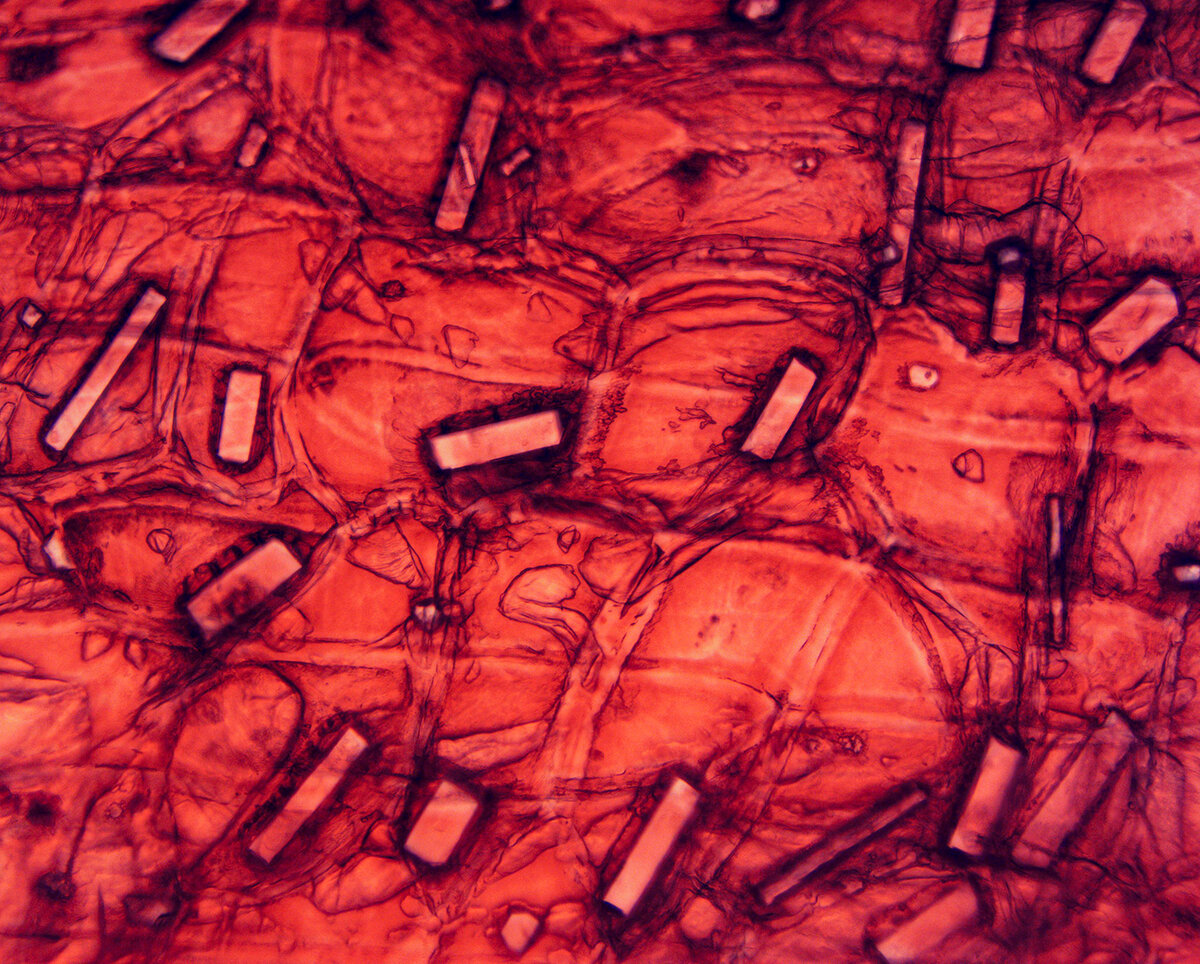
Spanish Onion

AlanLichty

Moderator
Brings new meaning to the word "abstract". No way I could have guessed what this was without your description.

It does make a nice abstract :)
 

JimFox

Moderator
Staff member
Wow Tom. That is so interesting. I also would never think anything about an onion would involve rectangles.
 

gardenersassistant

Well-Known Member
Gosh. That is intriguing. And striking as an image too. I like that a lot.

Would you be willing to share some information about what is involved in creating such images?
 

Tom Narwid

Well-Known Member
Gosh. That is intriguing. And striking as an image too. I like that a lot.

Would you be willing to share some information about what is involved in creating such images?
Thanks for your comments. Both images were recorded with a Amscope Microscope an either a Plan40 or Plan50 objective with transmitted light (not reflected light).
Small samples were cut from the skin placed on a slide and oil was added to help flatten the sample. Cover slide was then applied. Camera is a Amscope 14 Mp camera and is operated with their proprietary software which is excellent. This microscope is very versatile as it does both reflected light (good for metallurgical samples) and transmitted light whis is good for biological and transparent/translucent subjects. Due to virtually no depth of field at these magnifications many objects have to be focus stacked.
My set up was ~$1300 new. You are a very accomplished photographer so this would be a "walk in the park" for you.
 

gardenersassistant

Well-Known Member
Thanks for your comments. Both images were recorded with a Amscope Microscope an either a Plan40 or Plan50 objective with transmitted light (not reflected light).
Small samples were cut from the skin placed on a slide and oil was added to help flatten the sample. Cover slide was then applied. Camera is a Amscope 14 Mp camera and is operated with their proprietary software which is excellent. This microscope is very versatile as it does both reflected light (good for metallurgical samples) and transmitted light whis is good for biological and transparent/translucent subjects. Due to virtually no depth of field at these magnifications many objects have to be focus stacked.
My set up was ~$1300 new. You are a very accomplished photographer so this would be a "walk in the park" for you.
Thanks so much for explaining that Tom. I've often wondered how that sort of thing was done. I think I might explore it.

I hope this isn't asking too much, but I have lots of questions. [EDIT: I'm finding lots of good and very well presented information on the Amscope web site, which I think is going to answer pretty much all of these questions. ]

Is there any basic introduction to the technique/equipment that you are aware of?

Would this be the sort of thing? https://amscope.co.uk/products/amsc...-kohler-lab-research-microscope-18mp-camera-1

I can't tell if it has reflected illumination. I see this:
  • Illuminator: Built-in Kohler 3W LED illumination system
  • Condenser: N.A. 1.25 Abbe
  • Illumination: Kohler, 3W LED
Is this all to do with transmitted illumination, or is one of them reflected illumination?

Are the Amscope user manuals any good?

Apart from slides, are there any extras that are needed?
 
Last edited:
Top Bottom