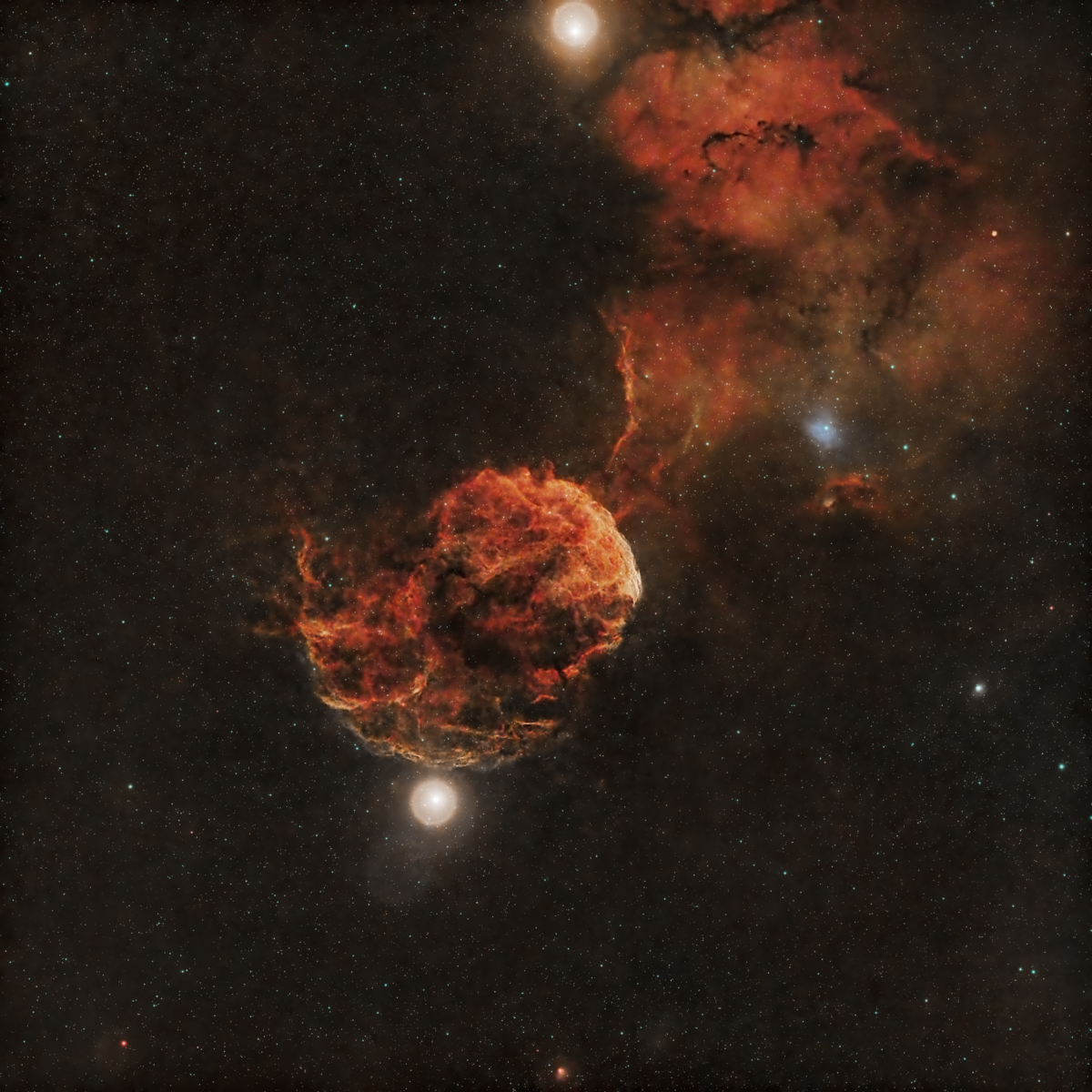
I also use Bill Blanshan's star reduction Pixel math scripts, they are the best thing out there, and now combined with BlurXterminator run early in your post processing flow are a really effective combo to star reduction. That being said, once you get REALLY bright stars in the FOV even these tools cannot really control them to the same degree as the dimmer stars in your image.
I have taken to recording completely separate data in RGB for my stars. I started with this just because I didn't like the look of the narrowband palette star colors, and all the classical workarounds for that seemed to me to be tedious and unsatisfactory. But I quickly realized that a side effect of this approach is that you can under-stretch your star data and get not only more colorful RGB stars to add back in to your image but also naturally smaller stars as well. This has allowed me to use a finer touch on the star reduction later. While this partially mitigates the issue you are mentioning with very bright stars, it still does not bring those really bright ones down to a level that blends in to the rest of the star field. On balance though I really like the colorful smaller stars I get from this approach. It only takes like ~30 mins of total integration using like 30 sec subframes to get enough data for this usijng my mono setup. You can experiment with the 533C and see what you think.
At the end of the day though, I think really bright stars can look ok with the type of treatment you have above, as long as you don't have a large number of them in the FOV.
All a long winded way of saying, '
No, I don't have a better approach once the star gets to be this bright..."

ML