

Douglas Sherman
Staff
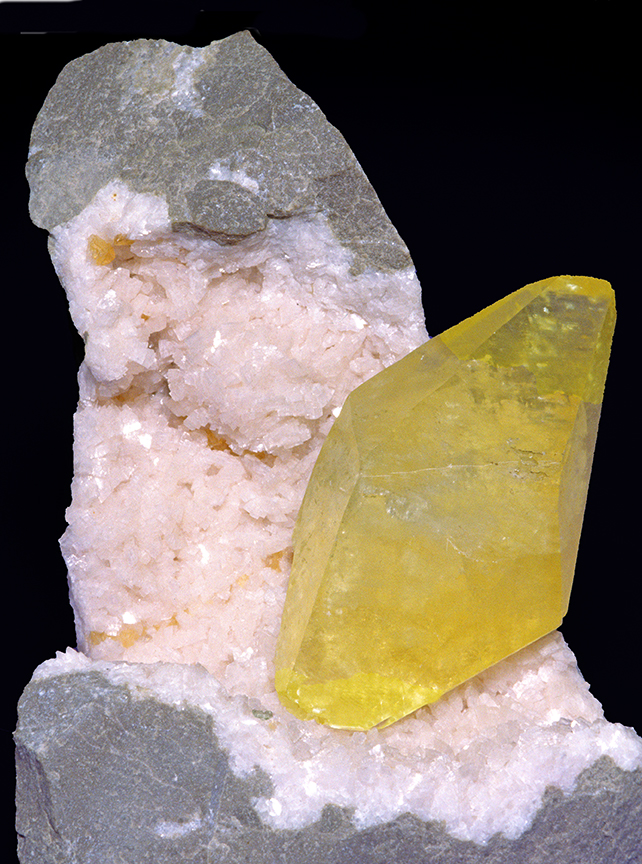
Open spaces in limestone and dolostone are called vugs. These open spaces allow the deposition of minerals from solutions which percolate into the cavities. Here is one that is covered with pink dolomite crystals with one large calcite crystal forming last.
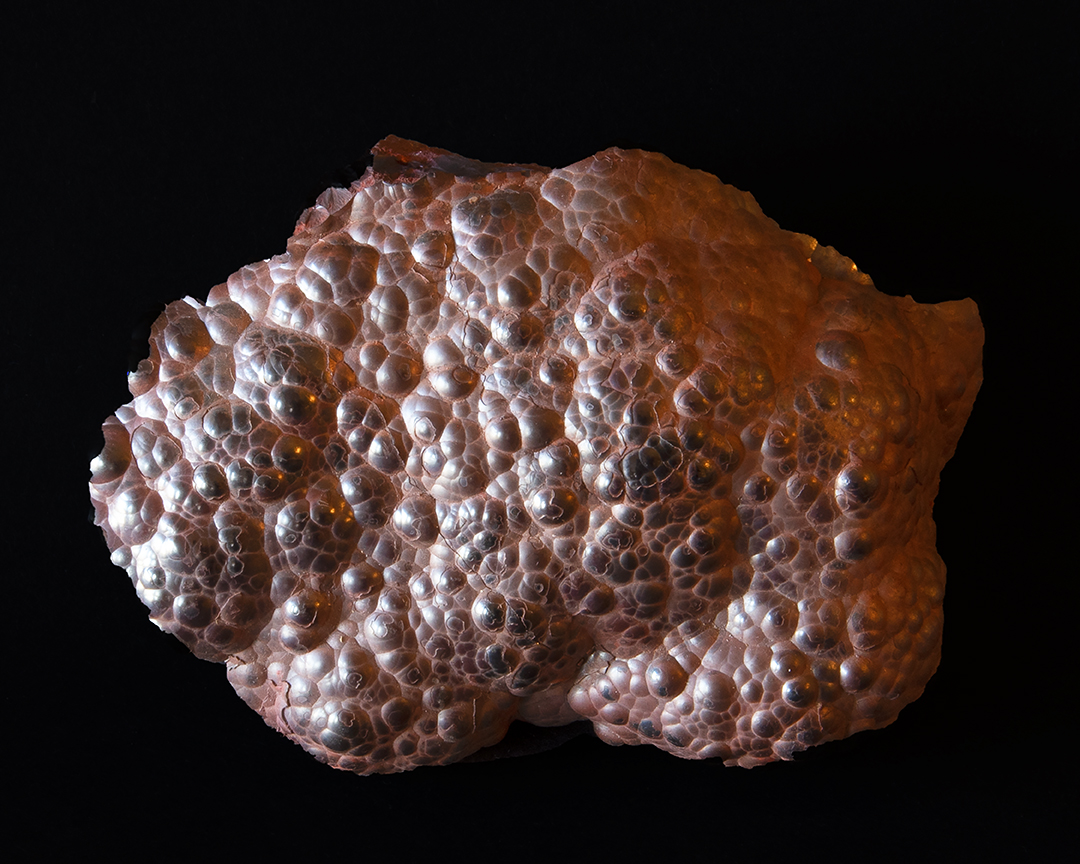
Hematite is usually a dark to light gray, unremarkable mineral. This particular specimen is called Botryoidal Hematite. Only a few minerals display this structure. It occurs when there are many small nuclei available as crystal growth sites which prevents the formation of sharp crystals. Thus, mounds form rather than distinct crystal shapes. The word botryoidal comes from the Greek meaning grapes.
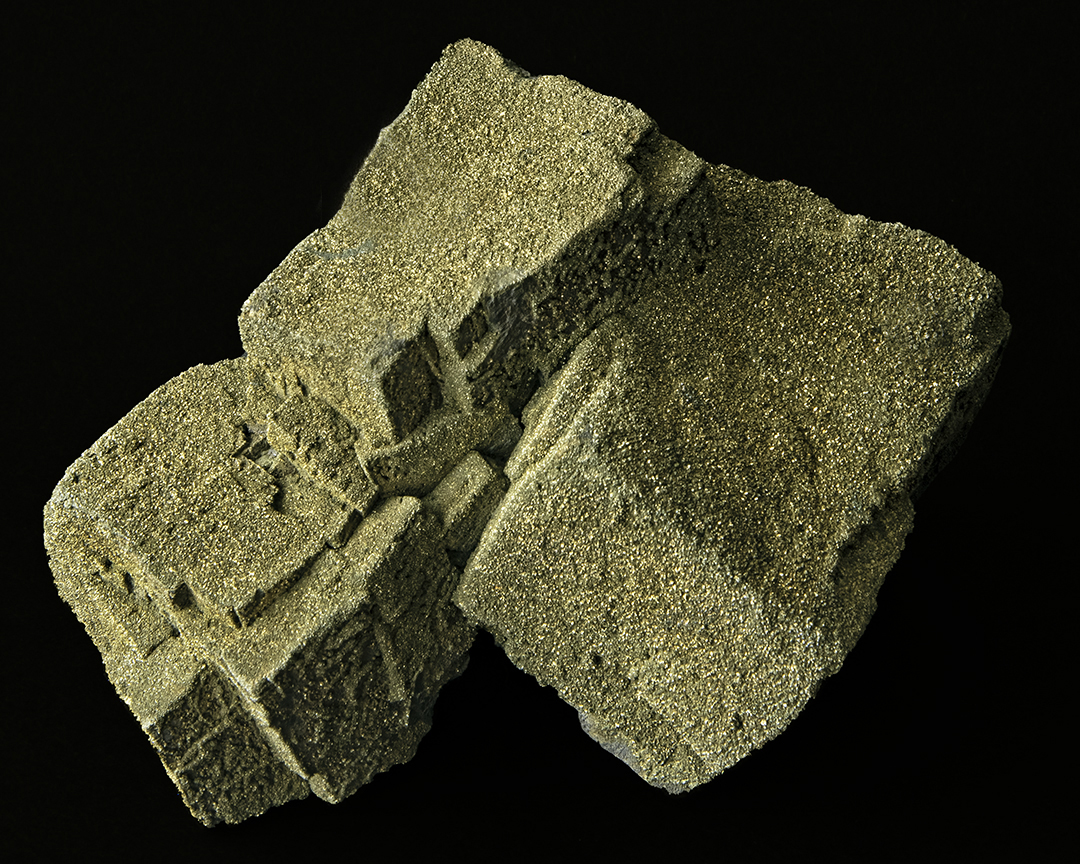
Cubic Galena crystals coated with tiny pyrite crystals.
Hematite is usually a dark to light gray, unremarkable mineral. This particular specimen is called Botryoidal Hematite. Only a few minerals display this structure. It occurs when there are many small nuclei available as crystal growth sites which prevents the formation of sharp crystals. Thus, mounds form rather than distinct crystal shapes. The word botryoidal comes from the Greek meaning grapes.
Cubic Galena crystals coated with tiny pyrite crystals.

 I like the crystal "grapes" in the second image showing a degree of translucency without the angular edges.


