

Douglas Sherman
Staff
I am sorry this is so late, but I had to find some images online and the search was arduous. Last Monday I promised to show you the difference between gold and "fool's gold" (pyrite). Believe it or not the easiest way to tell the difference is by the color of the specimen. Fool's gold is a brassy yellow color and gold is the color you see in gold jewelry. The second tipoff is the association of minerals with the specimen. Pyrite is an iron sulfide mineral; thus, it is often found in association with other sulfide minerals such as sphalerite and galena. It can also be found with quartz, but the other sulfide minerals re still present. Gold is typically associated with quartz. Both quartz and gold are found in the very last fluids associated with the cooling of magma after other minerals have already crystalized out. Thus, it is usually found in quartz veins injected into other rock materials.
The specimen I have has small clusters of gold throughout and I am showing you images of some of those clusters. I am also going to show you some specimens that are not mine that display some of the other characteristic forms of gold.
First, pyrite crystals. Notice the brassy yellow color and cubic crystals. You can also see sphalerite (the dark crystals) with which it is associated. If you scratch this mineral on a porcelain streak plate it will leave a black streak. Gold leaves a gold streak.

My gold specimen is in a palm sized chunk of quartz. This specimen is littered with gold and if you had a mine full you would be very well off.
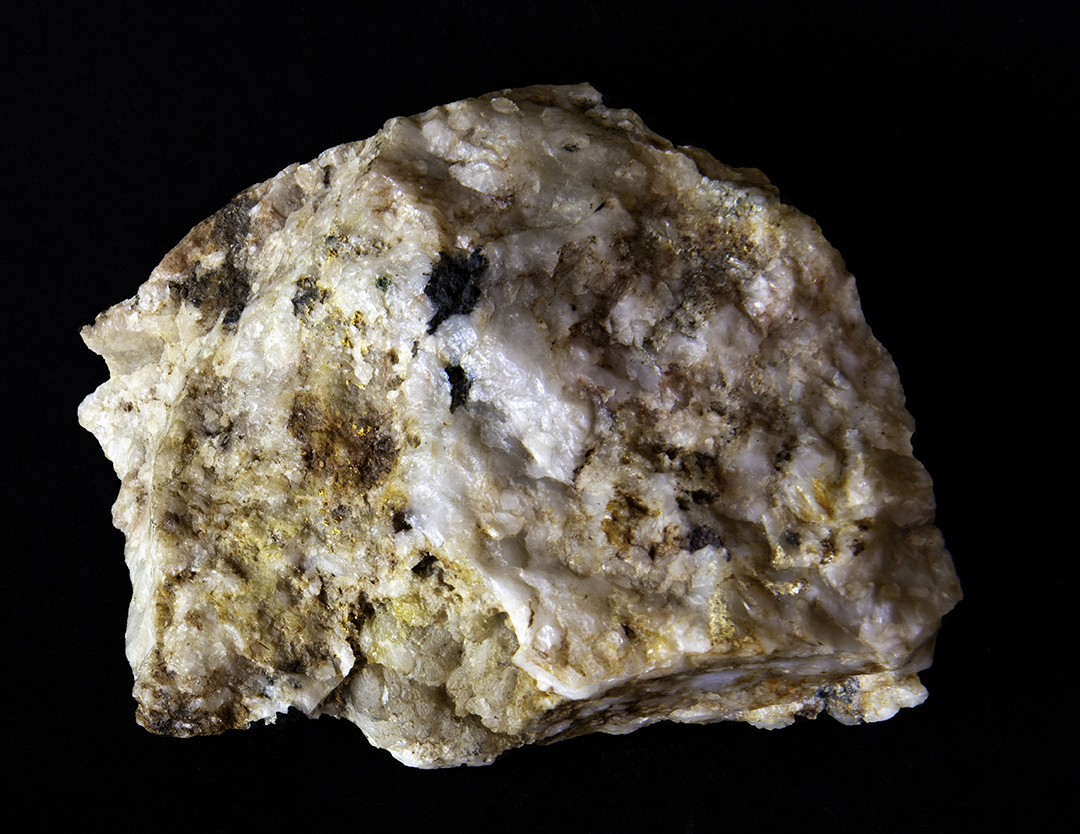
Here is a close-up of a section from the above specimen. You should be able to identify its location on the specimen above. Hint: it on the left side of the specimen.
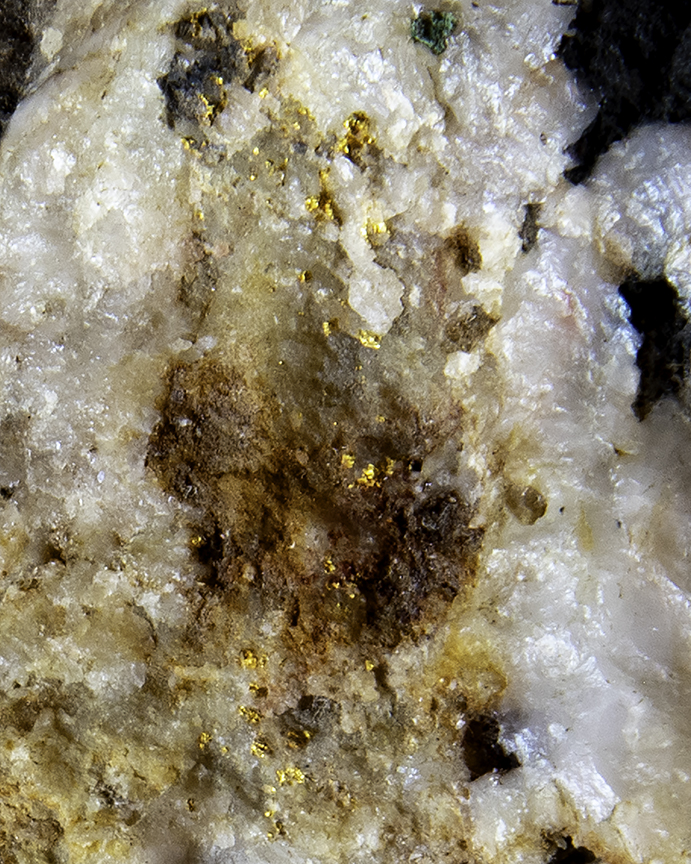
Here is a bigger chunk of gold from the other side of this specimen.
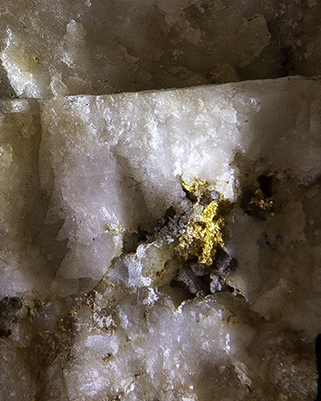
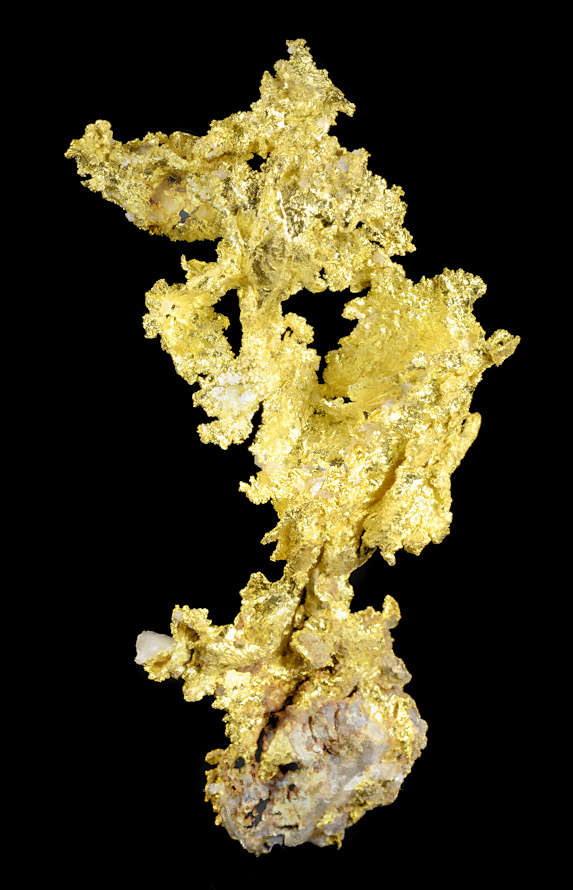
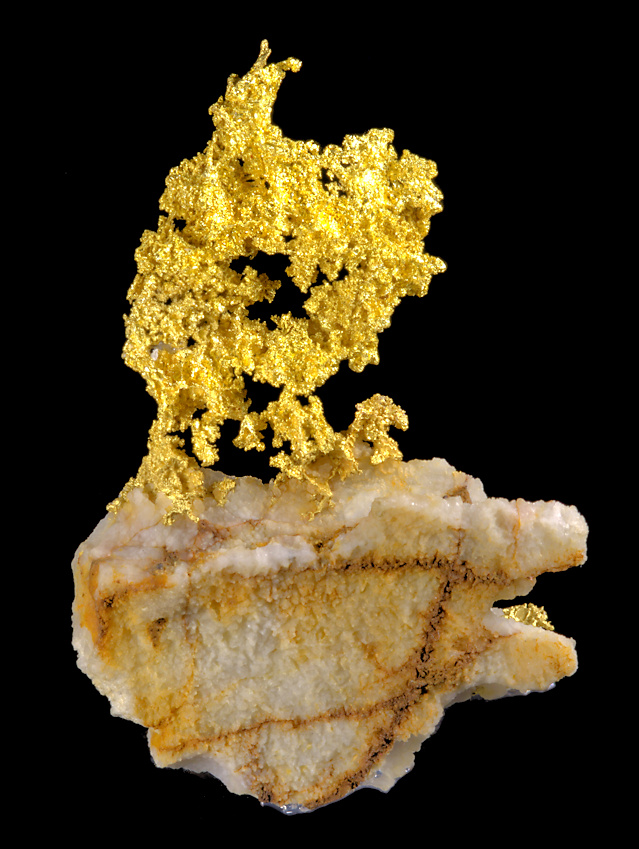
Here are some specimens of gold showing the variety of ways in which it can be found. I do not own these specimens. These are owned by Keven Ward.
Placer gold: this was eroded out of the rock in which it formed and rounded during transfer by a stream. These are typically found in potholes within the stream. Because gold is heavy it will settle out in potholes while lighter particles are carried along by the swift currents.
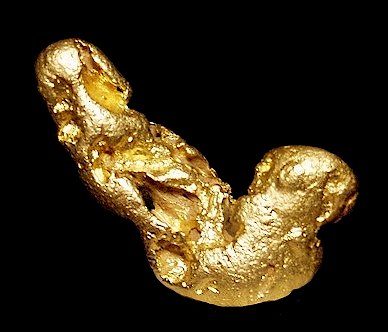
Gold crystals have formed in the last two specimens.
The specimen I have has small clusters of gold throughout and I am showing you images of some of those clusters. I am also going to show you some specimens that are not mine that display some of the other characteristic forms of gold.
First, pyrite crystals. Notice the brassy yellow color and cubic crystals. You can also see sphalerite (the dark crystals) with which it is associated. If you scratch this mineral on a porcelain streak plate it will leave a black streak. Gold leaves a gold streak.
My gold specimen is in a palm sized chunk of quartz. This specimen is littered with gold and if you had a mine full you would be very well off.
Here is a close-up of a section from the above specimen. You should be able to identify its location on the specimen above. Hint: it on the left side of the specimen.
Here is a bigger chunk of gold from the other side of this specimen.
Here are some specimens of gold showing the variety of ways in which it can be found. I do not own these specimens. These are owned by Keven Ward.
Placer gold: this was eroded out of the rock in which it formed and rounded during transfer by a stream. These are typically found in potholes within the stream. Because gold is heavy it will settle out in potholes while lighter particles are carried along by the swift currents.
Gold crystals have formed in the last two specimens.


