
Craig Zerbe
Well-Known Member
Taken in Oregon 2001 - a few minutes before Saturn disappeared behind the moon.
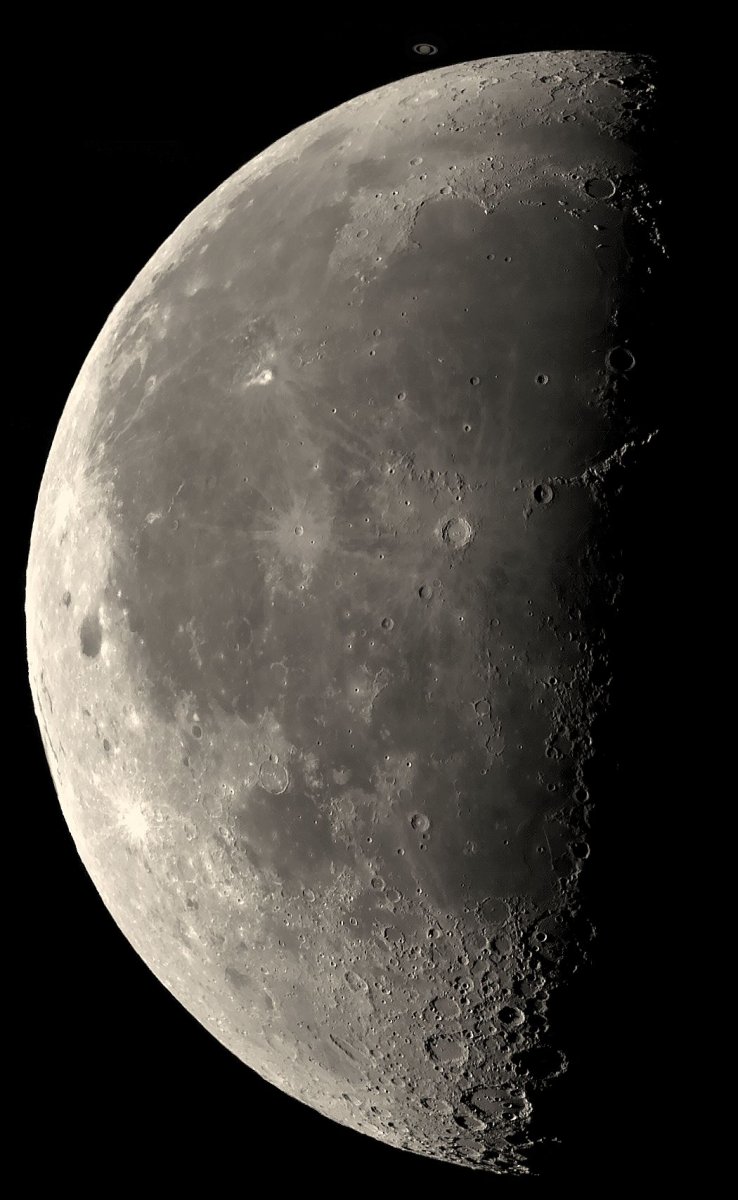


Craig,Taken in Oregon 2001 - a few minutes before Saturn disappeared behind the moon.
View attachment 15609


This is the camera I used https://astromart.com/auctions/astromart-auctions/ccd-cameras-astro/show/astrovid-2000-ccd-imaging-system-free-shipping-mint-1446 Mike, I am sure they have something much better now. It is just B&W, which I am sure helps. Here is a video from a few years ago on YouTube that will give you an idea the the "seeing" I was getting. The "full" moon images were mosaics I would put together. I would scan over the moon, taking a few seconds of video of each area and then use the telescope remote to move to the next area. The video camera had a 1.25" nose, so it plugged in just like an eyepiece would. I am sure it would be a lot easier today with direct digital storage and an HD or even 4K chip instead of 640 x 480. My Celestron 11" diameter Celestron SCT telescope of course, gathers a huge amount of light, so I am sure that kept the gain (ISO) down. My tripod was over 50lb and very sturdy. Before Registax software I would stack 10-16 images, as even that was manual and time consuming. That reduced video noise some but not nearly as well as stacking 200 images, which I used for the really high rez stuff. This "full" moon is probably 10-16 images stacked for each section with about 20 individual puzzle pieces. It does not take great seeing to get a full moon mosaic. On omy really high rez stuff, I would get maybe 3-4 nights a year that were truly special and pushed the limits of land based resolution. I have plenty of other images, from the old days I may occasionally post, but look at the YouTube video.Craig,
Your moon images are so crisp they look like they were taken outside of the Earth's atmosphere. You must have some pretty good seeing to start with at your location? Regardless, you are really diminishing any seeing effects masterfully in these moon images. remind me again of what you are shooting with here, camera and OTA-wise? Great timing too to get Saturn peeking out from the edge of the moon like that.
A phenomenal image in every way.
ML
Craig,This is the camera I used https://astromart.com/auctions/astromart-auctions/ccd-cameras-astro/show/astrovid-2000-ccd-imaging-system-free-shipping-mint-1446 Mike, I am sure they have something much better now. It is just B&W, which I am sure helps. Here is a video from a few years ago on YouTube that will give you an idea the the "seeing" I was getting. The "full" moon images were mosaics I would put together. I would scan over the moon, taking a few seconds of video of each area and then use the telescope remote to move to the next area. The video camera had a 1.25" nose, so it plugged in just like an eyepiece would. I am sure it would be a lot easier today with direct digital storage and an HD or even 4K chip instead of 640 x 480. My Celestron 11" diameter Celestron SCT telescope of course, gathers a huge amount of light, so I am sure that kept the gain (ISO) down. My tripod was over 50lb and very sturdy. Before Registax software I would stack 10-16 images, as even that was manual and time consuming. That reduced video noise some but not nearly as well as stacking 200 images, which I used for the really high rez stuff. This "full" moon is probably 10-16 images stacked for each section with about 20 individual puzzle pieces. It does not take great seeing to get a full moon mosaic. On omy really high rez stuff, I would get maybe 3-4 nights a year that were truly special and pushed the limits of land based resolution. I have plenty of other images, from the old days I may occasionally post, but look at the YouTube video.


