

Mike Lewis
Staff Member
So I think one of the best things about FocalWorld is the great resource that we have here of talented, experienced, and helpful photographers of almost every genre. This comes in handy when one's outing does not produce the results hoped for, as there is almost always at least someone here who is able to chime in with some good input on improving things for the future. So in that spirit I am posting 3 images from my night recent out in RMNP trying to get some images of the Perseids this year. I have 2 versions of my final composite image to show, as well as a single 'raw' frame that illustrates the conditions and colors I was seeing right out of the camera. I feel like for me this represents an improvement over past efforts at shots like this, while still falling far short of where I eventually want to get to.
Background:
The next 2 images are composites, with a single frame as the background and then all the meteors added by layer masking in Photoshop. The first version I did I did not like the way the white balance edits to the images seemed to destroy the natural color I had captured for the meteors themselves. I also realized I wanted to pick one of images that had M31 showing as the frame for the background (M31 rotated out of the FOV as the night wore on...). Here is that 1st version.
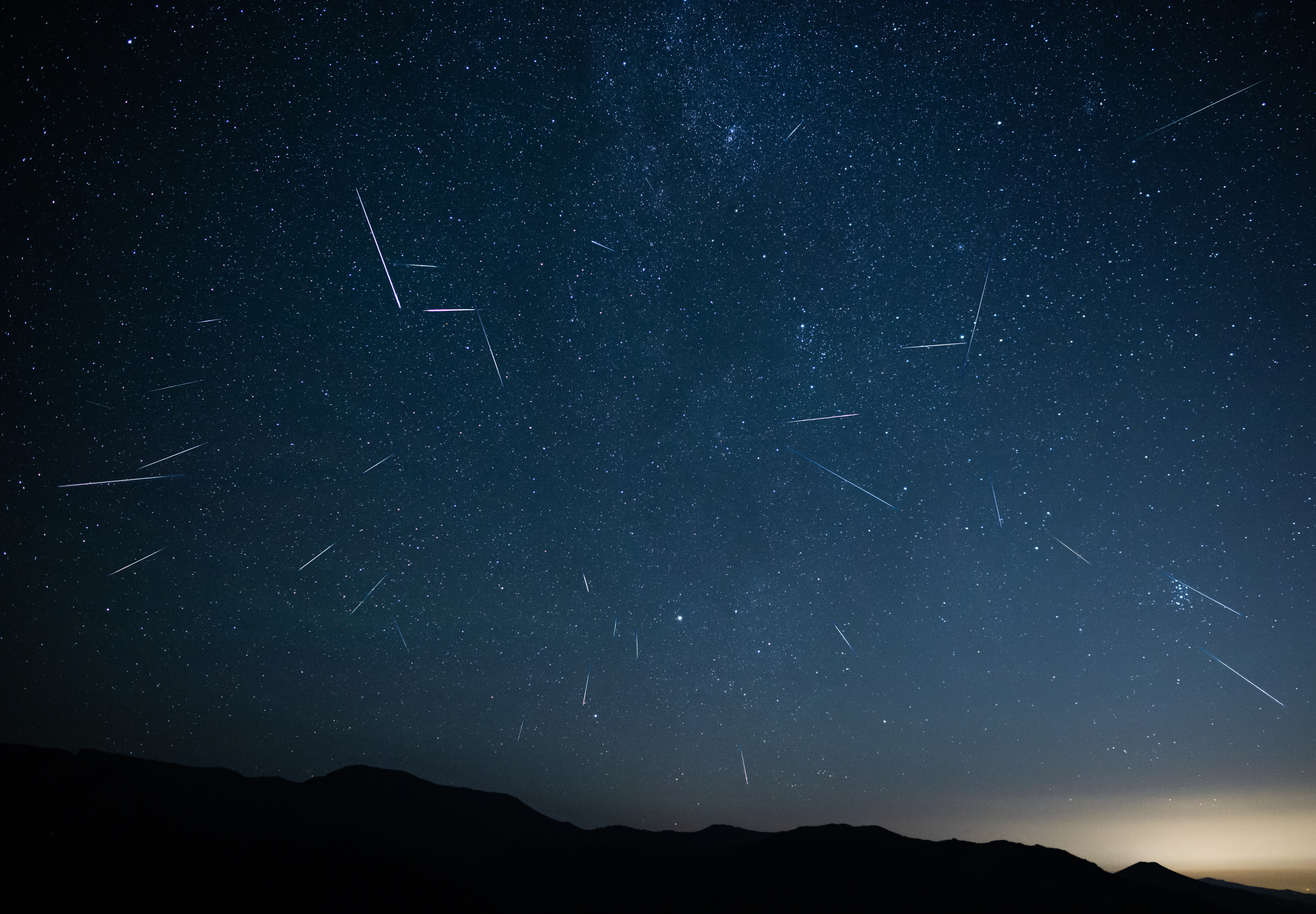
I went back and reworked the image to try to keep the meteor colors while still ending up with the background frame having a decent color to the sky. This was much more challenging, but here is the result from that set of edits:
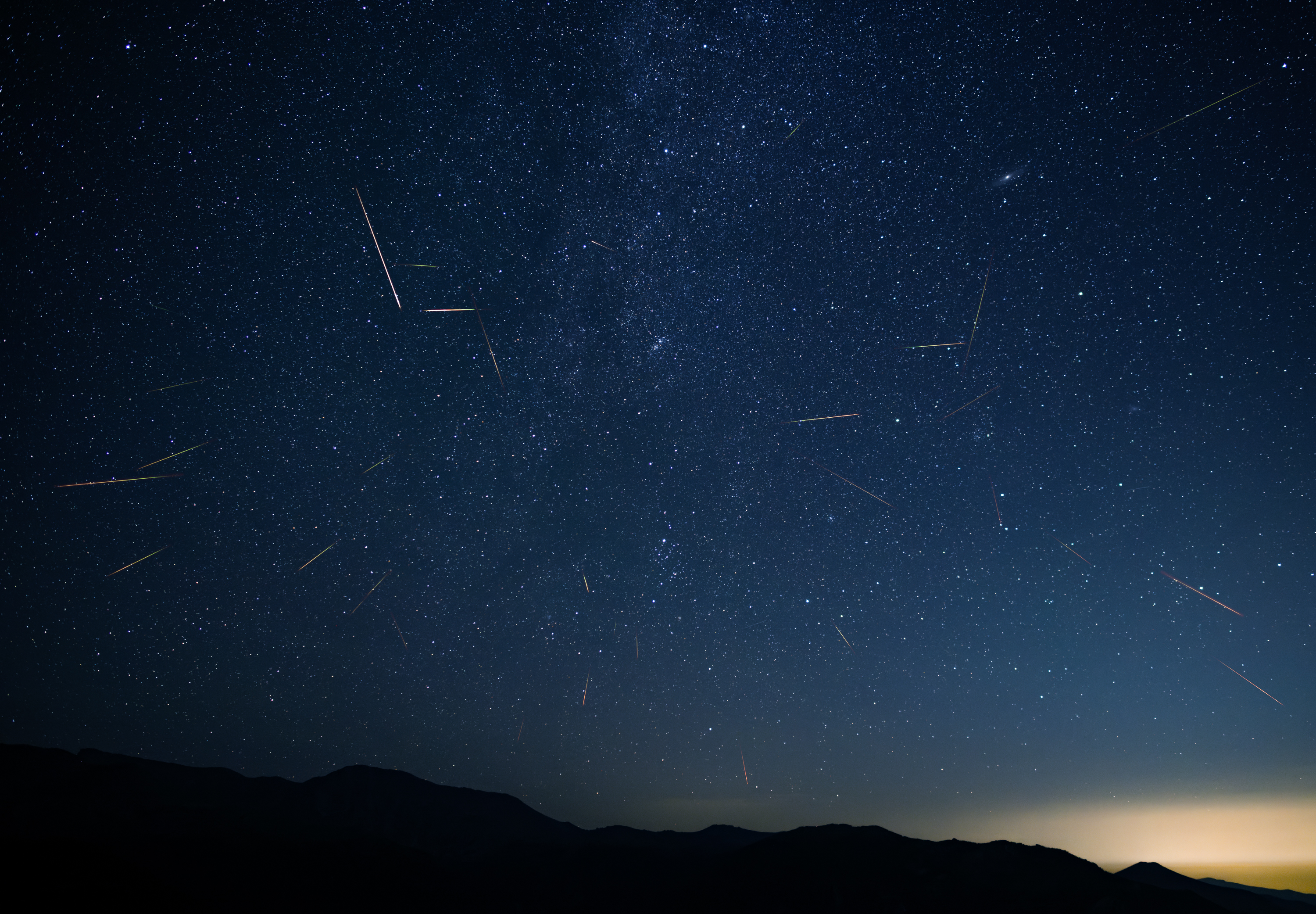
The 2nd image, with the more pronounced meteor colors really does represent the meteor color captured right out of the camera. But also right out of the camera the sky had that characteristic brown coffee look to it from light pollution. Here is a single frame to show what I mean:

So I consider this to be another learning experience image, and not anything too impressive. I would love to get some feedback from those at FW more experienced with these type of images.
I ended up with over 700 frames from the outing - I may try to make them into a time-lapse at some point in the future. Of course, the meteors will go by so quickly as to be invisible, but the sky motion might be pretty cool anyway.
ML
Background:
- I planned on getting up to Rainbow Curve in RMNP to shoot some of the Perseids. This seemed like a decent location, although in practice there was some strong light pollution from the cities out to the east of the park.
- I had 2 lens choices, a 24mm f/1.4 Rokinon (not really as wide as I wanted) and my EF 16-35 f/4 zoom (not really as fast as I wanted). I went with the Rokinon.
- I went with 8 seconds at ISO 4000. I probably could have pushed both of those a little harder, but I am really a stickler for round stars and am new to having a camera with decent high ISO so I was being overly conservative there.
- I could not get out on the peak night for the shower, ands so I had what were greatly reduced rates over what would have been possible to see the night before. Additionally, the night I got out Friday night/Saturday morning) I had a commitment until about 9 pm in Loveland, so did not get up to the park and all set up until well after dark at about 11:15. This prevented me from really setting up much of a composition or from getting any sort of an initial foreground exposure prior to full darkness. The moon was setting just as I arrived so no moonlight in the shot.
The next 2 images are composites, with a single frame as the background and then all the meteors added by layer masking in Photoshop. The first version I did I did not like the way the white balance edits to the images seemed to destroy the natural color I had captured for the meteors themselves. I also realized I wanted to pick one of images that had M31 showing as the frame for the background (M31 rotated out of the FOV as the night wore on...). Here is that 1st version.
I went back and reworked the image to try to keep the meteor colors while still ending up with the background frame having a decent color to the sky. This was much more challenging, but here is the result from that set of edits:
The 2nd image, with the more pronounced meteor colors really does represent the meteor color captured right out of the camera. But also right out of the camera the sky had that characteristic brown coffee look to it from light pollution. Here is a single frame to show what I mean:
So I consider this to be another learning experience image, and not anything too impressive. I would love to get some feedback from those at FW more experienced with these type of images.
I ended up with over 700 frames from the outing - I may try to make them into a time-lapse at some point in the future. Of course, the meteors will go by so quickly as to be invisible, but the sky motion might be pretty cool anyway.
ML


