The Cape and the Churn

AlanLichty

Moderator
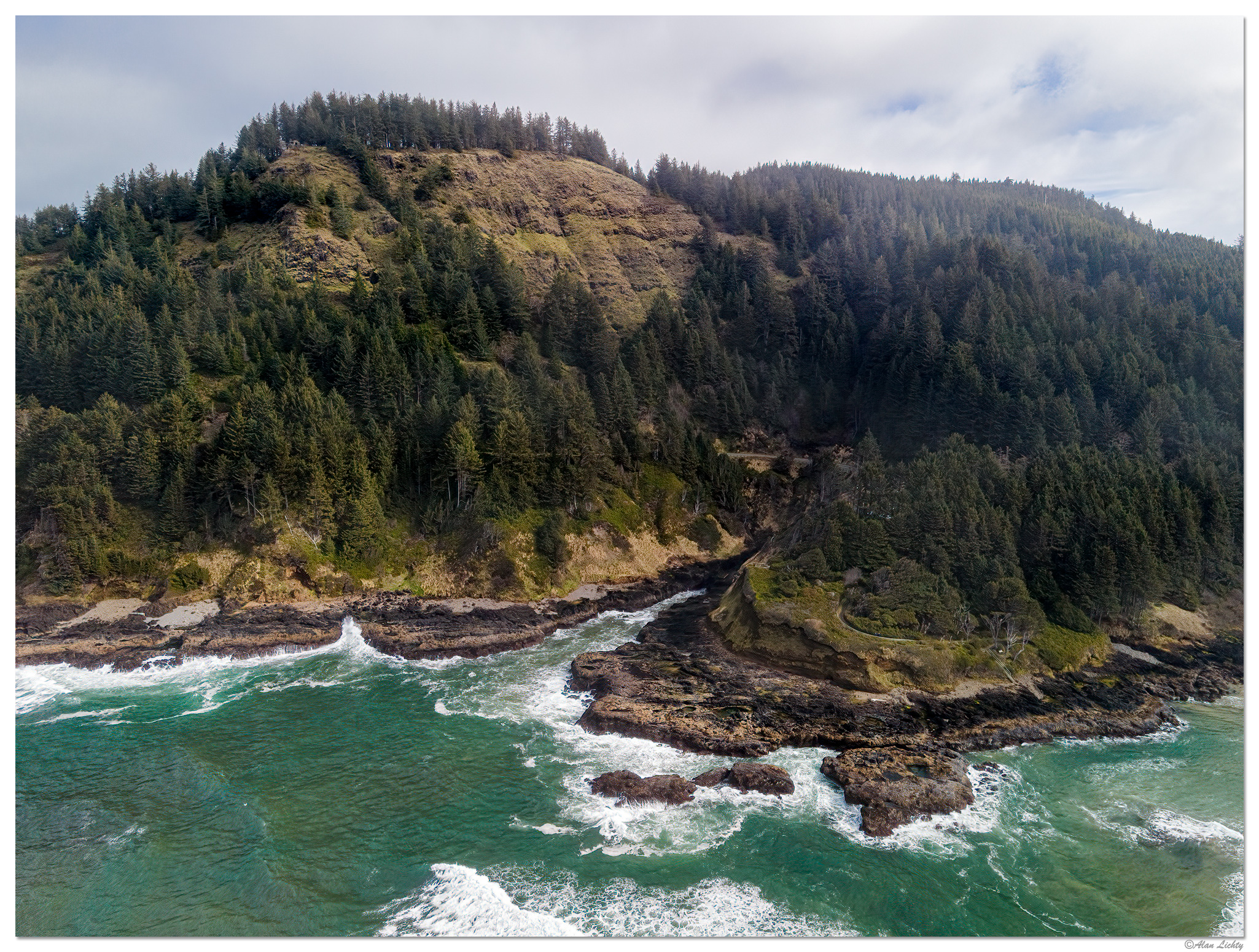
Cape Perpetua and the Devil's Churn along US101 on the Oregon Coast. During winter storms the water funneling into this chute can offer up some crazy splash shows if you can see them through the salty mist the exploding waves put out.

Click through for a more detailed version.
TheCapeandtheChurn.jpg


C&C always welcome.
 

JimFox

Moderator
Staff member
That's so cool to see from the sky. The shelve area there is really neat. I guess photos like this we better get now, as it appears the oceans are rising, so perhaps locations like Thors Well will disappear for future generations?
 

AlanLichty

Moderator
That's so cool to see from the sky. The shelve area there is really neat. I guess photos like this we better get now, as it appears the oceans are rising, so perhaps locations like Thors Well will disappear for future generations?
Thanks Jim - Not sure the shelf will get covered in our lifetimes although it sure is hard to see during winter storms :)

I have been down to that chasm more than a few times, it's really good to see it from this perspective.
Thanks Ben - I continue to be surprised at how some of these landmarks appear from the air.
 

Amy Earl

Well-Known Member
Wonderful image, Alan. Love the vivid colors of this coast. Certainly looks like a place where you could catch some great wave action.
 

AlanLichty

Moderator
Wonderful image, Alan. Love the vivid colors of this coast. Certainly looks like a place where you could catch some great wave action.
Thanks Amy - this is actually fairly calm for this place but during midwinter storms the wave action is jaw dropping although it can be difficult to shoot around the Cape because of the wind and the sideways rain. Just above the basalt shelf is a layer of uplifted marine sediments with a sharp erosion face that goes all along this shoreline. The exposed face is the height of the mid winter waves.
 

Amy Earl

Well-Known Member
Thanks Amy - this is actually fairly calm for this place but during midwinter storms the wave action is jaw dropping although it can be difficult to shoot around the Cape because of the wind and the sideways rain. Just above the basalt shelf is a layer of uplifted marine sediments with a sharp erosion face that goes all along this shoreline. The exposed face is the height of the mid winter waves.
Wow, that would be fun to see (from a safe distance). Have you had issues with the drone in the wind? Seems like it must get pretty windy along the coast even in regular conditions. Is there any danger of crashing the drone should a surprise gust come up? Are you able to gauge the wind at those kinds of altitudes before you fly?
 

AlanLichty

Moderator
Wow, that would be fun to see (from a safe distance). Have you had issues with the drone in the wind? Seems like it must get pretty windy along the coast even in regular conditions. Is there any danger of crashing the drone should a surprise gust come up? Are you able to gauge the wind at those kinds of altitudes before you fly?
I have posted a few shots of the Thor's Well area during winter storms and you definitely need to keep your distance. One guy didn't last winter and fell into the Devil's Churn. He didn't make it.

I watch the wind fairly carefully since there are a lot of times when the wind in that area is not suitable for a drone unless your goal is to turn it into a projectile heading for the cliffs. I have been pleasantly surprised at how well my drone does handle stiff breezes but its hard to gauge how much wind the drone is experiencing in flight since my view of the world is through a gimbal mounted camera that can absorb a lot of jolts and still leave the view looking smooth. When I was landing after a flight two days ago everything seemed smooth and then as I got the drone close in I noticed that it was adjusting its angles almost constantly with the gusty breezes and was anything but smooth. I was misled by how well the gimbal can compensate with the camera view. At a distance the drone is just a speck in the sky and you can't really see how much the device is flailing to stay steady.
 
Top Bottom