Mike Lewis
Staff Member
A very cool astronomy event is occurring this Monday for many folks to observe and potentially photograph (using safe techniques for viewing and / or photographing). A transit of Mercury across the Sun! Such a sight is does not occur often as seen from Earth. From Earth, only transits of Mercury and Venus are possible. This event will be the fourth of 14 transits of Mercury that will occur during the 21st century. In contrast, transits of Venus occur in pairs, with more than a century separating each pair. Unfortunately, the next one of those is 10–11 December 2117. So, I won’t be posting about that one
The cool thing about an event like this is that you can image the event with equipment you likely have on hand. I will be keeping all my expensive astro gear packed up this time, and only using my DSLR, a stable photography tripod, and the longest lens I have (in my case, a Sigma 150-600). With this, and a white light solar filter (hopefully you have one of those from the 2017 eclipse) I can set up with my gimbal mount in the driveway and go to town. Of course, it is IMPERATIVE to use a filter for this type of image. I have also used a 10 stop ND filter in the past, which protects the camera, BUT NOT YOUR EYES, for this type of shot. If you use your Live View mode on your DSLR, you should be fine.
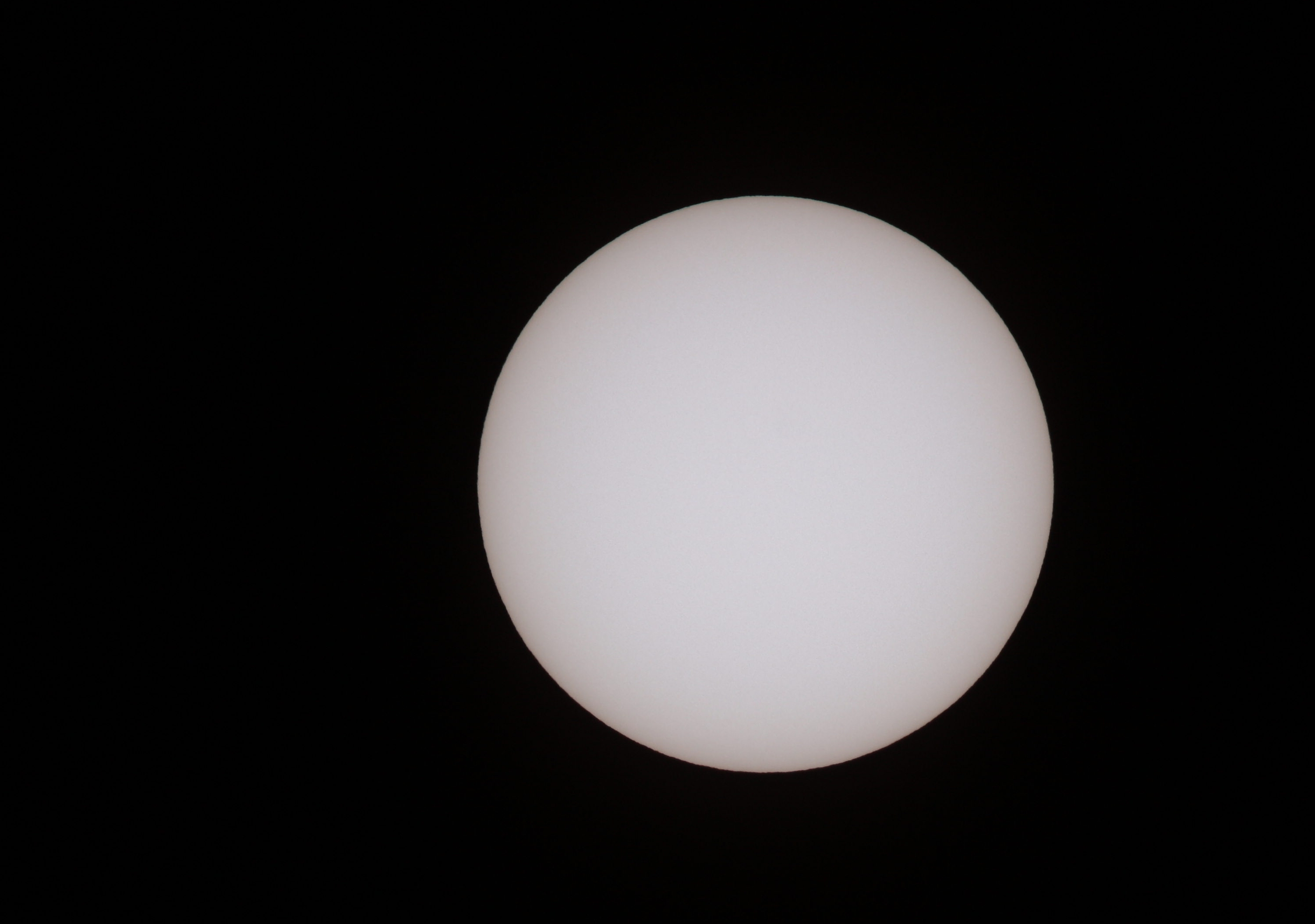
Here is an image with my 5DsR and my 580mm focal length telescope of the last Mercury transit. I should be able to duplicate these results with a simpler setup this time around.

The disk is small but still recognizable as something other than a sunspot (also visible in this image.) Given the high MP of my DSLR, I can crop this down even more to really show the circular nature of Mercury against the sun. Clicking through to the gallery image will make things a little more obvious, or click on my AStrobin image in full size:
https://www.astrobin.com/full/249044/0/
Here are all the details of where and when you can experience the event, plus some other good info:
https://www.space.com/mercury-transit-2019-why-its-rare.html
If you have the proper filter(s) and a longer lens, I urge you to try for this type of shot! Weather permitting, the transit will last for hours. it will be an image of a lifetime (or almost, the next transit is Nov 13th, 2032…)
ML
The cool thing about an event like this is that you can image the event with equipment you likely have on hand. I will be keeping all my expensive astro gear packed up this time, and only using my DSLR, a stable photography tripod, and the longest lens I have (in my case, a Sigma 150-600). With this, and a white light solar filter (hopefully you have one of those from the 2017 eclipse) I can set up with my gimbal mount in the driveway and go to town. Of course, it is IMPERATIVE to use a filter for this type of image. I have also used a 10 stop ND filter in the past, which protects the camera, BUT NOT YOUR EYES, for this type of shot. If you use your Live View mode on your DSLR, you should be fine.
Here is an image with my 5DsR and my 580mm focal length telescope of the last Mercury transit. I should be able to duplicate these results with a simpler setup this time around.
LRCC_FW_SUN_MERCURY_SEQ_LIGHT_Tv13200s_100iso_+29c_solar_20160509-10h46m36s760ms
Mercury Transit - May 9th, 2016
The disk is small but still recognizable as something other than a sunspot (also visible in this image.) Given the high MP of my DSLR, I can crop this down even more to really show the circular nature of Mercury against the sun. Clicking through to the gallery image will make things a little more obvious, or click on my AStrobin image in full size:
https://www.astrobin.com/full/249044/0/
Here are all the details of where and when you can experience the event, plus some other good info:
https://www.space.com/mercury-transit-2019-why-its-rare.html
If you have the proper filter(s) and a longer lens, I urge you to try for this type of shot! Weather permitting, the transit will last for hours. it will be an image of a lifetime (or almost, the next transit is Nov 13th, 2032…)
ML