Winged Wednesday 11.13.2024

Eric Gofreed

Well-Known Member
Thank you to everyone who posts to Winged Wednesday and everyone who comments. My contributions today are photographs of five birds from my Brazil trip a few months ago.

Jabiru-06864-Edit.jpg

The Jabiru is a large stork native to Central and South America, commonly found in the lush wetlands and marshes of Brazil’s Pantanal region. Towering at around 4.5 feet with a wingspan of up to 9 feet, the Jabiru ranks among the tallest flying birds in the Americas. With its long legs and massive, slightly upturned bill, this bird is well-equipped to wade through shallow waters in search of prey, which includes fish, amphibians, and small reptiles.
Bare-faced Curassow-1200.jpg

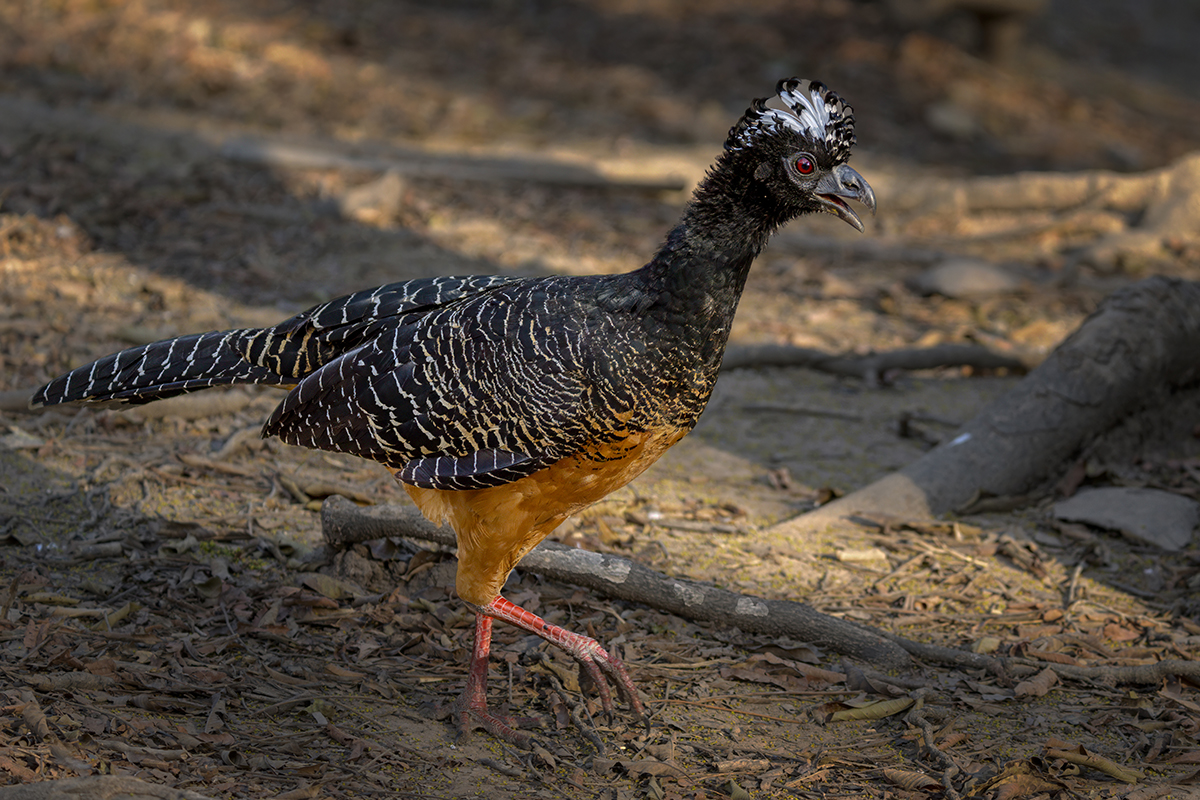
With a wingspan reaching 39 inches, the Bare-faced Curassow stands out as one of South America's striking forest dwellers. Found across Brazil, Bolivia, and Paraguay, this bird is specially adapted to life on the forest floor. Their diet mainly consists of fruits and seeds, playing a crucial role in forest regeneration. Despite their size, curassows are surprisingly elusive, typically seen in small family groups or pairs

Pied Plover-03340-Edit.jpg

The Pied Plover is constantly on the move, using quick steps to forage for insects and small aquatic creatures along riverbanks.
Red-breasted Toucan-09985-Edit-2.jpg

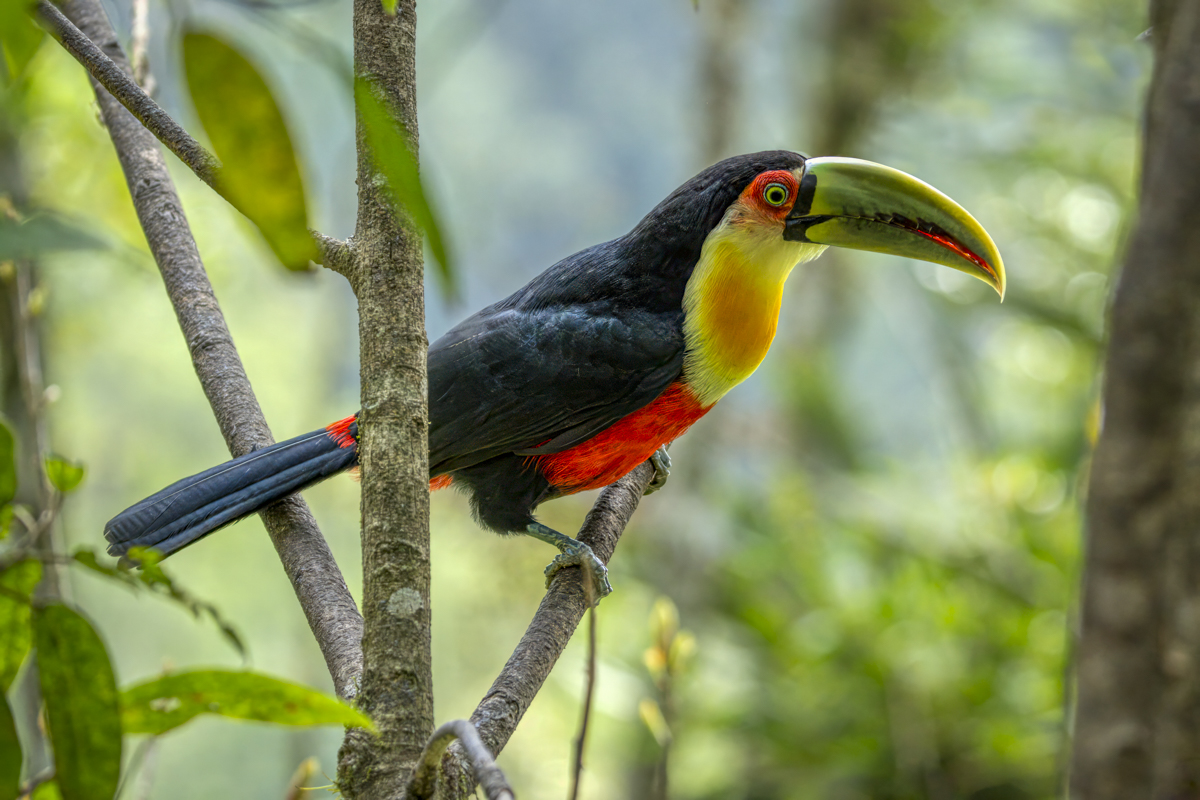
With its vibrant bill and red-breasted plumage, the Red-breasted Toucan stands out in the tropical forests of Brazil, Argentina, and Paraguay. Its large bill allows it to reach fruit, its primary food source, as well as insects and small prey tucked among dense branches. The bird’s bold colors are used to attract mates and establish territory, signaling health and vitality to others within its range.

Lesser Yellow-headed Vulture-05915-Edit-Edit.jpg

The Lesser Yellow-headed Vulture has a wingspan of up to 63 inches and is a masterful scavenger native to the tropical lowlands and wetlands of Central and South America. This vulture has a keen sense of smell to locate carrion. Unlike other birds, it flies low over open landscapes, scanning for food. While solitary by nature, it may gather with others at abundant food sources.
 

AlanLichty

Moderator
Wow - your posts from your Brazil trip are like we are being brought along for a tour of their birds. Fantastic images of birds I never knew existed. I love it :)
 
Thank you to everyone who posts to Winged Wednesday and everyone who comments. My contributions today are photographs of five birds from my Brazil trip a few months ago.

View attachment 77248
The Jabiru is a large stork native to Central and South America, commonly found in the lush wetlands and marshes of Brazil’s Pantanal region. Towering at around 4.5 feet with a wingspan of up to 9 feet, the Jabiru ranks among the tallest flying birds in the Americas. With its long legs and massive, slightly upturned bill, this bird is well-equipped to wade through shallow waters in search of prey, which includes fish, amphibians, and small reptiles.

View attachment 77247
With a wingspan reaching 39 inches, the Bare-faced Curassow stands out as one of South America's striking forest dwellers. Found across Brazil, Bolivia, and Paraguay, this bird is specially adapted to life on the forest floor. Their diet mainly consists of fruits and seeds, playing a crucial role in forest regeneration. Despite their size, curassows are surprisingly elusive, typically seen in small family groups or pairs

View attachment 77250
The Pied Plover is constantly on the move, using quick steps to forage for insects and small aquatic creatures along riverbanks.

View attachment 77251
With its vibrant bill and red-breasted plumage, the Red-breasted Toucan stands out in the tropical forests of Brazil, Argentina, and Paraguay. Its large bill allows it to reach fruit, its primary food source, as well as insects and small prey tucked among dense branches. The bird’s bold colors are used to attract mates and establish territory, signaling health and vitality to others within its range.

View attachment 77249
The Lesser Yellow-headed Vulture has a wingspan of up to 63 inches and is a masterful scavenger native to the tropical lowlands and wetlands of Central and South America. This vulture has a keen sense of smell to locate carrion. Unlike other birds, it flies low over open landscapes, scanning for food. While solitary by nature, it may gather with others at abundant food sources.
Nice beautiful predators, love it.

Oliver
 

AlanLichty

Moderator
These are really hard acts to follow. I have a salvage job of a shot dating back to a couple of months after I first bought a DSLR over 22 years ago. Kudos to modern processing software for making it possible to get something out of this shot of a red tail hawk cruising for lunch at the Ridgefield Wildlife Refuge. Definitely not a match for the wings images posted so far.

CD60_RWR-RedTailBIF021003.jpg
 

Eric Gofreed

Well-Known Member
These are really hard acts to follow. I have a salvage job of a shot dating back to a couple of months after I first bought a DSLR over 22 years ago. Kudos to modern processing software for making it possible to get something out of this shot of a red tail hawk cruising for lunch at the Ridgefield Wildlife Refuge. Definitely not a match for the wings images posted so far.

View attachment 77262
your red-tailed hawk is a Northern Harrier. It is also an exceptional photo. High Marks, Alan
 

Eric Gofreed

Well-Known Member

Eric Gofreed

Well-Known Member
Thanks - I missed the ID entirely. This was shot with a 6.1MP camera body and a lens borrowed from my 35mm film kit. I am amazed the image worked out at all to be honest :cool:
Alan, I have to admit, I get more shots that I’m happy with now, thanks to improvements in equipment, processing programs, and skills compared to 20 years ago. However, I believe the most valuable tool any photographer has is the eye just an inch behind the viewfinder. That Northern Harrier shot of yours is truly outstanding—better than any I have. By the way, for most of my life, we called this bird the Marsh Hawk and I still prefer that name.
 

AlanLichty

Moderator
Alan, I have to admit, I get more shots that I’m happy with now, thanks to improvements in equipment, processing programs, and skills compared to 20 years ago. However, I believe the most valuable tool any photographer has is the eye just an inch behind the viewfinder. That Northern Harrier shot of yours is truly outstanding—better than any I have. By the way, for most of my life, we called this bird the Marsh Hawk and I still prefer that name.
Thanks - I have several more I shot of this bird both before and after this capture that I might try reworking after seeing how this one worked out. I frequently overlook this early part of my digital archive since the equipment seems so quaint and primitive compared to our present day camera/lens offerings. My bird books all reference the name Marsh Hawk alongside of Northern Harrier. I was mistaking this for an immature red tail I also shot at that refuge.
 

Eric Gofreed

Well-Known Member
Thanks - I have several more I shot of this bird both before and after this capture that I might try reworking after seeing how this one worked out. I frequently overlook this early part of my digital archive since the equipment seems so quaint and primitive compared to our present day camera/lens offerings. My bird books all reference the name Marsh Hawk alongside of Northern Harrier. I was mistaking this for an immature red tail I also shot at that refuge.
I want to see your reworked photos. I've been a birder for over 50 years and still misidentify birds in the field. When uncertain of an ID on a photograph, I post it to iNaturalist.org for a definitive ID. Most of my Brazil bird photographs were either identified or the ID confirmed with iNaturalist.org
 
Last edited:

Eric Gofreed

Well-Known Member
I say, I say, Doug! You ain’t got yer ducks lined up in no row—they’re standin’ tall, like a, I say, like a stack o' flapjacks! Now, them’s some mighty fine photos, but lemme tip my hat, son, to yer woody… the duck, I mean. Top-notch work, I say, top-notch! (I imagine that's how how Foghorn Leghorn would compliment your photos, Doug)
 
Top Bottom