

Jim Dockery
Well-Known Member
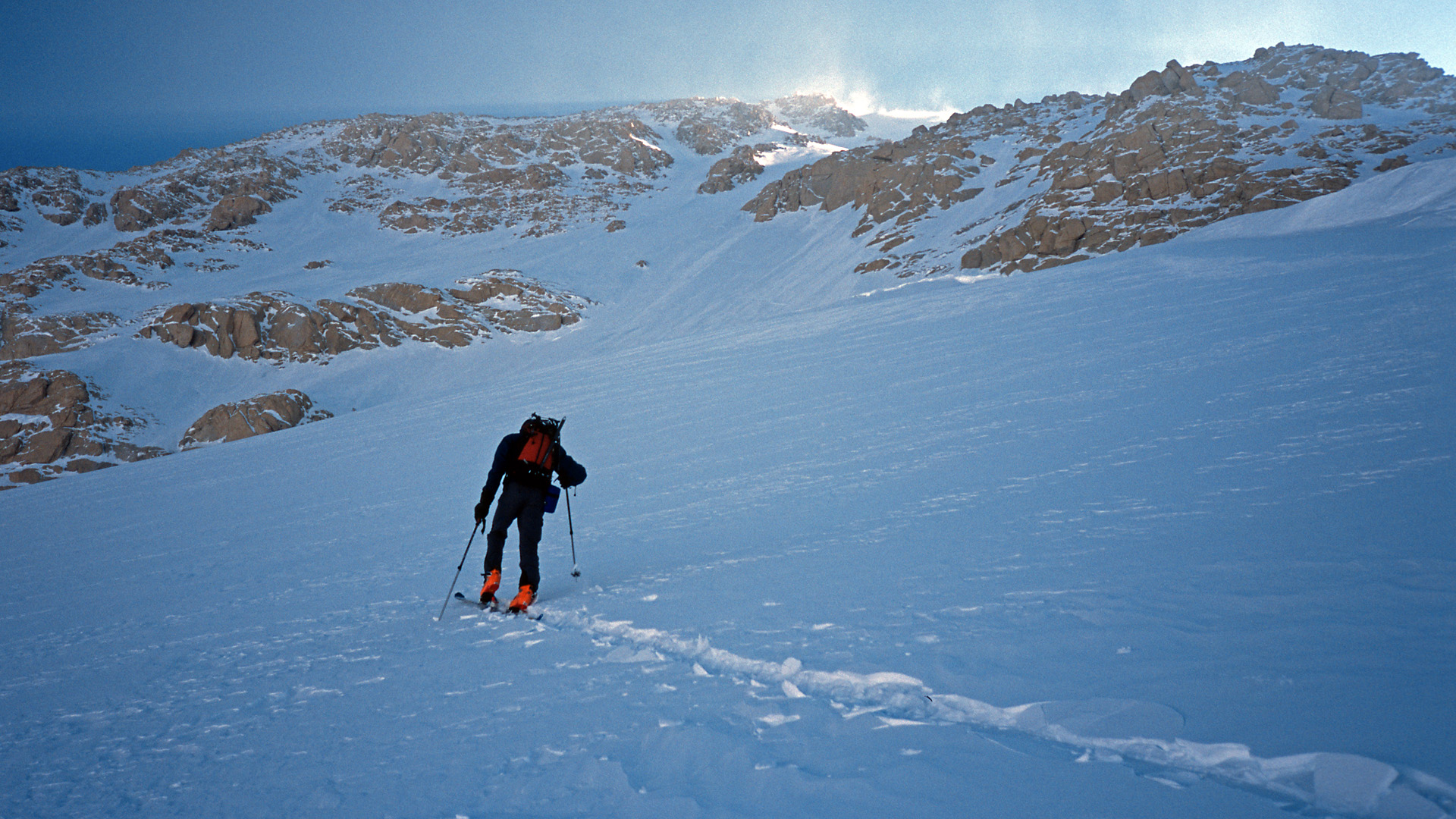
Pat climbing into The Orient Express couloir on our last attempt. We only make it half way up the rib to the right (avoiding dangerous wind slab snow). Note the spindrift blowing off the top.
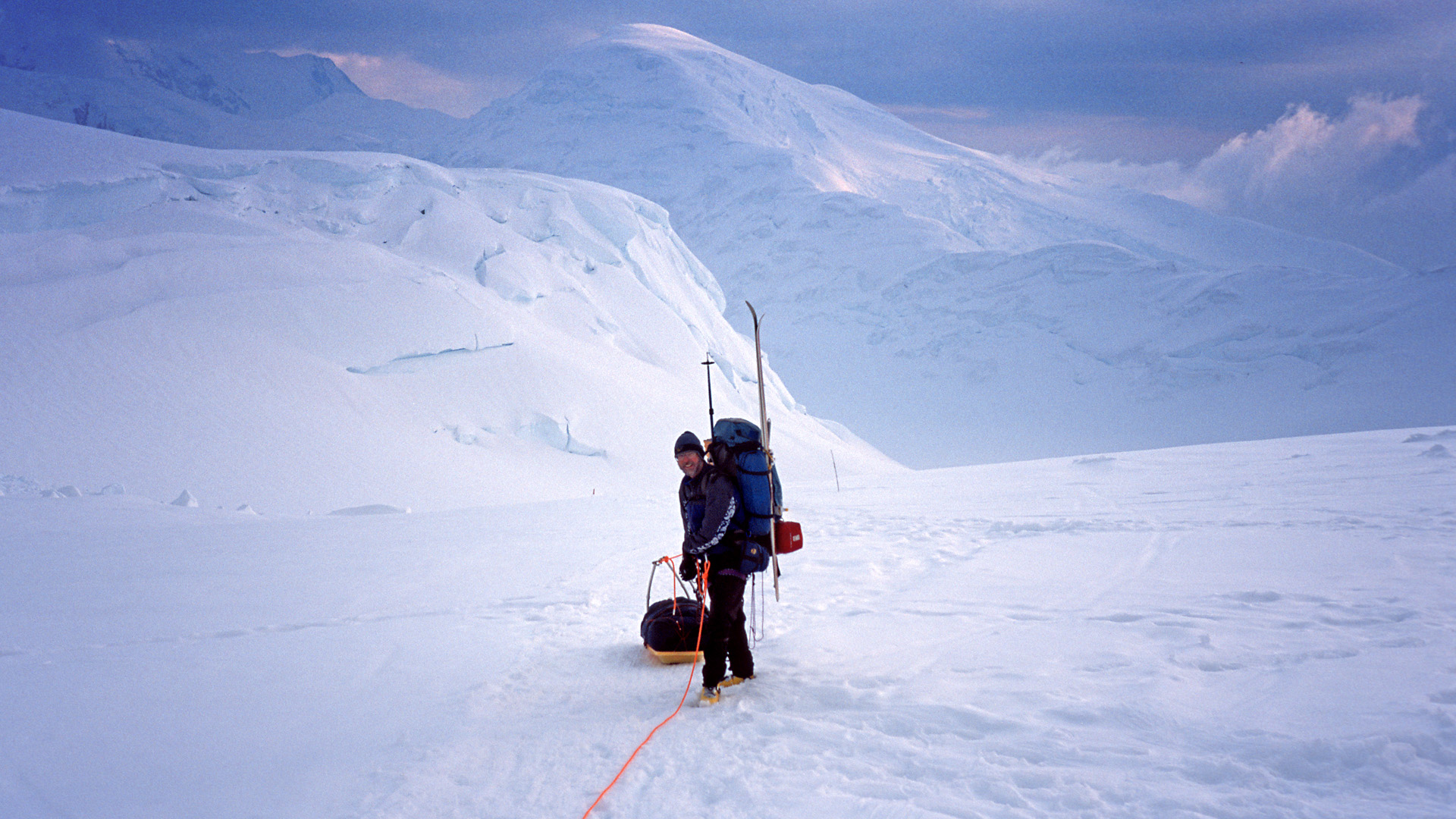
Me heading down. Some steep spots it was easier to carry the skis. This was one of the harder days for me, loosing 7,000 ft. of elevation with heavy loads.
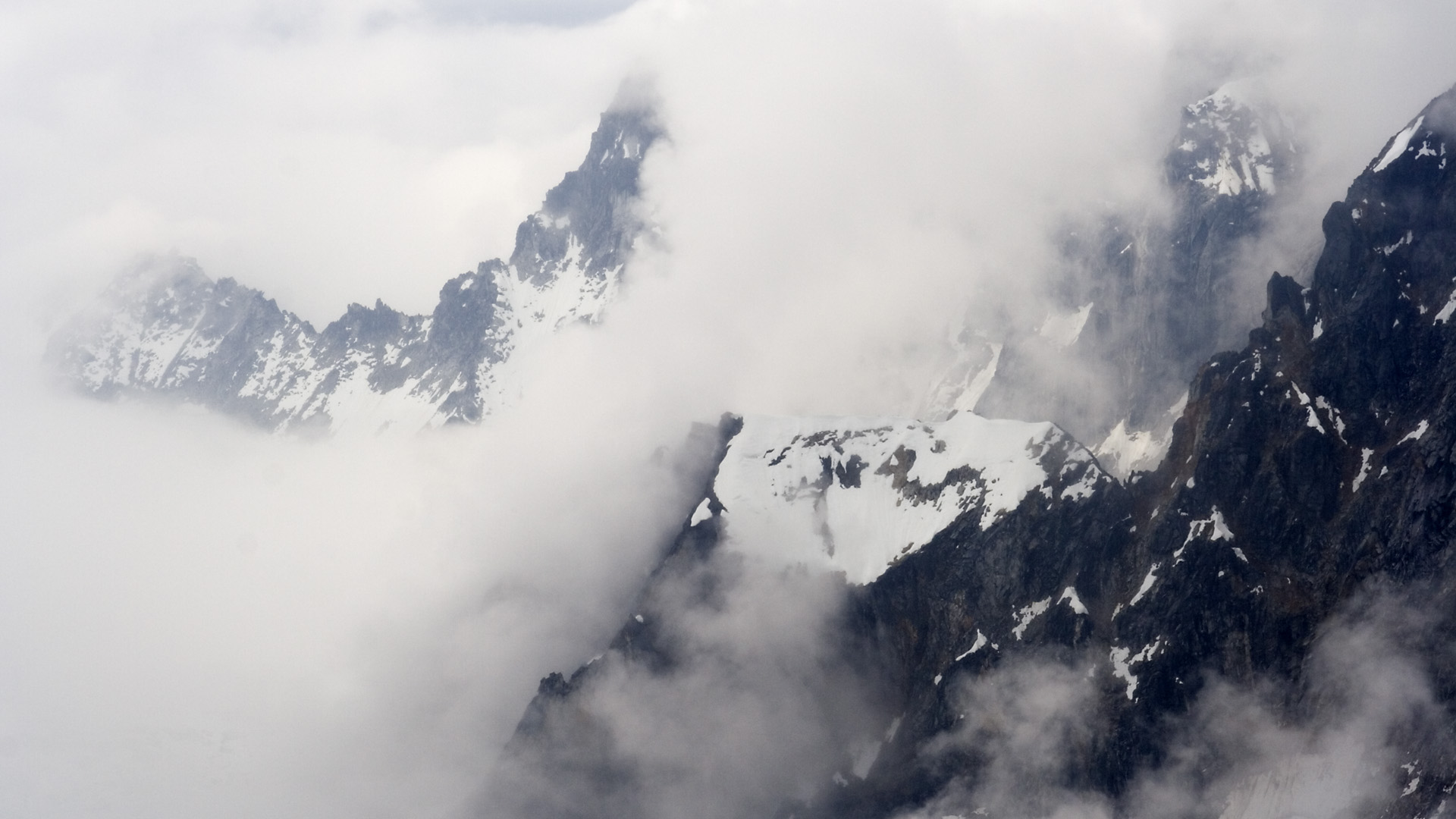
It was raining when we reached the landing strip area and we thought we might have to wait a few days for a clearing to fly, but our pilot found an opening and got in. Flying out was a bit scary, but also beautiful when he had to take a different route out just above the glacier.
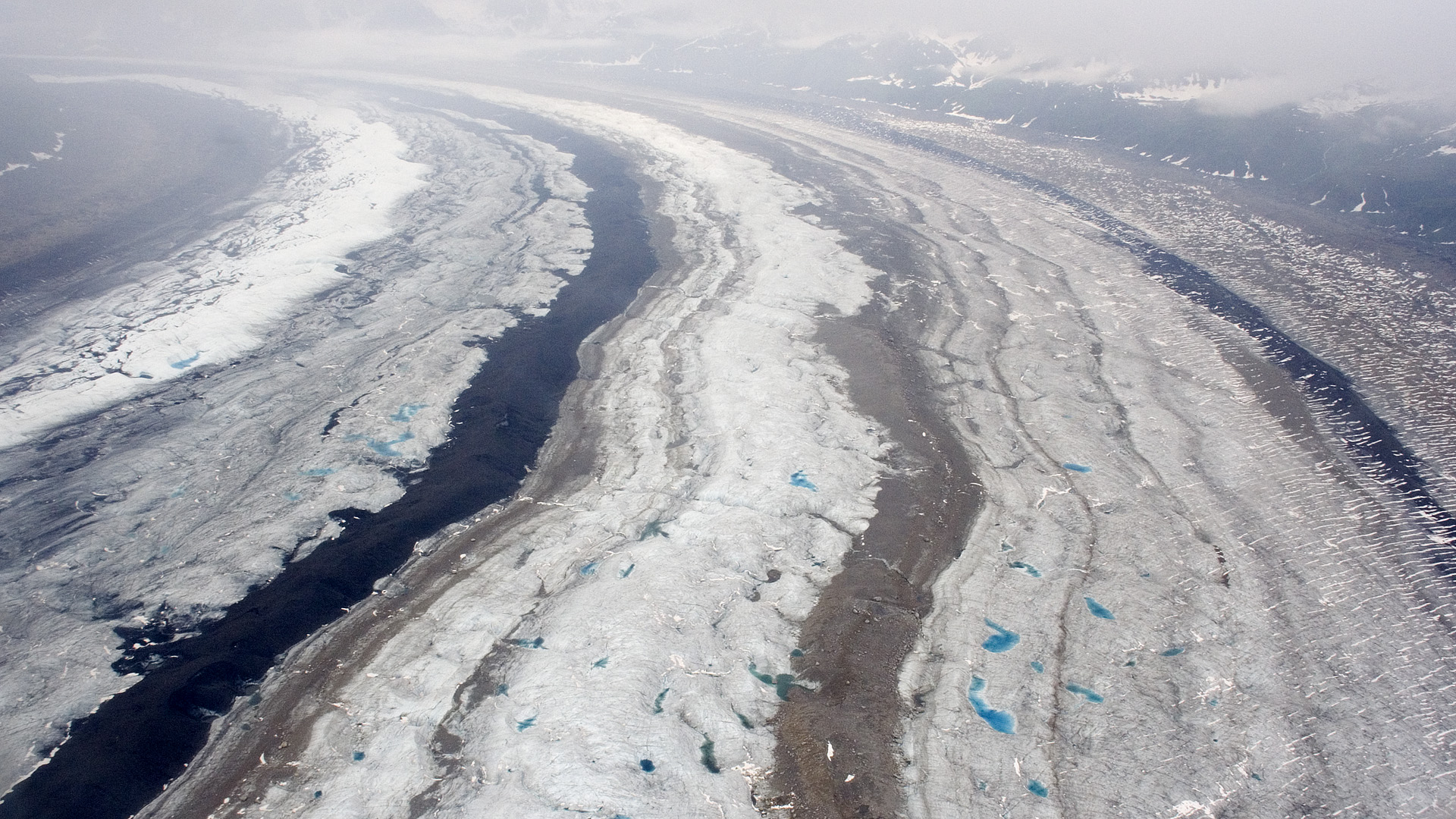
Kahiltna Glacier
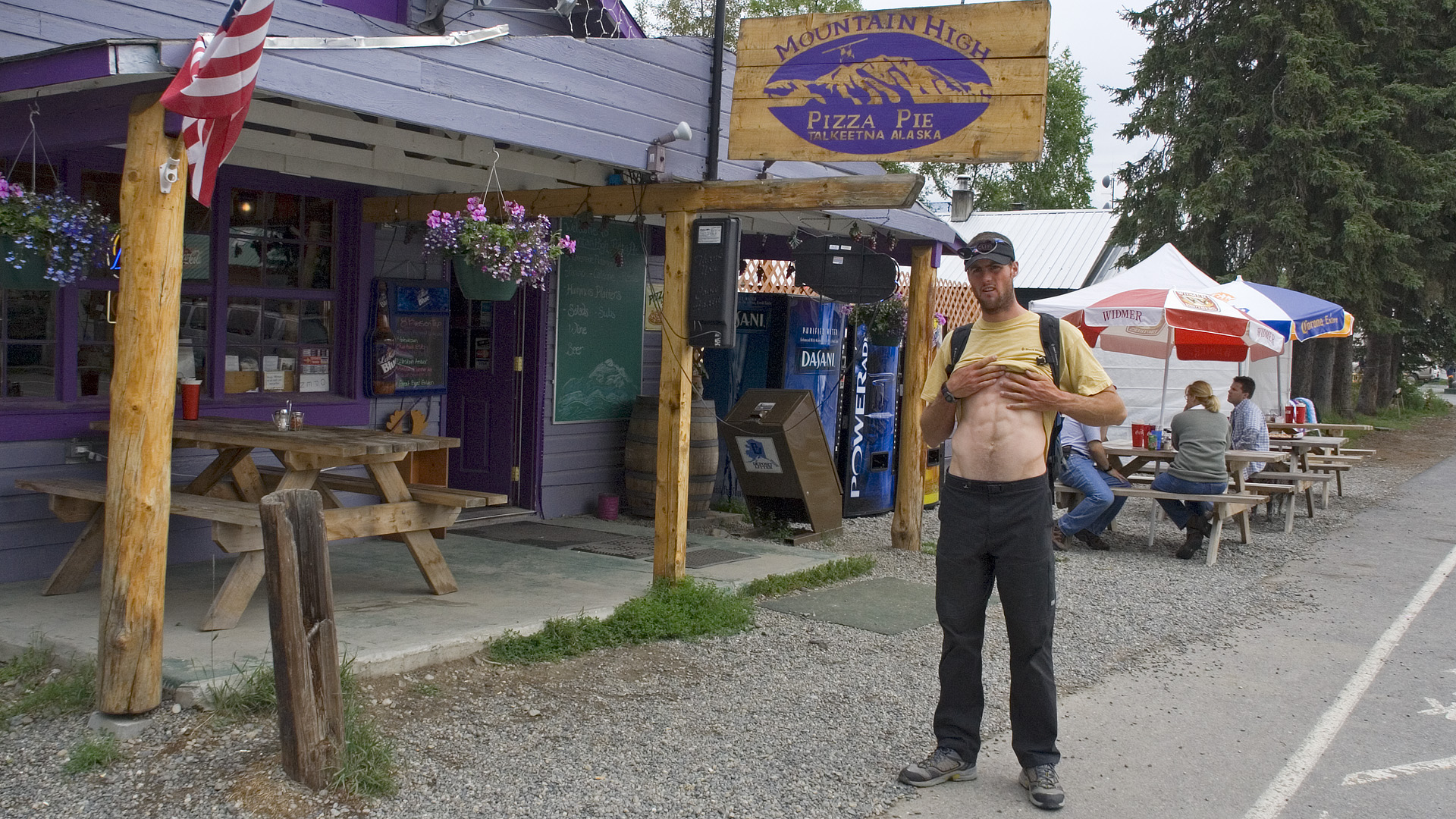
Pat about to chow down on our first meal in Talketna - pizza of course!
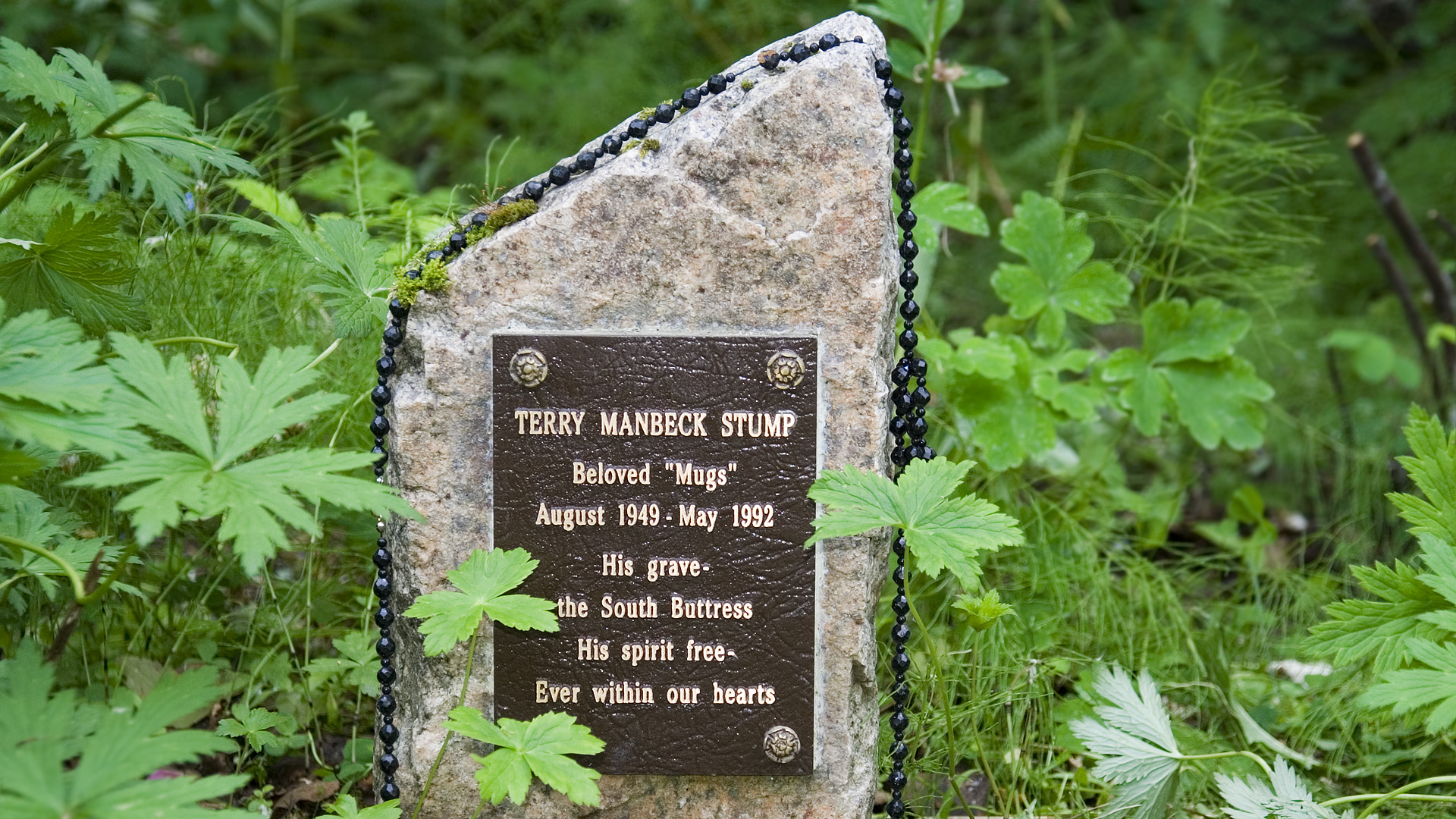
We had a few days to wait for our ride to Anchorage since we'd come down early. A visit to the cemetery filled with climbers memorials was mandatory. I was kind of glad we hadn't gone before the climb.
An friend of mine.
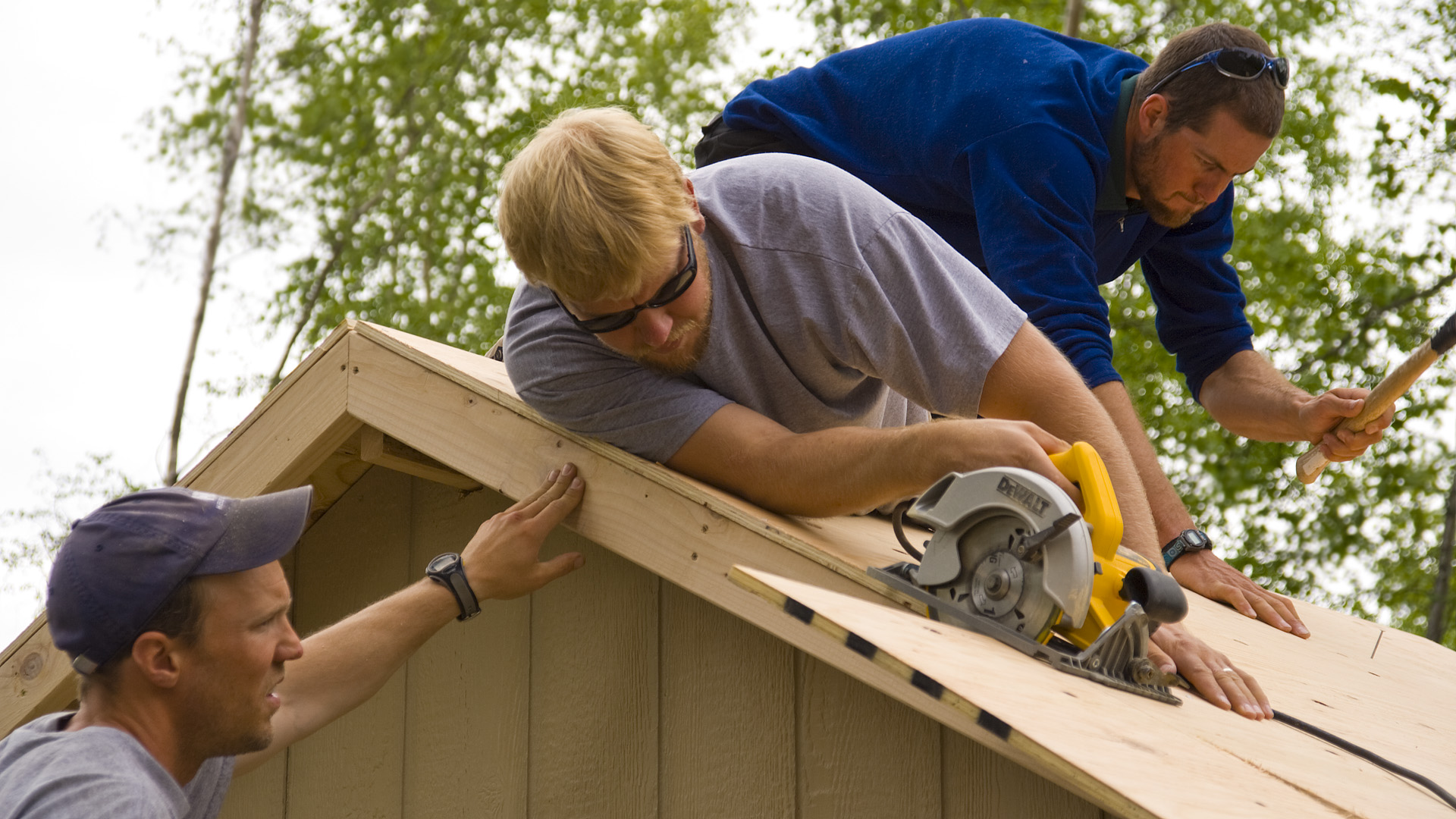
When we got to Anchorage we still had a couple days before Pat flew out so our friend Troy put us up at his place where we worked for our room and board on his new shed.
Of course when I got home I had a lot of fun work to do with the pictures, with the goal of making a slide show to show the kids at school with the themes: have a dream, work toward it with baby steps (in my case years of easier climbs), research the specific steps to realize it (equipment, transportation, permits, etc.), train hard, then go for it and take advantage of serendipity.
Storm Clouds over Foraker
Climbers at 12,000 ft.
Skiing from 16,000
View down from the summit.
I'll end with one of my favorite quotes, taken from Mt. Analogue by Rene Daumal.
“You cannot stay on the summit forever; you have to come down again. So why bother in the first place? Just this: What is above knows what is below, but what is below does not know what is above. One climbs, one sees. One descends, one sees no longer, but one has seen. There is an art of conducting oneself in the lower regions by the memory of what one saw higher up. When one can no longer see, one can at least still know.”
Part III
Me heading down. Some steep spots it was easier to carry the skis. This was one of the harder days for me, loosing 7,000 ft. of elevation with heavy loads.
It was raining when we reached the landing strip area and we thought we might have to wait a few days for a clearing to fly, but our pilot found an opening and got in. Flying out was a bit scary, but also beautiful when he had to take a different route out just above the glacier.
Kahiltna Glacier
Pat about to chow down on our first meal in Talketna - pizza of course!
We had a few days to wait for our ride to Anchorage since we'd come down early. A visit to the cemetery filled with climbers memorials was mandatory. I was kind of glad we hadn't gone before the climb.
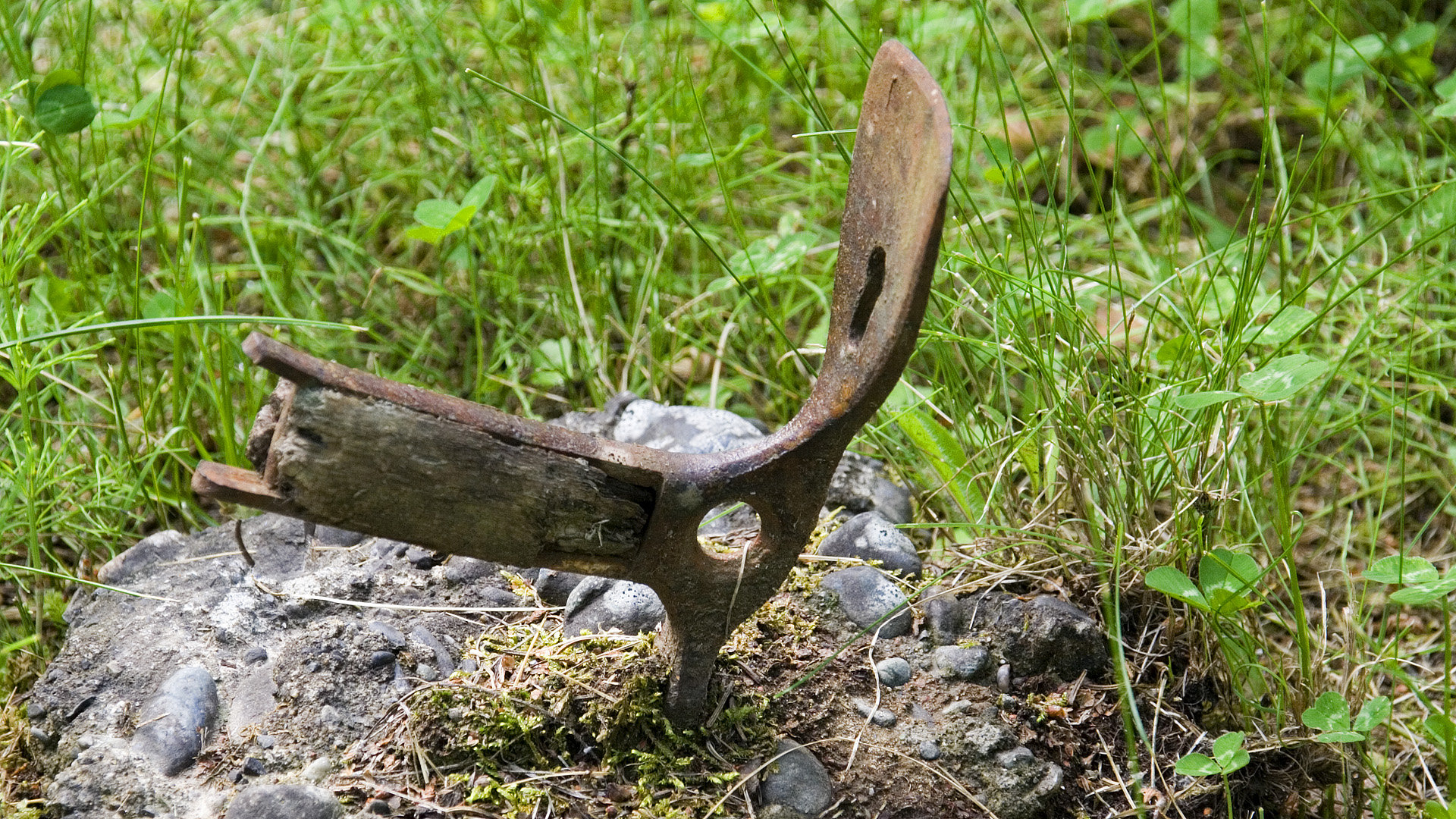
An friend of mine.
When we got to Anchorage we still had a couple days before Pat flew out so our friend Troy put us up at his place where we worked for our room and board on his new shed.
Of course when I got home I had a lot of fun work to do with the pictures, with the goal of making a slide show to show the kids at school with the themes: have a dream, work toward it with baby steps (in my case years of easier climbs), research the specific steps to realize it (equipment, transportation, permits, etc.), train hard, then go for it and take advantage of serendipity.
Storm Clouds over Foraker
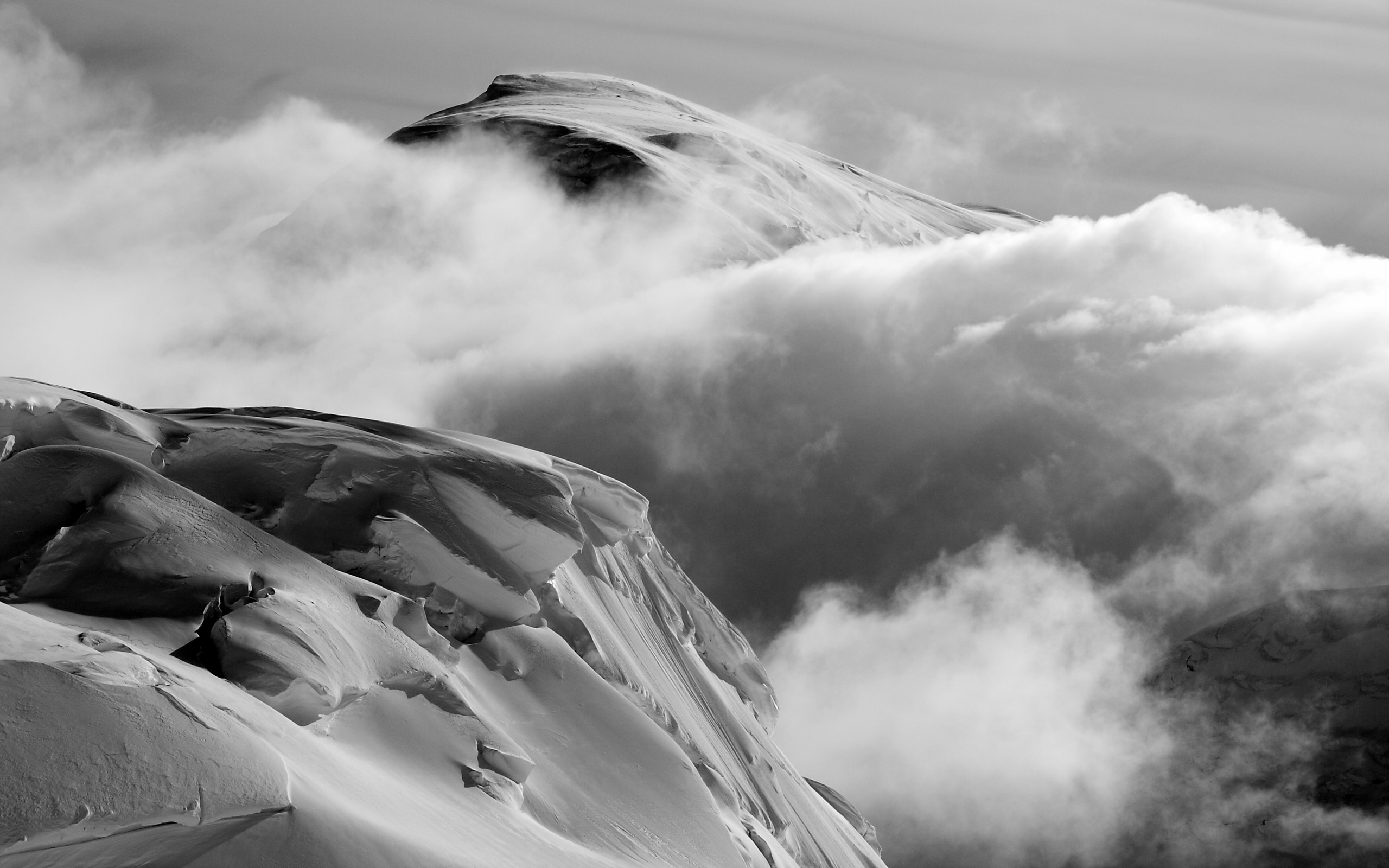
Climbers at 12,000 ft.

Skiing from 16,000

View down from the summit.

I'll end with one of my favorite quotes, taken from Mt. Analogue by Rene Daumal.
“You cannot stay on the summit forever; you have to come down again. So why bother in the first place? Just this: What is above knows what is below, but what is below does not know what is above. One climbs, one sees. One descends, one sees no longer, but one has seen. There is an art of conducting oneself in the lower regions by the memory of what one saw higher up. When one can no longer see, one can at least still know.”
Part III
Last edited:


