

Eric Gofreed
Well-Known Member
Bugs that came to my porch light will be my contributions to this weeks "Winged Wednesday." All these images were photographed with a flash and a diffuser. I also used an LED panel under white Plexiglass. Identifying bugs seems like a most difficult task even for an entomologist. However, for a novice like me there is iNaturalist.org to identify animals, insects, and plants . Macrophotography and bugs are not for everybody. I hope you find some enjoyment from my photos.
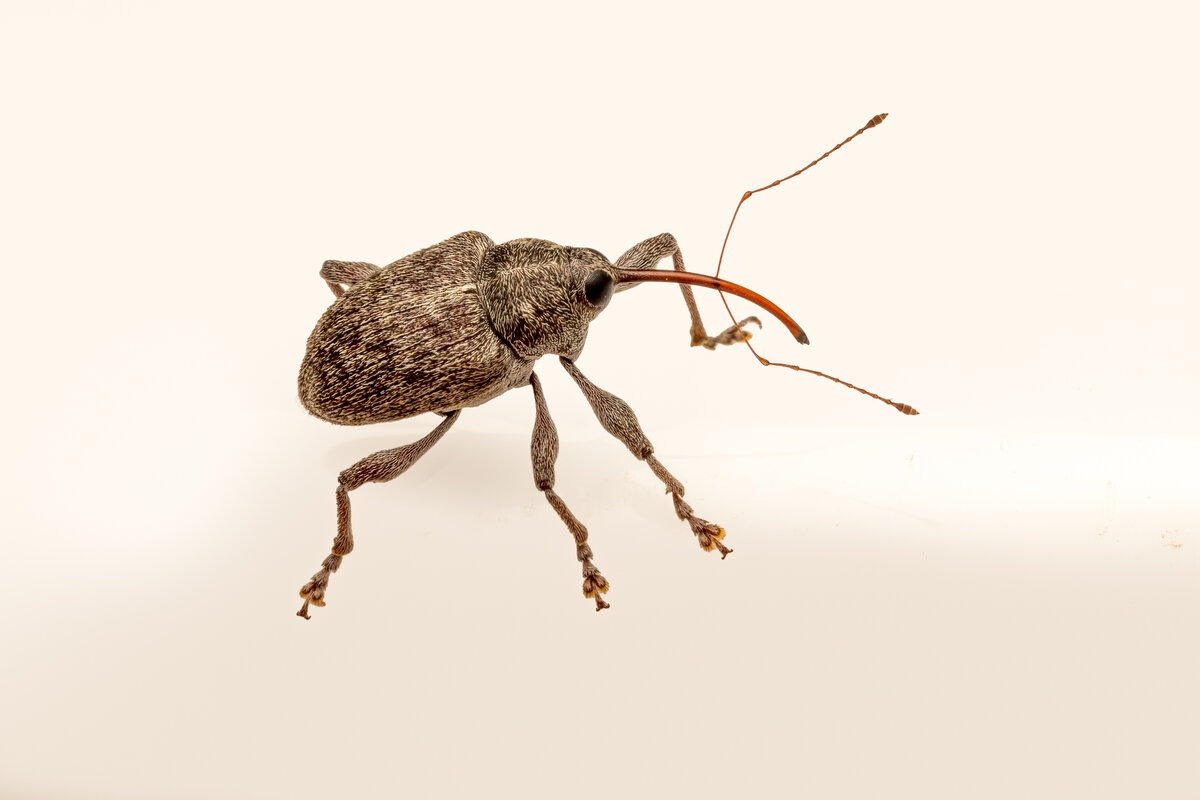
Acorn Weevil This male is @ 3/8 inches. Females have a longer proboscis. Bugs are either chewers or suckers. A quick look at their mouth easily distinguishes them. This Weevil is a sucker as his proboscis is designed to penetrate the plant and suck out the sap.
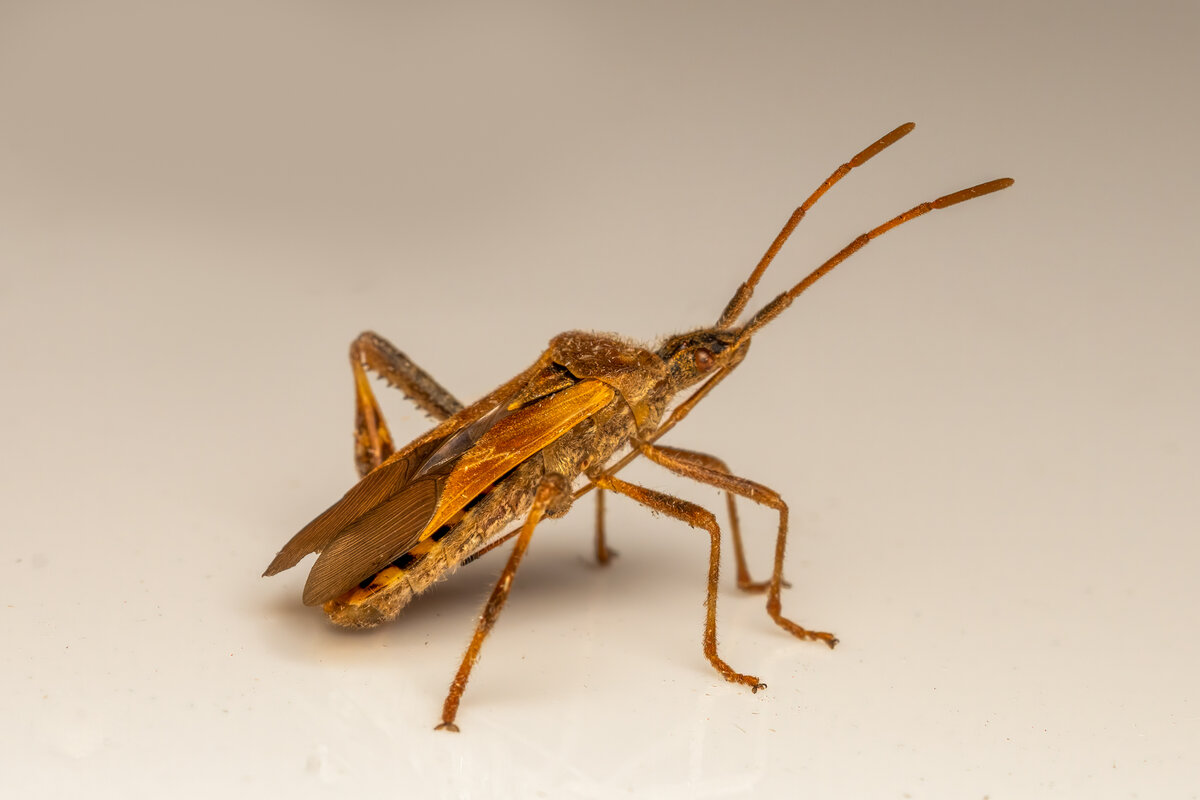
The western leaf-footed bug is another sucker. Notice his long proboscis that runs along his entire ventrum. In addition to sucking sap, his saliva is toxic to the plant.
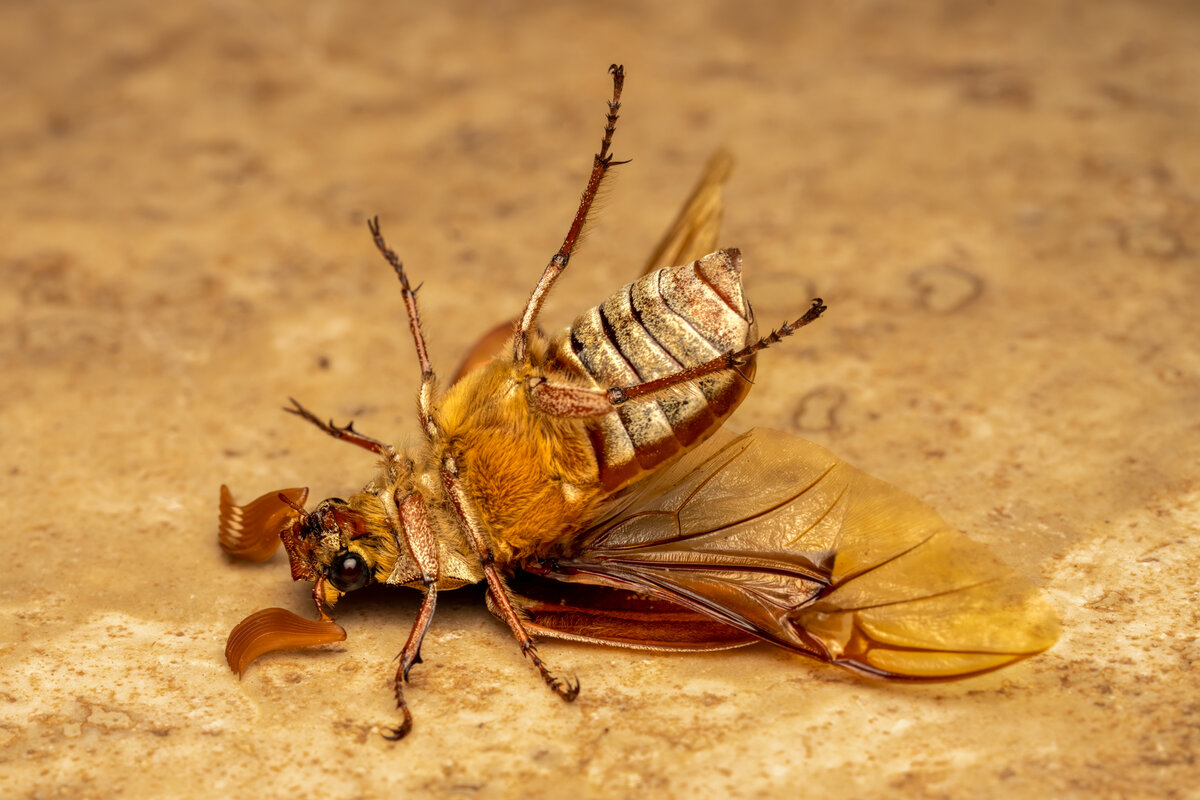
10 lined June Beetle was blinded and disoriented by the bright light in the dark and landed on his back.
My priority was to get the photo, then I turned him right-side up.
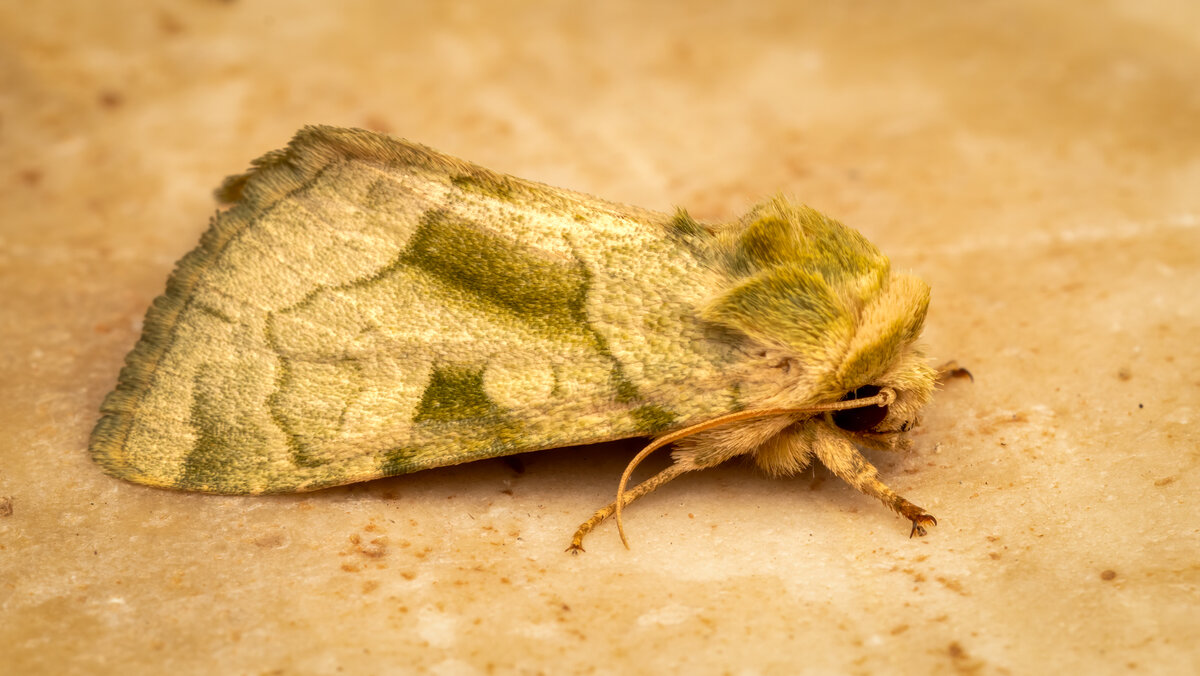
I get more moths than I can count. Many are very tiny and I'll post some of them next week. I prefer to photograph the pretty ones that are larger than 1/4 inch like this Green Oslaria Moth. I do photograph the smaller ones as my contribution to iNaturalist.org
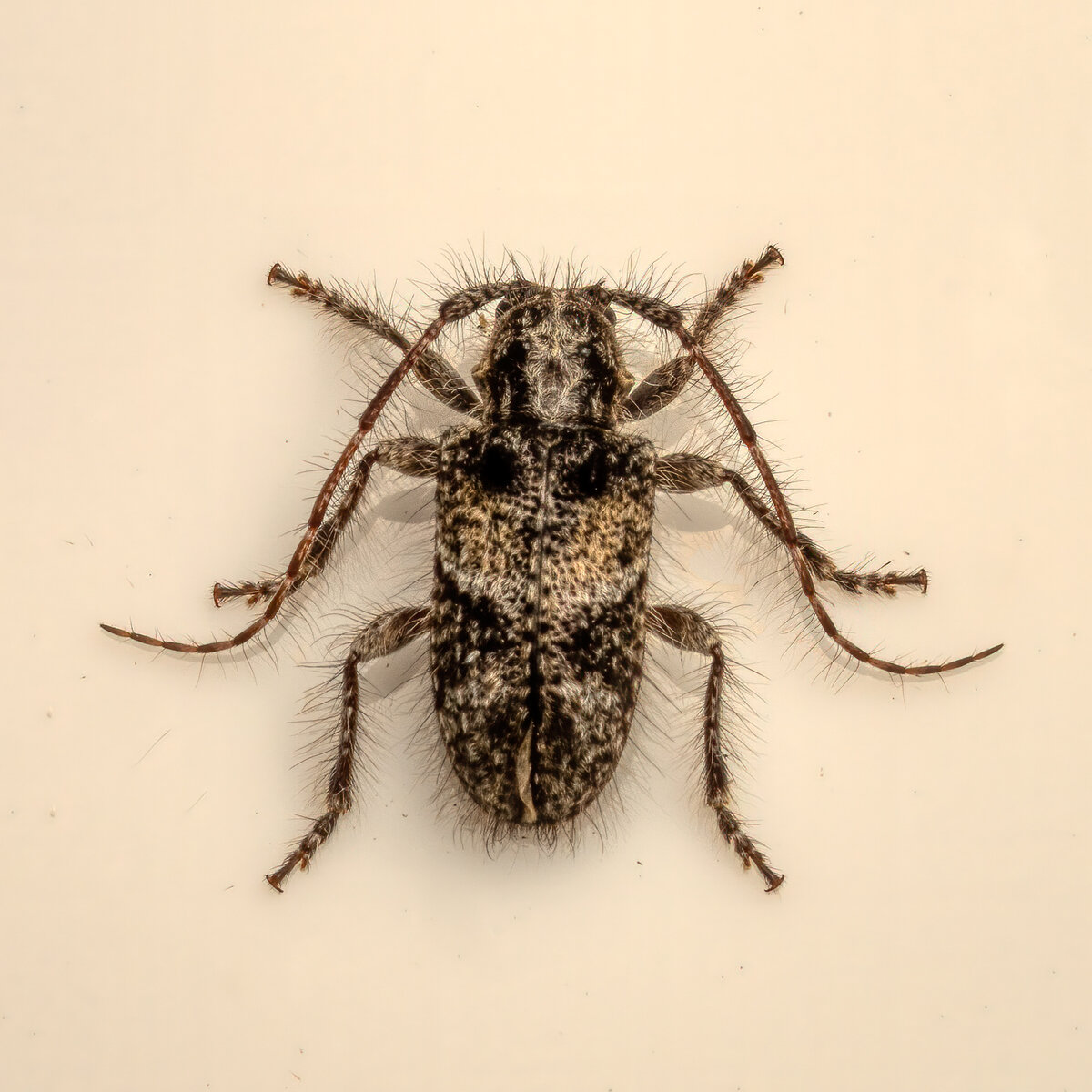
This tiny beetle is a member of the fat-faced longhorn beetle family; Genus Exocentrusa
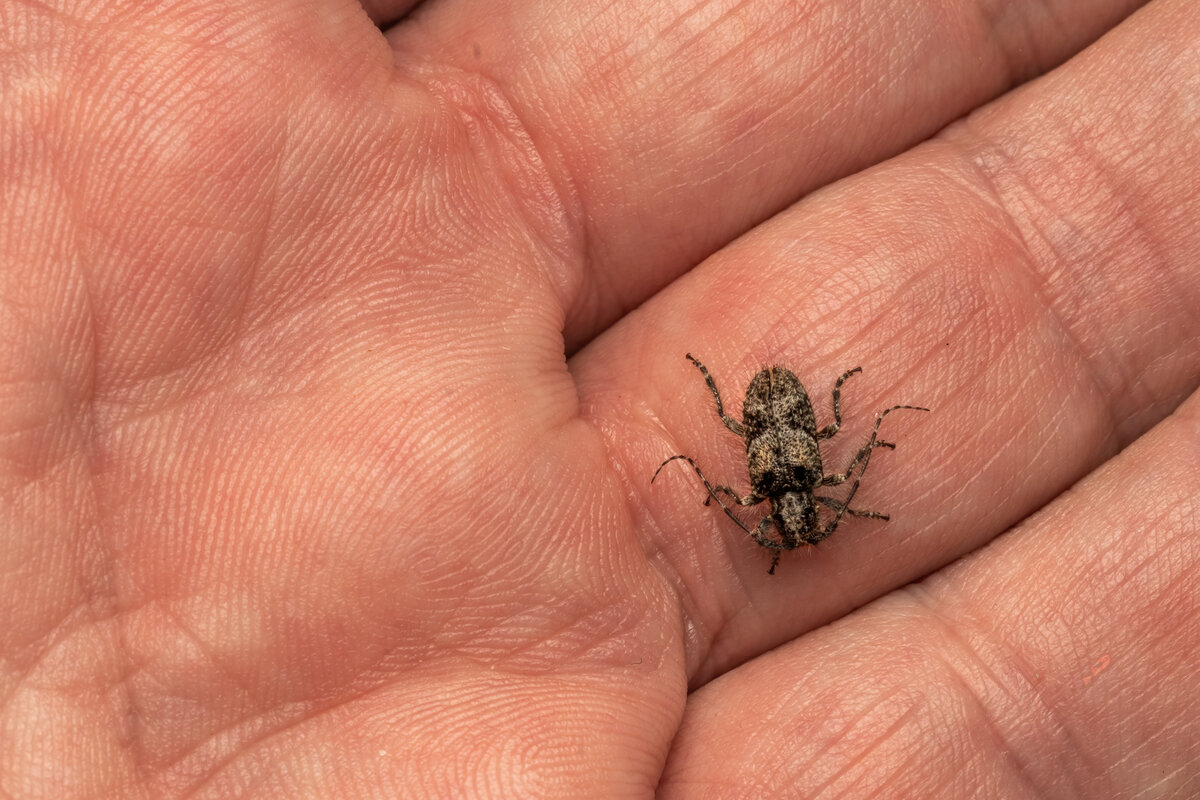
For reference this the same beetle in my hand
Acorn Weevil This male is @ 3/8 inches. Females have a longer proboscis. Bugs are either chewers or suckers. A quick look at their mouth easily distinguishes them. This Weevil is a sucker as his proboscis is designed to penetrate the plant and suck out the sap.
The western leaf-footed bug is another sucker. Notice his long proboscis that runs along his entire ventrum. In addition to sucking sap, his saliva is toxic to the plant.
10 lined June Beetle was blinded and disoriented by the bright light in the dark and landed on his back.
My priority was to get the photo, then I turned him right-side up.
I get more moths than I can count. Many are very tiny and I'll post some of them next week. I prefer to photograph the pretty ones that are larger than 1/4 inch like this Green Oslaria Moth. I do photograph the smaller ones as my contribution to iNaturalist.org
This tiny beetle is a member of the fat-faced longhorn beetle family; Genus Exocentrusa
For reference this the same beetle in my hand


